


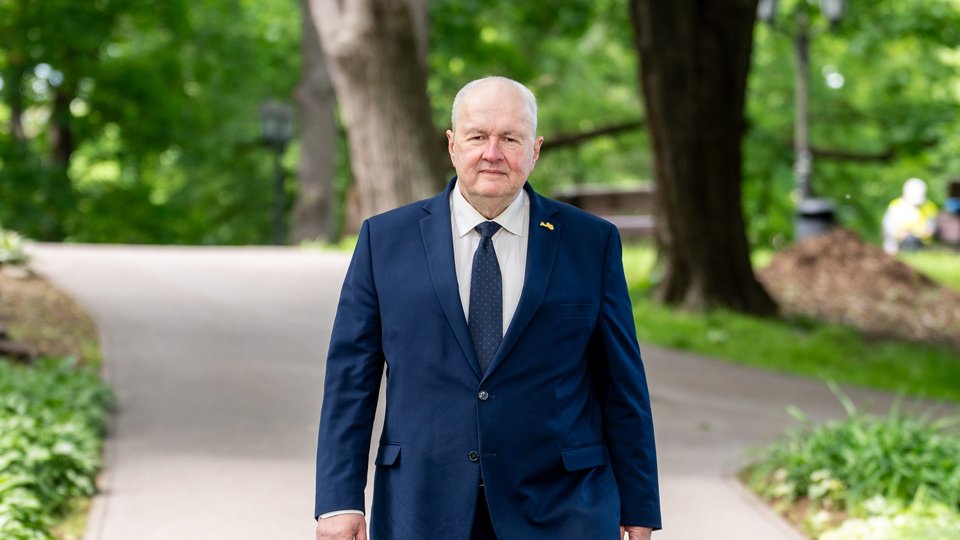
Connecting Ireland and Latvia
Meet the Chair of the Latvia-Ireland Parliamentary Friendship Group, Uģis Rotbergs
The Latvia-Ireland Parliamentary Friendship Group was first established in 1996. It is a cross-party group, made up of more than 15 members of Parliament. An Ireland-Latvia Parliamentary Group was established in the Oireachtas in September 2025. The Friendship Group’s purpose is to promote cooperation and collaboration between Ireland and Latvia, working closely with the Embassy, as well as between our respective national parliaments.
Here Uģis Rotbergs tells us more about his work and his particular interest in Latvian-Irish relations.
Meet Uģis Rotbergs
A member of the Saeima (Latvian Parliament) and Chair of the Saeima’s Latvia-Ireland Parliamentary Friendship Group, Uģis Rotbergs is also Deputy Chairman of the European Affairs Committee.
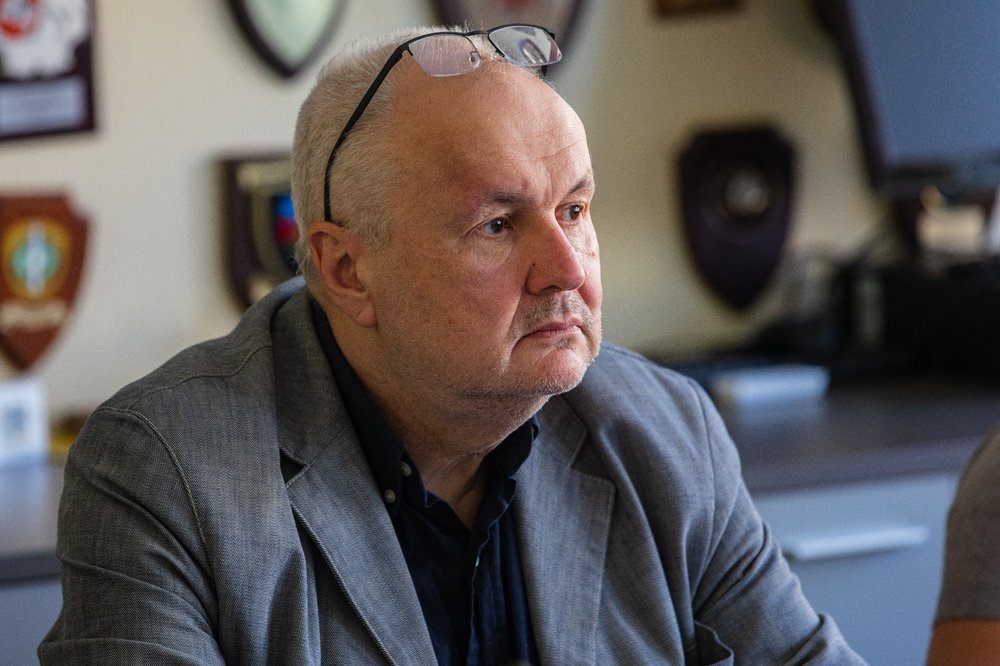
Rotbergs has spent his life committed to environmentalism and currently serves as Chairman of the Board of the Latvian Organization of the World Wide Fund for Nature.
Tell us a little about yourself and how you got into politics?
“When Latvia regained freedom in 1991, I joined the WWF (World Wide Fund for Nature) 1991 as a project leader and over the years became its Chairman. Apart from conservation, I have always been actively involved in NGO sector, promoting development of the civil society.
In 2007, Latvia experienced the “Umbrella Revolution”, a series of massive, peaceful anti-corruption political protests and driven by widespread public anger took place.
Emerging directly from the public demand for political reform generated by the anti-oligarch sentiment, and following the Umbrella Revolution, a coalition of intellectuals, anti-corruption experts, former diplomats, military personnel and NGO leaders founded “The Meierovics Society for Progressive Reform”. Named in honour of Zigfrīds Anna Meierovics - Latvia's legendary first Foreign Minister who secured the country's international recognition - the society aimed at bridging the gap between citizen activism and mainstream politics.
The core members of the Meierovics Society ultimately formed a tactical alliance with the political party Unity, subsequently ran for parliament and entered public office.”
I entered politics believing Latvia can uphold European values, resist oligarchic influence, and stop the corruption hindering our development.
What does your work as a parliamentarian entail?
“According to the Rules of Procedure, each Member of the Saeima must serve on two committees – one legislative, one non-legislative.
The Defence, Security and Anti-corruption committee is responsible for the areas of national security, state defence, internal affairs, and corruption prevention. Its primary task is to work on legislation regulating the state's military and internal security, as well as to oversee the activities of the relevant state institutions and services. Apart from that, the Committee is responsible for the supporting for Ukraine, including developing legislation to support Ukrainian refugees in Latvia.
The European Affairs Committee, where I serve as a Deputy Chair, is the primary parliamentary body representing the Saeima in EU matters and providing the government with a political mandate to defend Latvia's interests in Brussels.”
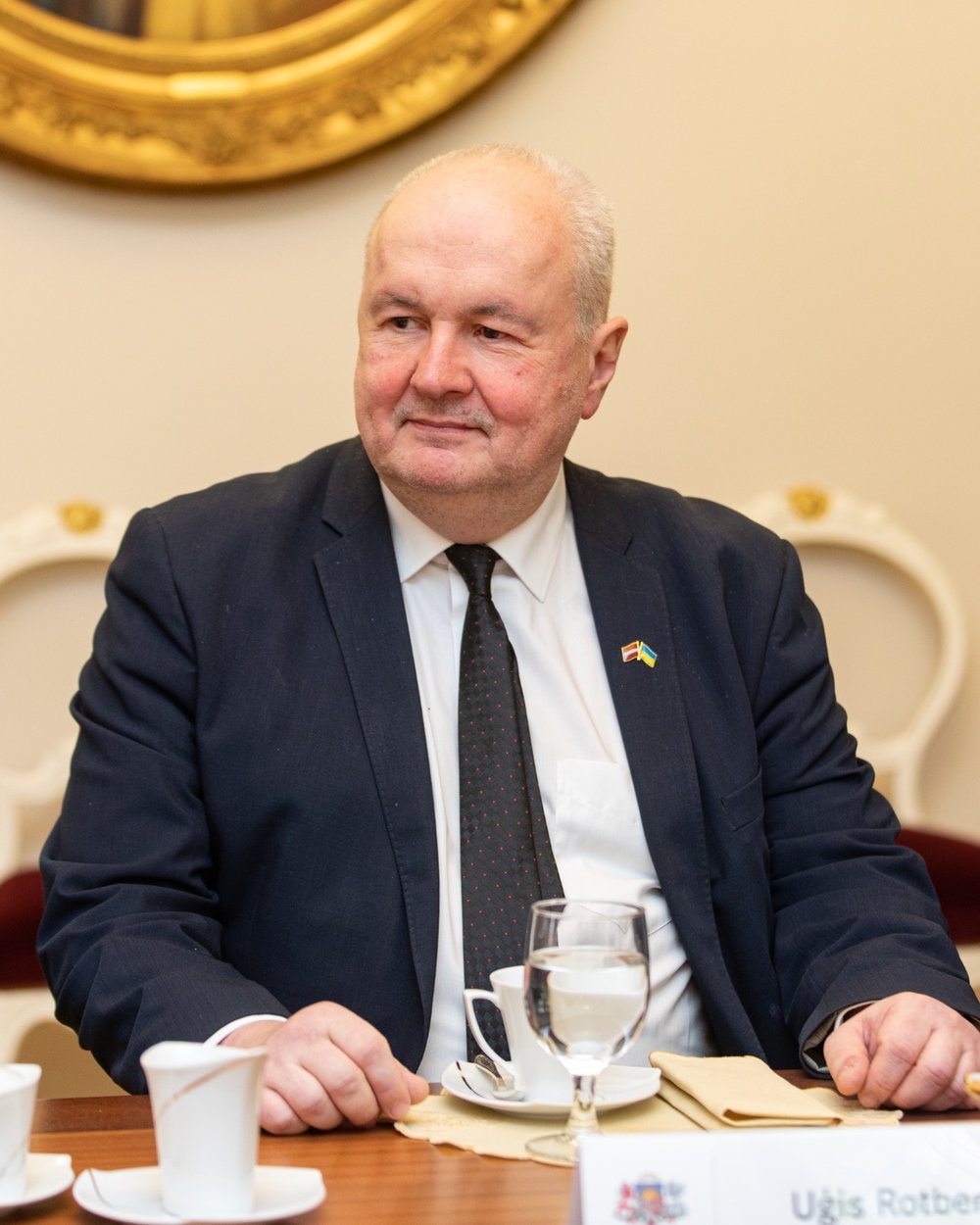
“The Committee reviews and grants a parliamentary mandate for the Latvian government's positions prior to the participation of sectoral ministers in EU Council meetings. Committee evaluates draft EU legal acts, monitors their timely and accurate transposition into Latvian legislation, and ensures adherence to the principles of subsidiarity and proportionality.
I am also co-Chair of the Security Committee of the Baltic Assembly (BA). The BA was created to promote inter-parliamentary cooperation among Estonia, Latvia, and Lithuania. It serves as a consultative and coordinating body where the three countries can align their political views and address regional cross-border issues.
Consequently, my parliamentary record remains entirely consistent with my founding political principles. Amid shifting global dynamics, Latvia's national security has emerged as a core focus of my work.”
When did you take on the role of Chair of the Latvia-Ireland Parliamentary Friendship group in the Saeima, and why?
“Right after the elections, I was approached by the outstanding politician and public figure, the former Chair of the Latvia-Ireland Parliamentary Friendship group Atis Lejiņš. Thanks to him, I volunteered for this position.
I had neither in-depth knowledge, nor experience regarding Ireland, therefore it seemed to be a very welcome challenge. Looking back, I can say that I have never regretted that decision and remain grateful for the opportunity.”
What impact can groups like this have on bilateral relationships?
“Much of the value is generated in personal interactions, not official meetings or conferences.
The format of parliamentary friendship groups gives the opportunity to learn more about each other’s values, motivations, actions.
It is almost impossible to get such personal insights from official documents. Politicians are also people who want to understand each other better.”
What similarities or differences do you see between Ireland and Latvia?
“This is the best question so far. This might be THE question for a lengthy friendship group meeting, and it also goes back to my previous answer about the importance of personal conversations and meetings – only because of those experiences can I give you a meaningful answer.
I am fascinated by how both our nations are deeply rooted in pagan traditions that revolve around fire, nature worship, and seasonal cycles. Despite our geographic distance and history of Christianisation, both Celtic and Baltic mythologies focus on maintaining a harmonious relationship with the natural world.
Much of the Irish pagan myths were documented by medieval monks. Latvia was among the last places in Europe to be Christianised, forced by violent crusades in the 13th century. Because the invaders suppressed native culture, our myths survived strictly in oral poetry. Yet, both our cultures split the year by cosmic cycles, celebrating with massive bonfires, dancing, and symbolic masking.
Both our cuisines are tied to the climate, agricultural roots, and historical survival. Both culinary traditions rely on hearty, comfort foods designed to sustain people through winters and long working days. Due to harsher winters and the need to preserve food for longer periods of time, Latvia has a more developed smoking and pickling tradition. Forests also supply an abundance of mushrooms and berries for subsistence.
In general, I think that Irish people are more outgoing and friendly, while Latvians are more reserved and calmer. Where else is such a perfected pub culture than in Ireland? On more serious note – both our nations spent centuries under foreign rule and fiercely protected our distinct cultural identities.”
Where do you see the future of Ireland-Latvia relations (including the parliamentary groups) heading?
“I see greater and deeper integration across the economic, cultural, and security sectors. Security-wise, we have a lot in common – including different hybrid threats, cyber-attacks, misinformation, underwater infrastructure protection, marine security.
One specific area of Latvian interest is our large diaspora in Ireland. Latvia would like to strengthen their belonging to their homeland through maintaining our language and cultural traditions.”
Ireland has 3 broad priorities for its EU Presidency: security, competitiveness and EU values - how do these align with Latvia’s EU priorities?
“Ireland’s priorities for the Presidency are self-evident and completely align with Latvian ones. Understanding that Presidency is about enhancing the entire EU’s competitiveness on global scale; however, this is also a Latvian domestic challenge.
Latvia promotes the EU values of democracy, the rule-of-law, human rights and dignity. As for a freedom loving country being together with other Baltic States on the Easter flank of the EU, security remains and will remain our highest priority.”