


Samhain at the Congressional Cemetery
Before Hallowe’en, there was Samhain. For centuries, communities across Ireland marked Samhain as the end of the harvest season and the beginning of winter. More than a turning of the year, it was a liminal moment when the veil between past and present, between the living and those who came before, was believed to grow thin. It was a time for remembrance, reflection and storytelling.
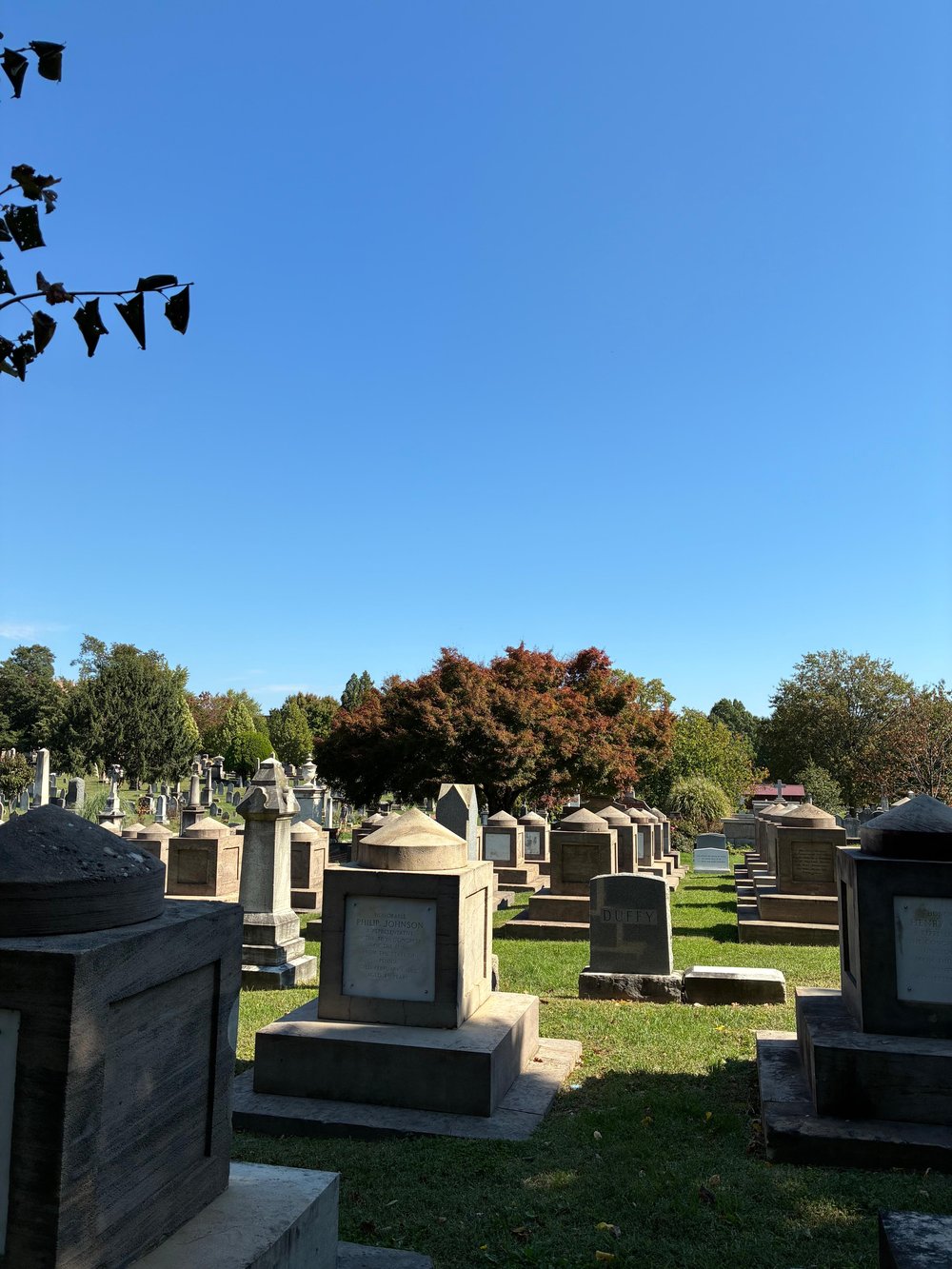
This Samhain, the Embassy of Ireland is partnering with the Congressional Cemetery in Washington, D.C. to uncover the stories of remarkable Irish men and women whose lives helped shape American history and whose final resting place lies in the U.S. capital.
For nearly two centuries, Congressional Cemetery has served as a repository of American history. Among the statesmen, soldiers, activists and pioneers buried there are Irish emigrants and Irish Americans whose journeys carried them from towns and villages across Ireland to the centre of some of the most significant chapters in the American story.
Their lives reflect the enduring Irish contribution to the United States.
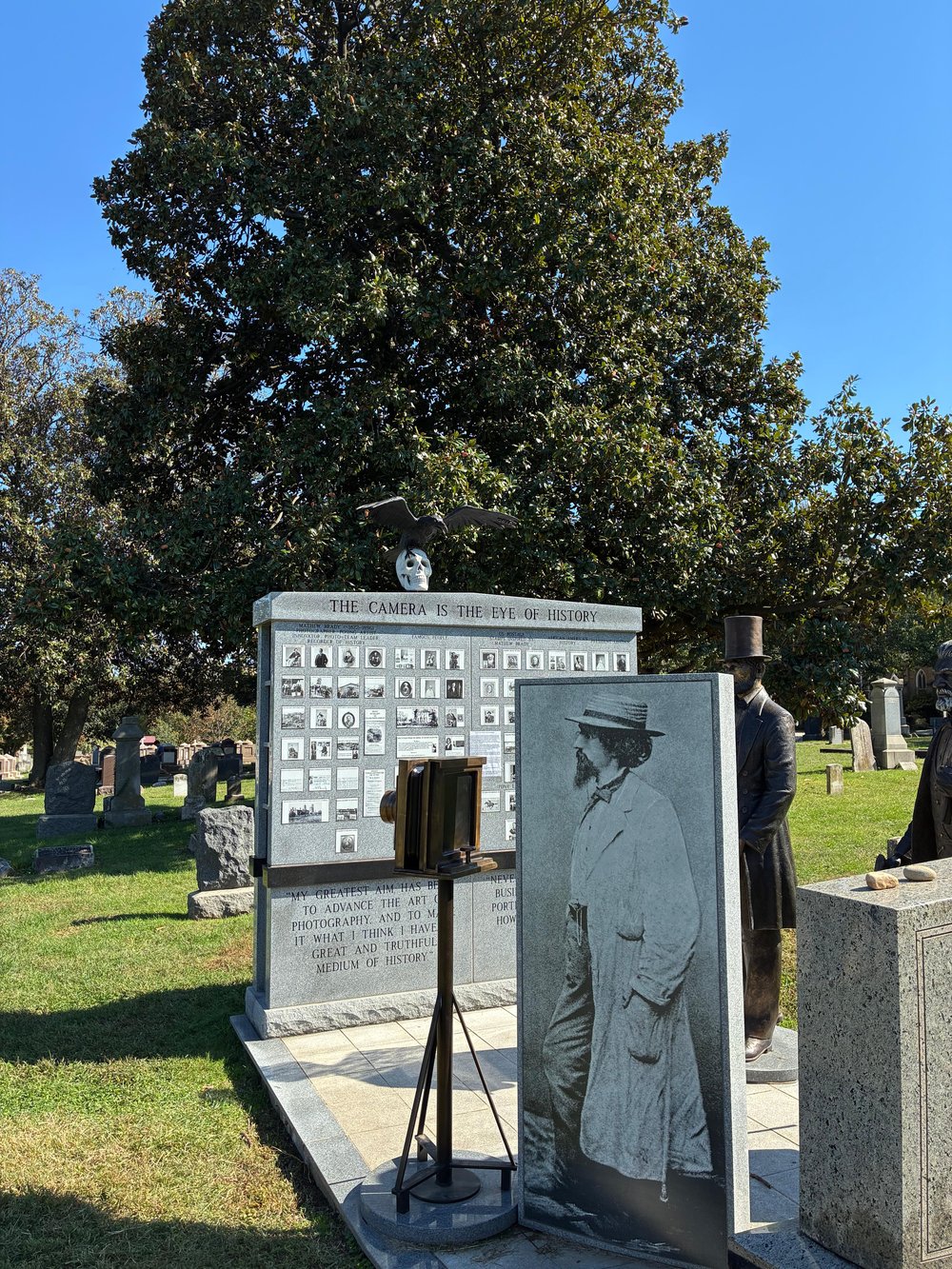
Mathew Brady: Capturing a Nation
Few people did to preserve the face of nineteenth-century America than Mathew Brady, widely regarded as the father of photojournalism.
Born to Irish immigrant parents, Brady became one of the most influential photographers. Long before smartphones, he recognised photography's power as an art, not simply to record history, but to bring it directly before the public. His portraits immortalised presidents, generals and public figures, while his groundbreaking documentation of the American Civil War transformed the way Americans understood conflict.
In 1862, Brady's team photographed the aftermath of the Battle of Antietam, the bloodiest single day in American military history. The resulting exhibition, The Dead of Antietam, confronted New Yorkers with stark images of fallen soldiers, bringing the brutal reality of war into public view in an unprecedented way. Audiences accustomed to heroic and often romanticised depictions of battle were instead faced with its devastating human cost.
Today, when we picture Abraham Lincoln, Frederick Douglass, Civil War soldiers or the United States at war with itself, we are often seeing them through Brady's lens. Through his pioneering work, Brady helped lay the foundations of modern photojournalism and left behind an irreplaceable visual record of a defining chapter in American history.
The Irish Women and Girls Who Answered the Call
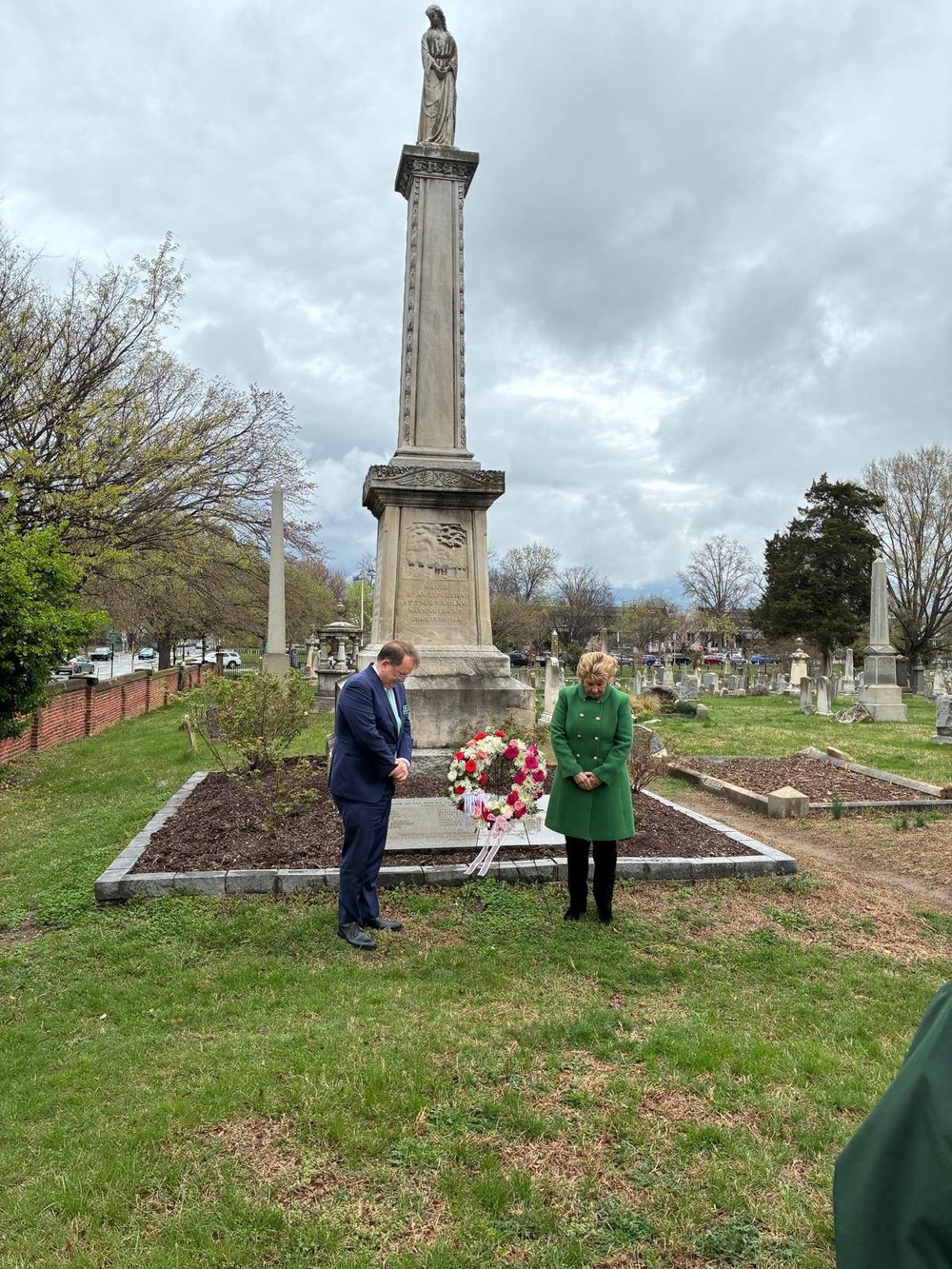
Among those commemorated at Congressional Cemetery are Irish immigrant women and girls who answered the wartime call for their adopted home. While we often think of the Irish men who took up arms in the Civil War in various Irish brigades, Irish women also played critical roles in the war effort. Many found employment in government workshops and munitions production, including at the Washington Arsenal (now Fort McNair).
Tragically, a catastrophic explosion at the Washington Arsenal in June 1864 killed 21 young women workers, most of whom were young Irish immigrants. Far from their families and country of birth, they became victims of the deadliest civilian disasters in the war.
Their deaths shook the capital, and indeed the nation. President Abraham Lincoln himself served as chief mourner at their funeral, joined by Secretary of War Edwin Stanton.
Soon after the tragedy, fellow citizens of Washington, D.C. and Congress commissioned a monument to the victims, selecting an Irish-American, Lot Flannery, to design and build the monument. The largest monument in the Congressional Cemetery, the Arsenal Monument serve as a poignant reminder of the sacrifices ordinary immigrant women made, even as history often overlooked their contributions.
Thomas Fitzpatrick: From Cavan to the American West
Another Irish story buried at Congressional Cemetery stretches deep into the mythology of the American frontier.
Born in County Cavan, Thomas Fitzpatrick, nicknamed as “Broken Hand,” emigrated to the United States and became one of the great mountain men, explorers and trailblazers of the American West. He travelled vast distances across the continent, guided wagon trains, forged relationships with Native American communities and played an important role in opening routes that would shape America's westward expansion.
His extraordinary journey from rural Ireland to the frontiers of North America speaks to the global reach of the Irish diaspora and the many different paths emigrants forged in pursuit of opportunity.
William Boyd: A Conductor on the Underground Railroad
William Boyd is remembered for his role as a conductor on the Underground Railroad, the network that helped enslaved people escape bondage and seek freedom. A tailor by trade, Boyd helped ferry people in a secret compartment in his wagon from the south to non-enslavement states.
Unfortunately, Boyd was caught in Maryland and sentenced to years in prison for hiswork
His commitment to justice reflected the values and convictions that inspired many immigrants to engage in public life and social reform in their adopted homeland.
Remembering Through Storytelling
At Samhain, remembrance is not simply an act of looking back. It is an opportunity to reconnect with the lives, experiences and sacrifices that continue to shape the present.
The stories preserved at Congressional Cemetery reveal the breadth of the Irish experience in America: innovators and adventurers, workers and reformers, women and men whose lives intersected with some of the most important moments in United States history.
As the evenings draw in and the veil between past and present grows thin, these stories invite us to pause and remember the generations who came before us. Their journeys began in Ireland, but their legacies became part of a shared Irish-American story that continues to resonate today.
This Samhain, through our partnership with Historic Congressional Cemetery, we honour their memory and celebrate the enduring connections between Ireland and the United States.
To learn more about the Congressional Cemetery, please visit www.congressionalcemetery.org.
You may also be interested in these articles
26 August 2026
Embassy Commemorates 150th Anniversary of the Catalpa Rescue
In partnership with the National Library of Ireland, the Embassy of Ireland, USA was proud to host a special commemoration marking the 150th anniversary of the Catalpa Rescue, celebrating an extraordinary episode of Irish-American cooperation and one of the most remarkable acts of international cooperation in Ireland's struggle for independence.
Read more
24 July 2026
Countdown to the 2026 Aer Lingus College Football Classic
In partnership with ESPN and with support from Diageo and Irish American Events, the Embassy was proud to host a reception in celebration of the 2026 Aer Lingus College Football Classic.
Read more
1 July 2026
Celebrating America250
Ahead of America's semiquincentennial, the Embassy was proud to host a reception celebrating 250 years of shared history between Ireland and America and the 23 U.S. Presidents who descended from the island of Ireland.
Read more
22 June 2026
Ireland at Capital Pride 2026
The Embassy of Ireland, USA was proud to march alongside members of the Irish community in the 2026 Capital Pride Parade, showing support for the LGBTI+ community.
Read more