


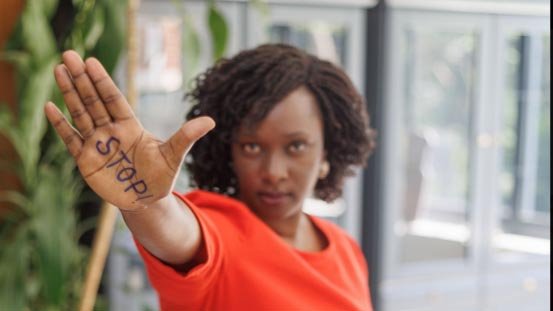
16 Days of Activism Against Gender-Based Violence in Uganda
The 16 Days of Activism Against Gender-Based Violence is an annual global campaign dedicated to raising awareness, strengthening advocacy, and mobilising action to end violence against women and girls.
Running from 25 November, the International Day for the Elimination of Violence Against Women to 10 December, Human Rights Day, the campaign demonstrates that gender-based violence (GBV) is a human rights issue.
>> Watch video series filmed in Uganda for 16 Days of Activism campaign
Social justice movement
Since its inception in 1991 by the Center for Women’s Global Leadership, the campaign has grown into one of the world’s most recognised social justice movements. It engages governments, civil society, UN agencies, private sector actors, schools, and grassroots communities across more than 180 countries.
At its core, the campaign seeks to amplify survivors’ voices, promote accountability, and strengthen the implementation of laws and policies intended to protect women and girls. It also aims to challenge harmful social norms and encourage community dialogue. By doing this we can inspire individuals to take practical actions from reporting and preventing violence to supporting survivors’ access to justice, health, and psychosocial services.
Developing policy to prevent violence
A key emphasis for 2025 was on intersectionality, recognising how age, disability, displacement, socio-economic conditions, and digital spaces shape people’s experiences of violence.
Over the years, the campaign has helped elevate GBV as a priority on international agendas, leading to strengthened policy frameworks such as national action plans on GBV, comprehensive domestic violence laws, and increased funding for survivor-centred services.
Collective action shifting public perceptions
The 16 Days of Activism Against Gender-Based Violence has driven collective action, including community dialogues, school engagement programmes, men’s involvement initiatives, and large-scale media efforts that have shifted public perceptions.
Globally, it has supported the growth of movements like #MeToo and spotlighted emerging issues such as online harassment, technology-facilitated violence, and the heightened vulnerabilities of women in conflict settings. Many countries now use the 16 Days as a platform to launch national GBV reports, publish updated statistics, announce new commitments, or reinforce coordination among stakeholders.
Calling for meaningful action
Despite persistent challenges, including underreporting, limited resources, and entrenched social norms, the campaign has played a critical role in sustaining momentum and reinforcing that GBV is preventable.
The 16 Days of Activism 2025 will continue to call for collective responsibility urging communities, institutions, and governments to move beyond awareness and drive meaningful, measurable action that protects the rights, dignity, and wellbeing of women and girls everywhere.
16 days of activism in Uganda
The Embassy of Ireland, Uganda developed the following videos for the 16 Days of Activism 2025 speaking with experts in the field, highlighting progress made and new challenges.