


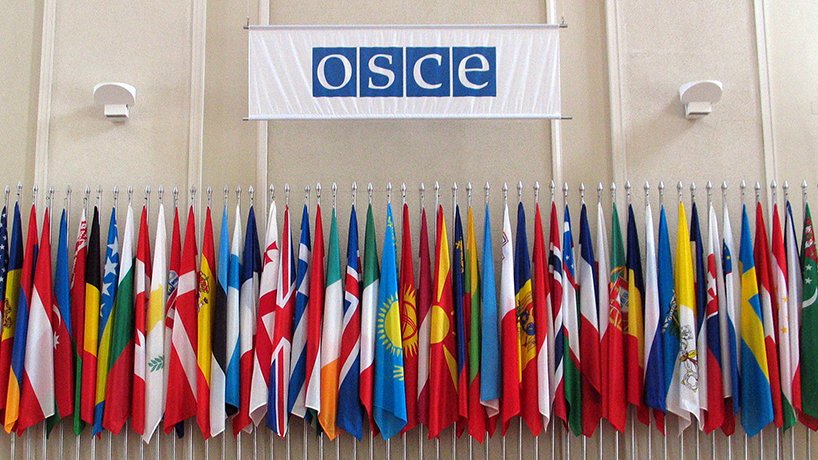
About the OSCE and its participating States
Overview of the OSCE
With 57 participating States, the Organization for Security and Co-operation in Europe (OSCE) is the world’s largest regional security organisation and is the primary instrument for early warning, conflict prevention, crisis management and post-conflict rehabilitation in Europe, Central Asia and North America.
All 57 participating States enjoy equal status and decisions are taken by consensus on a politically but not legally binding basis.
The OSCE has a comprehensive and cross-dimensional approach to security that encompasses politico-military, economic and environmental, and human aspects.
It therefore addresses a wide range of security-related concerns, including arms control, confidence and security-building measures, human rights, persons belonging to national minorities, democratisation, policing strategies, counter-terrorism and economic and environmental activities.
See the OSCE website for a full breakdown of all the different roles and structures.
Participating states of the OSCE
The OSCE has 57 participating States from Europe, Central Asia and North America
| Albania | Andorra | Armenia |
| Austria | Azerbaijan | Belarus |
| Belgium | Bosnia and Herzegovina | Bulgaria |
| Canada | Croatia | Cyprus |
| Czech Republic | Denmark | Estonia |
| Finland | France | Georgia |
| Germany | Greece | Holy See |
| Hungary | Iceland | Ireland |
| Italy | Kazakhstan | Kyrgyzstan |
| Latvia | Liechtenstein | Lithuania |
| Luxembourg | Malta | Moldova |
| Monaco | Montenegro | Mongolia |
| Norway | Poland | Netherlands |
| Romania | Russian Federation | Portugal |
| Serbia | Slovakia | San Marino |
| Spain | Sweden | Slovenia |
| Tajikistan | North Macedonia | Switzerland |
| Turkmenistan | Ukraine | Türkiye |
| United States | Uzbekistan | United Kingdom |