


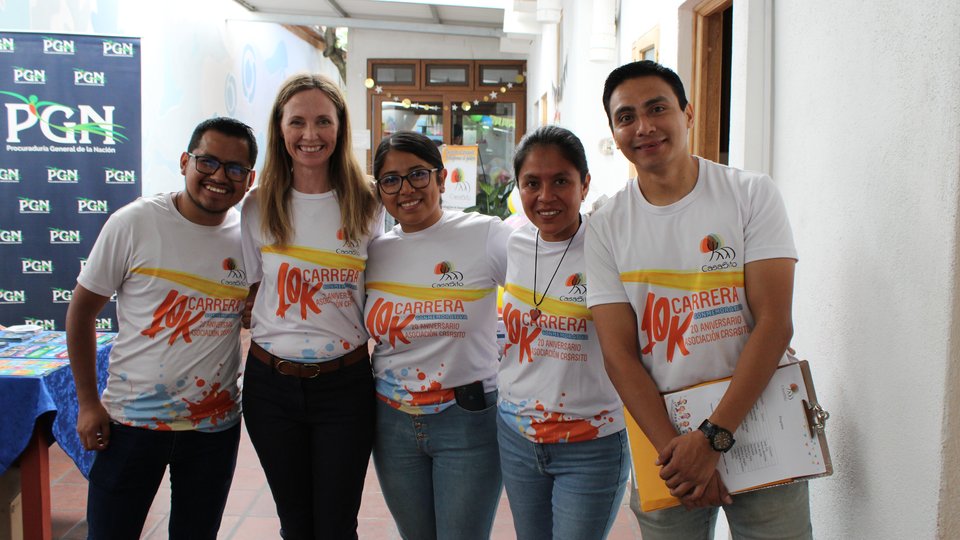
Building connections through education: Meet Helena Murphy
Guatemala and Ireland have strong bonds based on partnerships in humanitarian work, education and climate justice.
However, these bonds are made real by the work and connections built by people across both countries. One such person building strong ties between our two countries is Helena Murphy, an Irish woman working to help indigenous Guatemalans access education.
Meet Helena Murphy
Born and raised along the Ring of Kerry, Helena Murphy always dreamt of traveling and felt a strong pull from a young age to explore the world.
After completing a degree in Communications in Dublin, Helena spent a number of years in London working in post-production before making a career change and going back to university to study for a master’s in Social Work, a goal Helena had held for over a decade. She then went on to work in adult social services as part of a community support team.
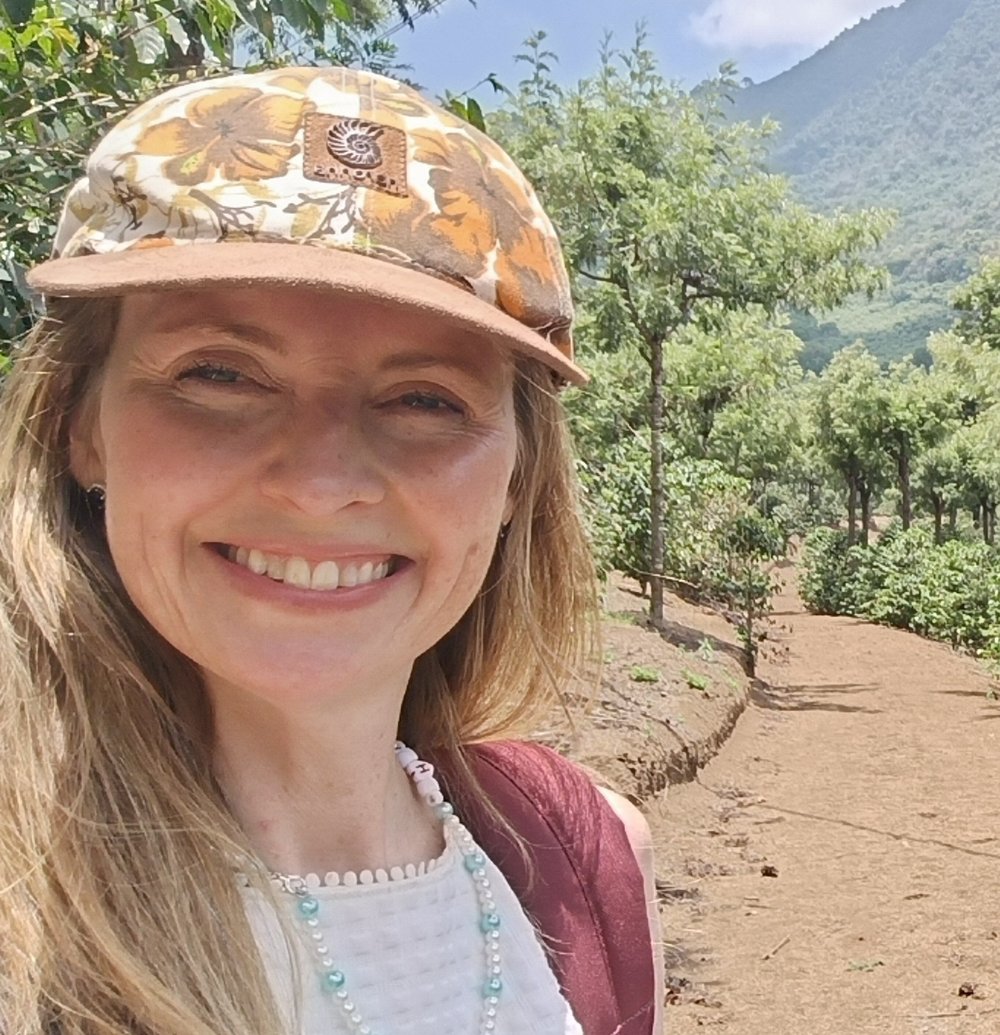
A few years on, Helena decided to take a sabbatical to travel in Latin America. Guatemala was part of that adventure, but it wasn’t until almost two years later that she returned to settle in the country.
Helena devoted her early years in Guatemala to raising her three children while also taking on voluntary community-based work. Since early 2024, she has been working with CasaSito Association, a Guatemalan charity that created holistic youth and teacher programs focused on education and life skills training to break the cycle of poverty.
We sat down with Helena Murphy to hear about her life in Guatemala, her Irish heritage and the impactful work she is doing abroad.
Read the interview with Helena Murphy
How has your Irish background influenced your work in Guatemala?
“My Irish background has always influenced my life’s choices and my approach to leadership. Even after two decades of living abroad, I have never felt disconnected from my identity and culture. That connection comes from my upbringing and the importance my family placed on never forgetting where we come from. Remembering my past, my family’s history, is deeply ingrained in me.
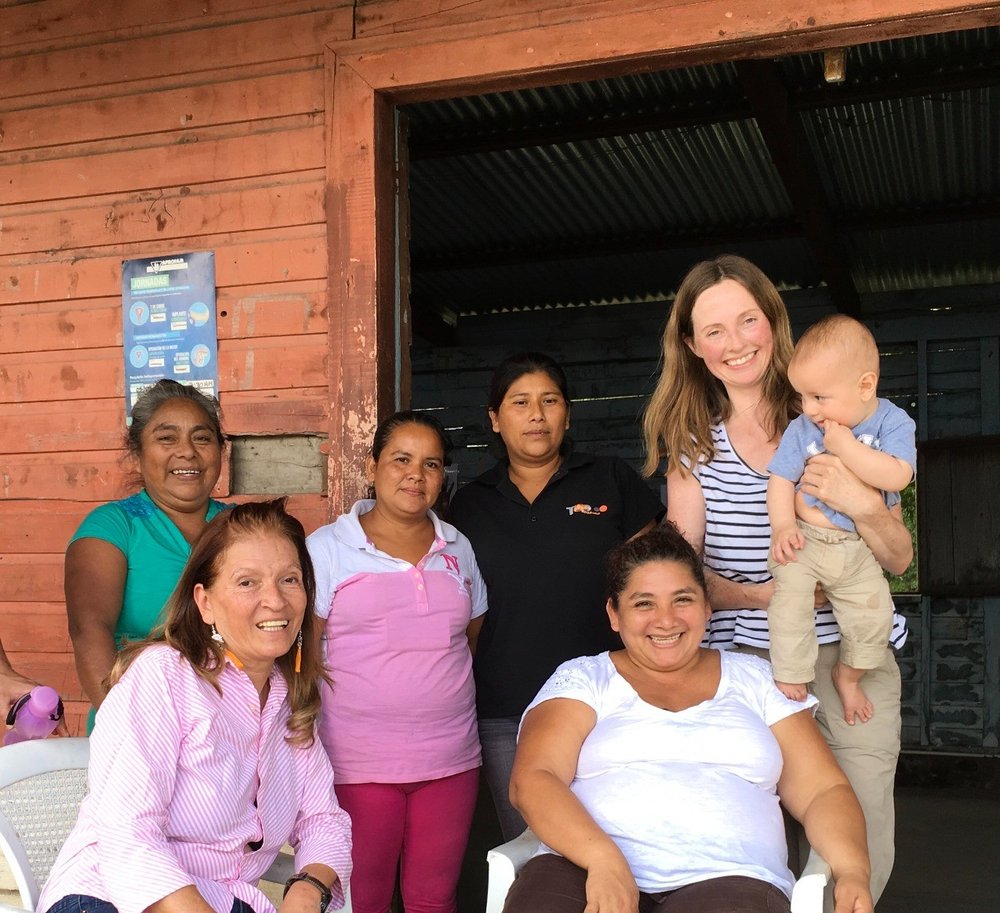
When I first came to Guatemala, it was for travel and discovery, to learn about its history and culture. This was a dream inspired by my early love of history, especially advanced civilizations; much like Ireland once was before colonisation. Over the years, I have noticed many parallels between Ireland’s history and present-day Guatemala.”
While their contexts are distinct, the people share resilience, a deep sense of community, and pride in their cultural identity. These shared traits continue to shape my work, inspiring me to lead with empathy, honour and respect local traditions, and work together with my Guatemalan peers for lasting, positive change.
How did you first become involved with CasaSito, and what inspired you to take on the role of Fundraising and Communications Manager?
“The opportunity to work with CasaSito came about quite naturally at a time when I was seeking a new professional challenge in Guatemala, after dedicating my early years here to my family. During my time in the country, I volunteered and participated in various fundraising efforts, most notably following the volcanic eruption in 2018.
It was when CasaSito’s collaborated on a project my partner and I had started with high-risk communities around the volcano, that I learnt of their work. The project installed an alarm system to alert residents when evacuation was necessary. Our community-centered approach aligned closely with CasaSito’s values. With over 20 years of experience in youth development, CasaSito has a strong and well-known reputation in the area where I live.”
“The community here is relatively small, much like rural Ireland, and news travels fast, so I often heard about their work as well as crossed paths with the founders, Alice and Greg. As a social worker and someone who loves to share information, I once shared a funding opportunity with CasaSito, which led to an initial informal conversation about the organisation and this role.
I was inspired to apply as it would mean that I would be part of this grassroots Guatemalan organization that would not only challenge me but also allow me to contribute to transforming lives and future generations.”
Could you share an example ofthe meaningful impact CasaSito has had on a local community?
“My role means that to communicate impact, I need to hear the real stories of the young people, teachers, and parents who are part of our programs. In a country where only 25%of young people complete secondary school, with high levels of poverty, malnutrition, and gender inequality, it is encouraging to see the difference being made, and this motivates me more than anything else.
CasaSito’s impact can be seen in many ways. At first, the numbers might seem small, but looking beneath the surface reveals the real ripple effect of their work on families and communities. CasaSito’s programs aim to break the cycle of poverty through education and help young people to thrive.
Take the community of San Cristóbal Verapaz, for example. It is a beautiful town nestled among rolling green hills in a culturally rich region where most people are Indigenous Mayan. However, over 90% of families live below the poverty line, and the town still carries the scars of a 36-year civil war that ended less than 30 years ago."
127
Supported 16 teachers, 111 young people and their families
12
Impacted 12 communities in 3 regions of Guatemala
93%
93% of youth scholars earned final school grades above 75%
"All of CasaSito’s team in the region come from this community, so they truly understand the challenges young people face today. Many of the youth we work with have parents who never went beyond primary school. Yet these young people are not just passing their classes; they are graduating from secondary school with high marks, and many are going on to university. Young women, in particular, are gaining support and opportunities to dream big rather than feeling pushed to drop out and focus solely on domestic work. This shift is opening new doors and changing how families see the role of women.
One of our social workers was once a youth scholar herself. She recently graduated from university and now works for CasaSito, helping young people to dream and succeed. Another young woman, soon to graduate with a nursing degree, hopes to return to her community and open a clinic to help local people access healthcare. A mother who initially wanted her daughter to stay home and help with chores, believing education would not benefit her, has since altered her opinion, supporting her daughter’s determination to study. This mother has even joined CasaSito’s adult literacy course.”
CasaSito’s holistic approach means the work is not just about academics. The organisation works closely with families and schools, supporting mental health as much as academic success and teaching young people important life skills and social responsibility. When one child succeeds in school, it gives hope to the whole family and inspires younger siblings to aim higher. And this we see time and time again.
I love getting involved in program activities, witness the team in action, go out into communities, visit young people at home, and visit schools. This puts my work into perspective and gives me purpose and drive.”
As a member of the Irish diaspora working in Guatemala, how do you see the role of international leaders engaged in community development in Central America?
“I believe the role of international leaders in community development has shifted significantly. Thankfully, it is no longer about assuming you know best or bringing ready-made solutions. Instead, it is vital to listen to local communities and involve them in every step of the process. In my work, I am guided by the insights and expertise of Guatemalans on the ground.
Here in this part of Central America, community is at the heart of life. People survive, support one another, and live within close-knit communities. That is why it is essential for international leaders to listen to and work alongside local people, ensuring development efforts respect and strengthen communities.
As international leaders you have experience, knowledge, insights and solutions, but if you do not engage the people on the ground and involve the community where you want to solve a problem, you risk failure. True sustainability in community-based work requires an approach that engages all key stakeholders and considers the community’s needs and context.”
What advice would you give to young Irish or Central American people who are looking to cross cultural boundaries and engage in community-based work?
“My advice is to do your homework first. Learn as much as you can about the community and context beforehand, but also engage directly with local leaders, community members, and organizations working in the area.
Language matters. Making an effort to learn and speak the local language shows respect and helps deepen connections. You might not be fluent, but people will appreciate your effort, and it may even open doors.
Keep an open mind. Listen carefully and be ready to adapt, as what works in one place may not fit another. Communicate openly within cross-cultural teams and be willing to navigate cultural norms that may be new to you.
Never underestimate the importance of building trust. From my own experience in rural Guatemala, success in community-based work often depends on it. Without trust, you may find it difficult to achieve your mission, and in some cases, you may not even be welcomed in.”
Core values like trust, respect, collaboration, and transparency often make the difference between success and failure. It can be a long road at times, but the outcome is deeply rewarding when shared with the community where you work.
Looking back, what would you say has been the greatest lesson you’ve learned as a leader working between cultures?
“Ultimately, the greatest lesson I’ve learned is that leadership requires humility, openness, and a genuine commitment to collaboration and shared values. It is this commitment that can truly unite us.
Working across cultures is enriching, embrace it. It does not mean you need to change who you are. Authenticity and being down to earth matter to me. I value genuine connections, and my experiences over the years have opened my eyes in many ways.
On a personal level, my children are Guatemalan-Irish. Guatemala is not just where I live and work, it’s where I’m raising my children. That makes my hopes for a better future here all the more real, not just for them, but for every child and young person.”