


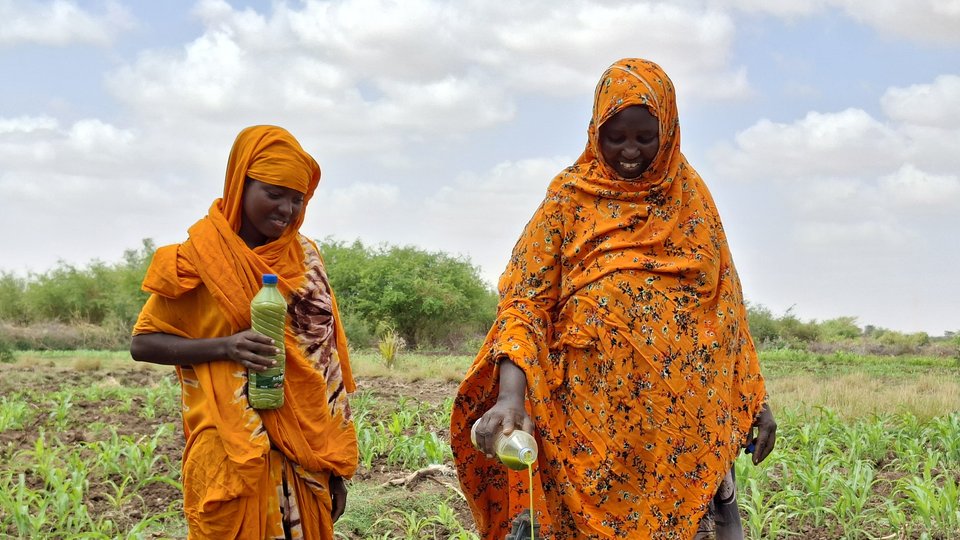
Building resilience through sustainable farming in Somalia
In Busley village in Dollow district, Gabay Yussuf, a mother of eight, has experienced this first-hand. Poor soil, pests, crop diseases, and scarce water often left her farm producing barely enough to feed her family. Seasonal droughts and flash floods destroyed what little she could grow.
With support from Irish Aid, Nomadic Assistance for Peace and Development (NAPAD), working in partnership with Trócaire, provided 150 farmers, including Gabay, with drought-tolerant seeds such as maize, cowpeas, watermelon, and coriander, along with essential farming tools.
Farmers also received practical agroecology training on improving soil, rotating crops, composting and using natural methods to manage pests. Gabay applied these techniques on her own land.
We’ve learned how to handle pests, crop diseases, and even make our own organic fertiliser, problems that used to keep our harvests so low.
The impact has been significant. Where farmers previously harvested four to five sacks of maize, they harvested fourteen sacks from the same land providing reliable access to food, and she is better prepared for difficult weather conditions.
As more farmers adopt these approaches, crop yields are improving across the community. With support from Irish Aid, Gabay and other farmers are turning knowledge and effort into better harvests, creating more stable livelihoods for their families and increasing food production in their communities.