
Half century of diplomatic ties
Ireland and Hungary, 50 years
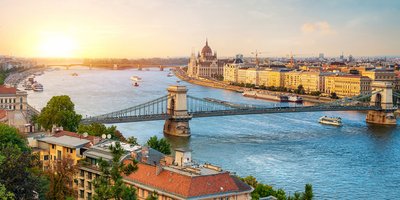
Two thousand kilometres apart, Ireland and Hungary’s ties can be traced back over a millennium. Even before the Magyar settlement, Celts lived by the Danube basin. The great river owes its name to the Celtic Goddess Danu whose children, the Tuatha Dé Dannan, were Ireland’s first mythological settlers.
Across the centuries, Ireland and Hungary’s bonds were forged through shared Christian heritage and histories of invasion, occupation and – often failed – revolution. From these parallels sprang innumerable cultural and community connections.
The friendship between our nations was formalised in 1976 through the establishment of diplomatic relations between our states. But, like the Danube, the course of our history runs deeper. Marking the 50th anniversary of those ties, this exhibition celebrates a millennium of MagyÍr heritage.

Across the middle ages, renaissance and reformation, Ireland and Hungary’s bonds were forged through shared Catholic heritage and histories of invasion and occupation.
-
1069
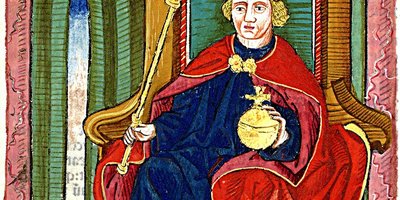
King Géza I of Hungary brought relics of the Irish pilgrim monk St Colmán of Stockerau, son of Máel Sechnaill, High King of Ireland, from the Abbey of Melk in Austria to the Basilica of Székesfehérvár.
-
1400-1500
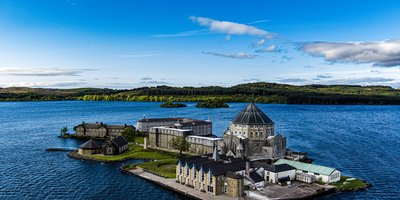
First recorded Hungarian visits to Ireland were pilgrimages to St. Patrick’s purgatory in Lough Derg, first in 1353 by György, a knight of King Louis the Great, then in 1411 by cleric Lőrinc Tar.
-
1655
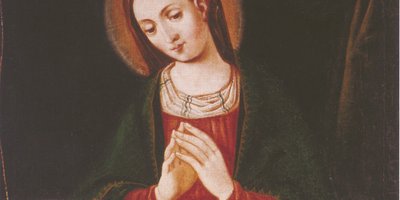
Walter Lynch, Bishop of Clonfert, fled Galway in the wake of Cromwell’s invasion to Győr, bringing a portrait of Our Lady. Housed in Győr’s Cathedral, the ’’Irish Madonna’’ was reported to weep blood on St Patrick’s Day 1697.
-
1680s
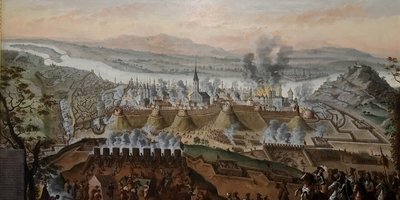
Irish Count Francis Taaffe of Ballymote, General and Chief of Staff to Charles V and the Duke of Lorraine, were some of the Irish to take part in the campaign against the Ottomans, recapturing Buda in 1686 and triumphing in the 2nd Battle of Mohács in 1687.

Through the 18th, 19th and early 20th centuries, Hungarian and Irish reformers and revolutionaries inspired each other in leading national cultural revivals and pressing for independence.
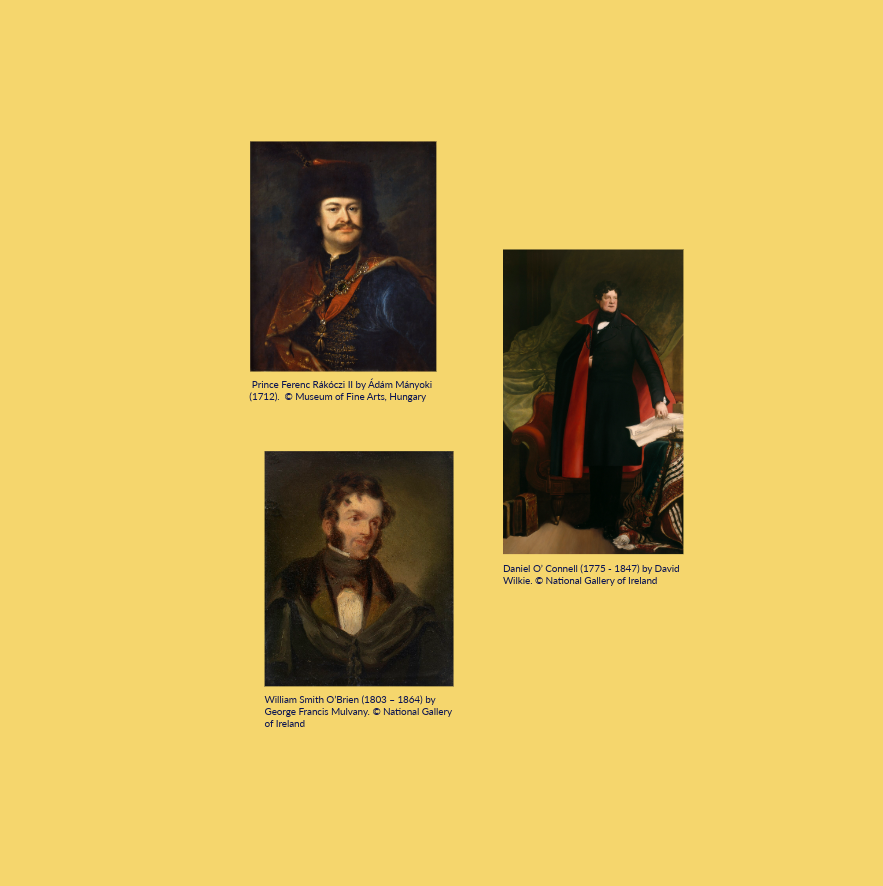
18th century
Prince Ferenc Rákóczi II, who from 1703-1711 led a campaign for independence from the Habsburgs, argued that Austria handled Hungary as England then did Ireland, treating it ‘‘as a conquered country’’ without ‘‘ever having conquered it’’. Through the early 1840s, in the pages of Pesti Hírlap, Lajos Kossuth, future leader of Hungary’s 1848 revolution, regularly cited the achievements of Daniel O’Connell, the ‘Liberator’, who emancipated Ireland’s Catholics.
William Smith O’Brien, Irish revolutionary (1803 –1864), met Count Béla Széchenyi, Ferenc Deák and others on a visit to Hungary, reflecting afterwards that “The case of Ireland is as nearly as possible parallel to the case of Hungary.’’ Others, including Thomas Davis, John Mitchell and Michael Davitt, were similarly inspired by Hungarian reformers.

18th century
Prince Ferenc Rákóczi II, who from 1703-1711 led a campaign for independence from the Habsburgs, argued that Austria handled Hungary as England then did Ireland, treating it ‘‘as a conquered country’’ without ‘‘ever having conquered it’’. Through the early 1840s, in the pages of Pesti Hírlap, Lajos Kossuth, future leader of Hungary’s 1848 revolution, regularly cited the achievements of Daniel O’Connell, the ‘Liberator’, who emancipated Ireland’s Catholics.
William Smith O’Brien, Irish revolutionary (1803 –1864), met Count Béla Széchenyi, Ferenc Deák and others on a visit to Hungary, reflecting afterwards that “The case of Ireland is as nearly as possible parallel to the case of Hungary.’’ Others, including Thomas Davis, John Mitchell and Michael Davitt, were similarly inspired by Hungarian reformers.
19th century
“I fear a dog breed large enough for my tastes does not exist!” Empress Elisabeth (Sisi) once remarked. But she found one in the Irish wolfhound. Her favourite, “Shadow”, was aptly named, travelling always by her side, including on visits to Ireland in 1879 and 1880. A statue of the Empress and Shadow, by János Meszlényi Molnár, was unveiled in Budapest’s XX. District in 2004.
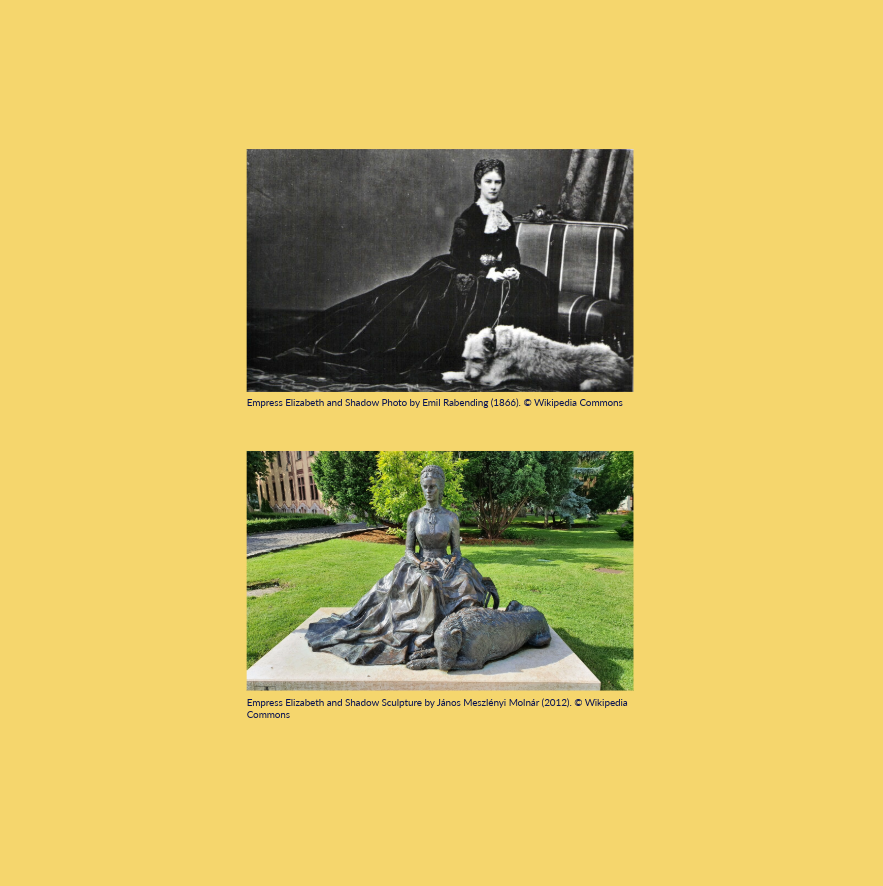
19th century
“I fear a dog breed large enough for my tastes does not exist!” Empress Elisabeth (Sisi) once remarked. But she found one in the Irish wolfhound. Her favourite, “Shadow”, was aptly named, travelling always by her side, including on visits to Ireland in 1879 and 1880. A statue of the Empress and Shadow, by János Meszlényi Molnár, was unveiled in Budapest’s XX. District in 2004.


Arthur Griffith, founder of Sinn Féin and later President of Dáil Éireann, published The Resurrection of Hungary: A Parallel for Ireland, arguing for Irish nationalists to follow Hungary’s example of passive resistance and abstentionism.

Writers played a seminal role in the cultural revivals and independence movements of both nations. Across the 19th century, Ireland and Hungary’s leading poets found parallels in the patriotism of their respective causes.
‘‘Forget not the field where they perish’d, The truest, the last of the brave, All gone — and the bright hope we cherish’d Gone with them, and quench’d in their grave!’’
- From ‘‘Forget Not the Field’’ by Thomas Moore
Three of the giants of Hungarian letters – Sándor Petőfi, Mihály Vörösmarty and János Arany – penned translations of their Irish contemporary Thomas Moore’s ‘‘Forget Not the Field’’, a paean to Irish patriots.

‘‘Turn the hearts of the kings – let the Magyar again Reap the harvests of peace on his bountiful plain; And if not with renown, with affections and lives, Send the driven serfs home to their children and wives’’
- From ‘‘Hungary’’ by Samuel Ferguson
In 1848, Samuel Ferguson’s ‘‘Hungary’’ appeared in the Dublin University Magazine, an epic lament to news of the Revolution’s defeat
‘‘We, too, have seen our bravest and our best To prisons go, and mossy ruin rest Where homes once whitened vale and mountain crest; Therefore, O nation of the bleeding breast, Libations, from the Hungary of the West."
- From ‘‘How Ferencz Renyi Kept Silent’’ by WB Yeats
Inspired by the heroes of Hungary’s 1848 revolution, William Butler Yeats’ ‘‘How Ferencz Renyi Kept Silent’’ was published in Arthur Griffith’s The United Irishman in 1903. In it, the future laureate famously hailed Ireland as ‘‘the Hungary of the West’’.

Written across Trieste, Zurich, and Paris through the years of the ‘Great War’, James Joyce’s Ulysses is the most Dublin of novels. But it has a Hungarian heart – its protagonist, Leopold Bloom, is the son of Jewish Hungarian, Rudolf Virág, born in Szombathely.
Since 1994, Szombathely has held a major festival each Bloomsday to celebrate its Joycean heritage. Blum-House was inaugurated in 1997, having served as home to author Hungarian Márton Blum and his family from the mid-19th century, with a stunning Joyce statue unveiled there on Bloomsday’s centenary in 2004.
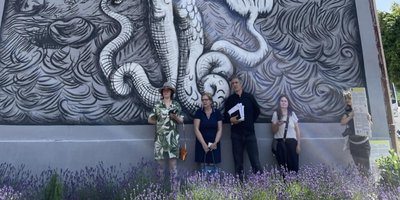
In 2020, in partnership with the Embassy of Ireland and the Dublin Project Arts Centre, Szombathely launched an ambitious new project, commissioning Irish and Hungarian artists to create murals inspired by each of Ulysses’s 18 episodes.

Since 2011, the Leopold Bloom Art Foundation, established by Irish entrepreneurs Mary McLoughlin and John Ward, has honoured outstanding contemporary Hungarian artists with one of central Europe’s most prestigious prizes. In 2024, the Foundation loaned its permanent collection to the Szombathely gallery.
In 2023, the city of Budapest marked its 150th anniversary by publishing Budapest Nagyregény, The Grand Budapest Novel, a collaborative literary project inspired by Ulysses where 23 Hungarian writers each contributed a chapter, one for each of the city’s districts. The publication was part of a larger European Odyssey, which explores Joyce’s novel across 18 European cities.

Four decades after the Easter 1916 rising, the Irish people were profoundly moved by the heroism of Hungarians’ revolution against Soviet oppression.
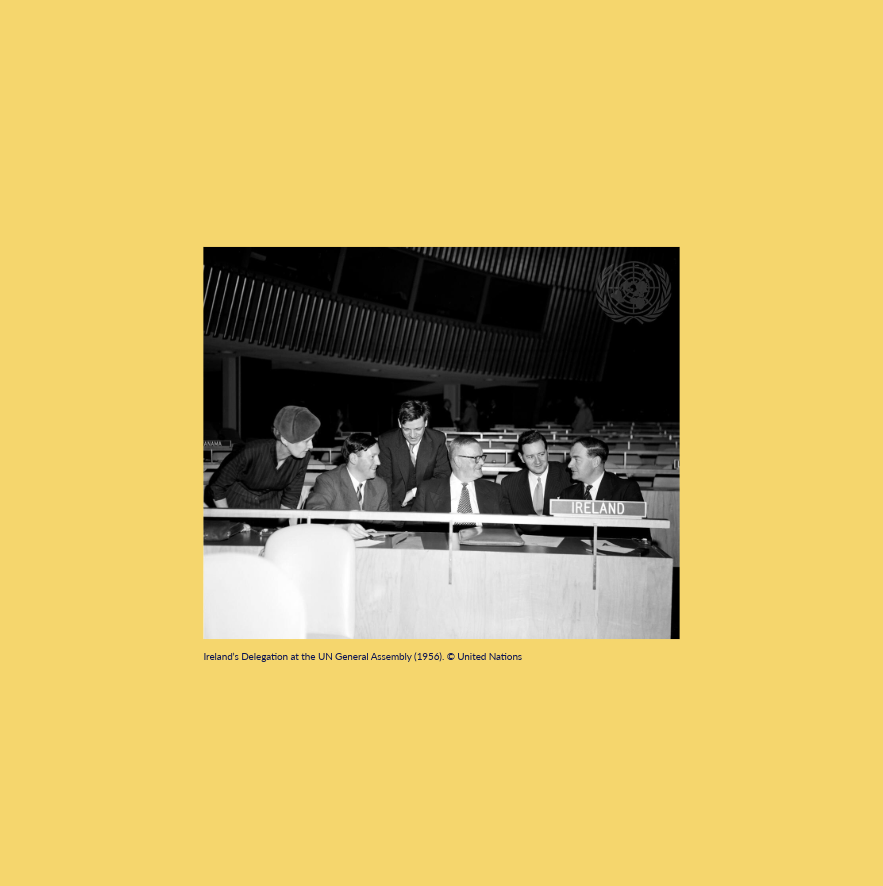
Admitted to the UN in 1955, Ireland’s first major speeches to the General Assembly stressed its solidarity with Hungary.
Addressing a Special Assembly on 8 November, Frederick H. Boland, Ireland’s first Permanent Representative to the UN, said that:
‘‘I know that for us in Ireland – and I venture to think that for the peoples of many other of the smaller nations represented here – any mention in the future of national independence or anti-colonialism or the right of self determination by any spokesman of the Soviet Union will always evoke in our minds a single name, a name on which the courage and endurance of a very gallant people have shed a great and undying glory, the name of Hungary.’’

Admitted to the UN in 1955, Ireland’s first major speeches to the General Assembly stressed its solidarity with Hungary.
Addressing a Special Assembly on 8 November, Frederick H. Boland, Ireland’s first Permanent Representative to the UN, said that:
‘‘I know that for us in Ireland – and I venture to think that for the peoples of many other of the smaller nations represented here – any mention in the future of national independence or anti-colonialism or the right of self determination by any spokesman of the Soviet Union will always evoke in our minds a single name, a name on which the courage and endurance of a very gallant people have shed a great and undying glory, the name of Hungary.’’
In his historic address to Dáil Éireann, in June 1963, President John F Kennedy recalled that intervention.
‘‘For knowing the meaning of foreign domination, Ireland is the example and inspiration to those enduring endless years of oppression. It was fitting and appropriate that this nation played a leading role in censuring the suppression of the Hungarian Revolution, for how many times was Ireland’s quest for freedom suppressed only to have that quest renewed by the succeeding generation?’’
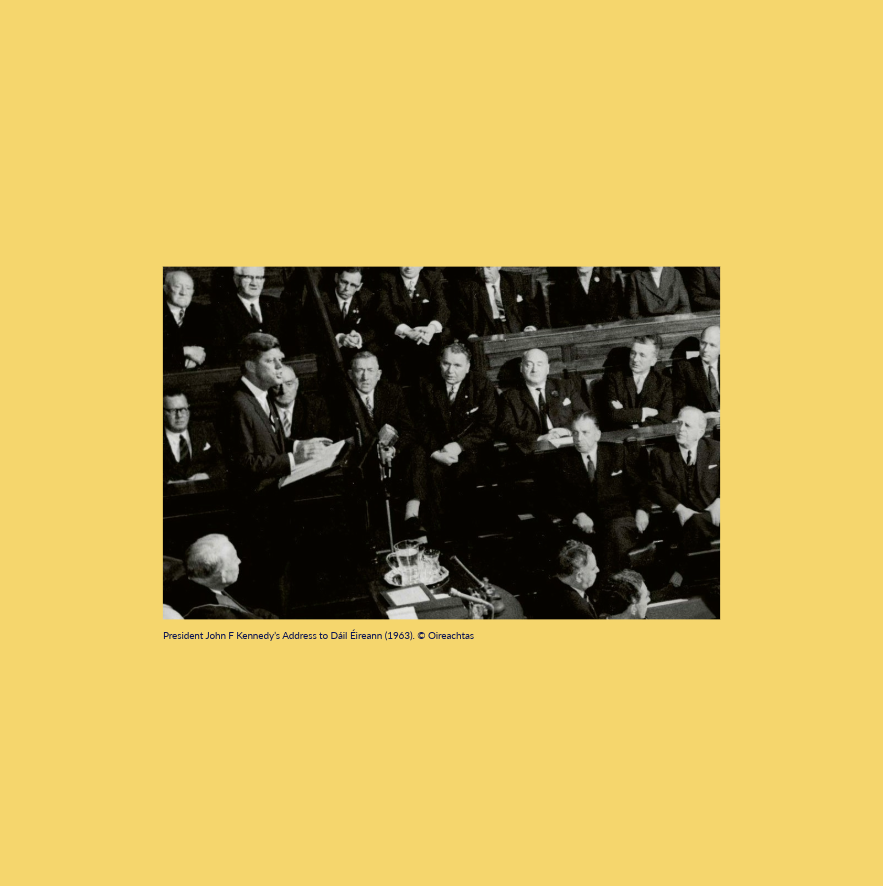
In his historic address to Dáil Éireann, in June 1963, President John F Kennedy recalled that intervention.
‘‘For knowing the meaning of foreign domination, Ireland is the example and inspiration to those enduring endless years of oppression. It was fitting and appropriate that this nation played a leading role in censuring the suppression of the Hungarian Revolution, for how many times was Ireland’s quest for freedom suppressed only to have that quest renewed by the succeeding generation?’’

Ireland granted asylum to 541 Hungarian refugees in the wake of the 1956 revolution. Most were housed in Knockalisheen, County Limerick, and, within a few years, moved on from what was then Western Europe’s poorest state.
Others stayed – amongst them Henry Spelter, one of Hungary’s most celebrated confectioners. He found work at Bewley’s, Dublin’s oldest café, where his ‘Mary Cake’ became a favourite. Today, in a tribute to Henry and his fellow refugees, its sales raise funds for Ukrainians displaced by Russia’s invasion.
Thomas Kabdebo (1934 – 2018) was another 56er who left an indelible imprint on Ireland. Chief Librarian at the National University of Ireland Maynooth from 1983, he was a prolific author, editor and broadcaster, publishing many seminal works on Irish – Hungarian links.


In 1925, Dublin stockbroker Hubert Briscoe was appointed Hungarian Honorary Consul to Ireland meeting the criteria for ‘‘a businessman of good standing who would like to supplement a solid civic status with a little consular dignity’’. Only after the British declaration of war on Hungary in December 1941 did Briscoe resign from his post, due to the irreconcilability of the declaration with his business interests in Britain.
On 1 October, 1976, the countries formally re-established diplomatic relations ‘‘guided by the desire to promote friendly relations and to develop economic, social and cultural cooperation between their two States’’. Hungary opened a resident Embassy in Dublin in February 1991, whilst Ireland opened a resident Embassy in Budapest in 1995.

President Árpád Göncz made a first state visit to Ireland, hosted by President Mary Robinson.
A gifted writer, Hungary’s first democratically elected President had earlier translated the seminal plays of Sean O’Casey and John Millington Synge. Five years later, President Mary McAleese made a first Irish state visit to Hungary, returning six years later to attend the 50th anniversary commemorations of the 1956 Revolution.
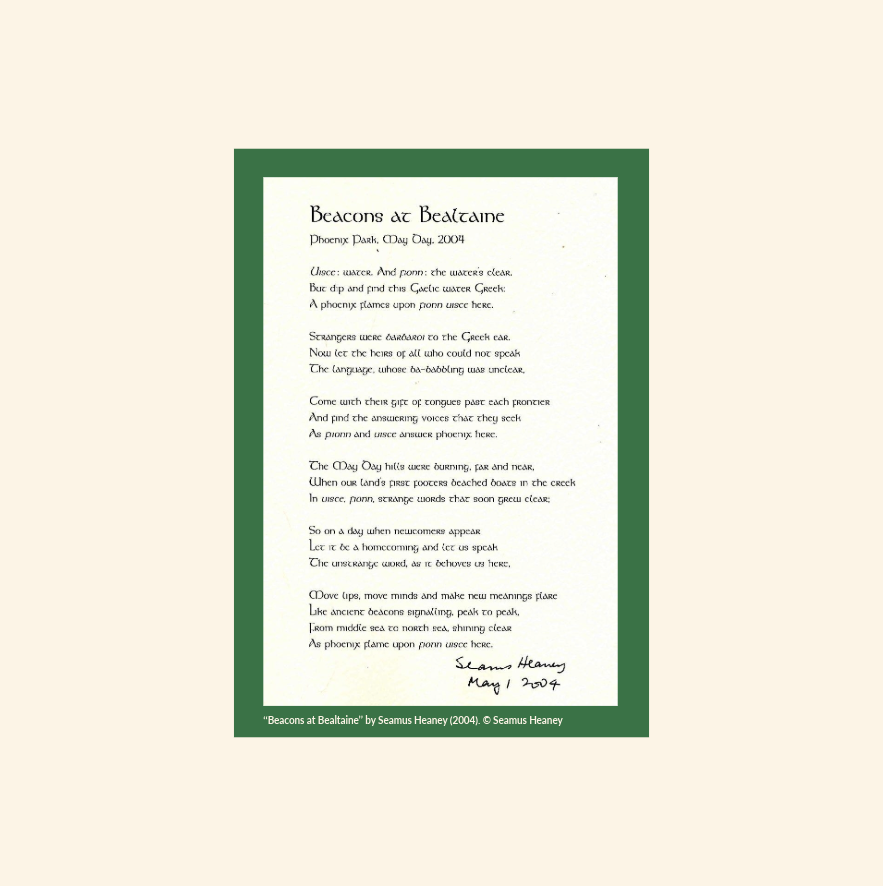
Ahead of the Presidency of the Council of the EU, Ireland extended a special welcome to Hungary as it joined the European Union on 1 May 2004.
On what was christened ‘‘the Day of the Welcomes’’, President Mádl joined President McAleese and fellow heads of state at Dublin’s Phoenix Park to celebrate the EU’s greatest enlargement.
The event was immortalised by Seamus Heaney in ‘‘Beacons at Bealtaine’’.

Ahead of the Presidency of the Council of the EU, Ireland extended a special welcome to Hungary as it joined the European Union on 1 May 2004.
On what was christened ‘‘the Day of the Welcomes’’, President Mádl joined President McAleese and fellow heads of state at Dublin’s Phoenix Park to celebrate the EU’s greatest enlargement.
The event was immortalised by Seamus Heaney in ‘‘Beacons at Bealtaine’’.

Since Ireland’s Presidency welcomed Hungary to the EU in 2004, the countries’ community and commercial ties have flourished.
Today, almost 10,000 Magyar reside in Ireland. At 1,000, Hungary’s Irish community is smaller, but no less dynamic – ‘‘kicsi a bors de erős’’ – boasting a vibrant GAA club, a passionate pop-up Gaeltacht, and some of Europe’s best Irish pubs, cafés and bakeries, including the award winning Arán in Budapest’s historic Jewish quarter.
Over the decades, Hungary’s renowned University of Veterinary Medicine has trained almost a thousand Irish students. Hundreds more have studied music at the Liszt Academy, whilst many young Hungarians have enrolled at Irish institutions.

With community came commerce. Today, annual bilateral trade in goods and services exceeds €7 billion. Established in 2005, the Irish Hungarian Business Circle represents Irish firms employing over 4,000 Hungarians.
Investors include Kingspan (building components) in Újhartyán, McHale (agricultural machinery) in Szolnok, ICON (medical research) in Budapest, and CRH (building components) country-wide. Irish agrifirm ClonBio has built Europe’s largest grain bio-refinery and ethanol production facility in Dunaújváros.
From its regional hub in Budapest, Ryanair operates 500 weekly flights, including daily connections with Dublin.
Ireland’s most iconic export has a Hungarian history. Guinness’s first mills were built by Ganz and Company, so that, for a century, every glass of the black stuff carried a drop of the Danube.
More recently, the iconic Sullivan’s brewing company reopened its taps in Kilkenny using specially designed brewing equipment built by ZipTech in Miskolc.
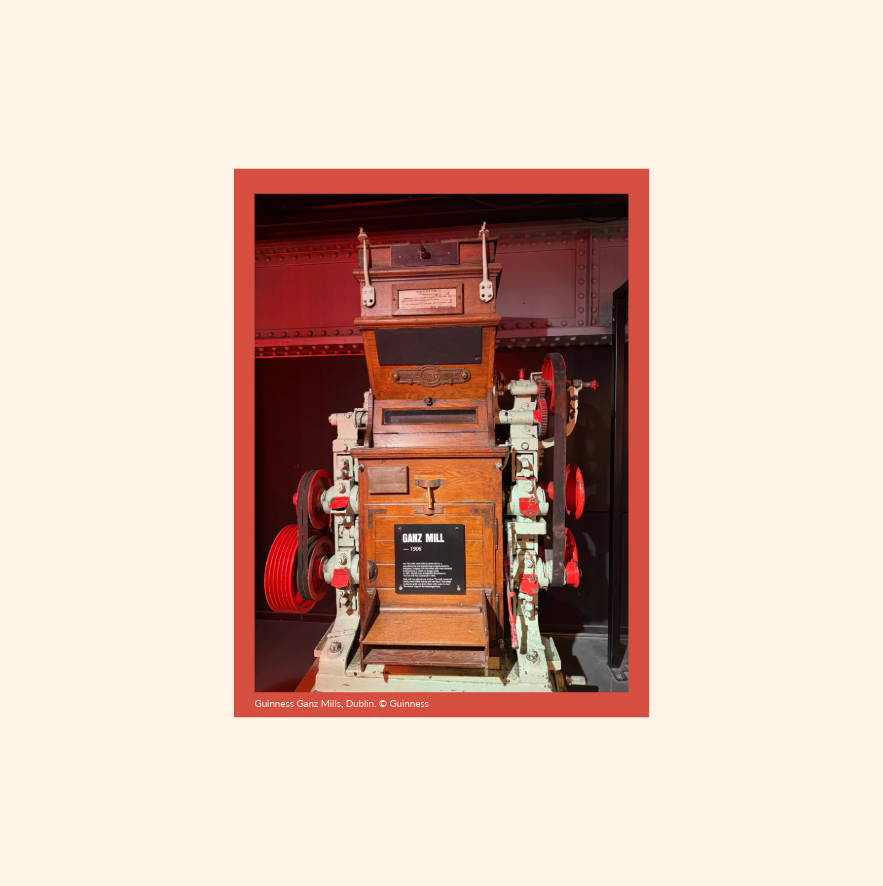
Ireland’s most iconic export has a Hungarian history. Guinness’s first mills were built by Ganz and Company, so that, for a century, every glass of the black stuff carried a drop of the Danube.
More recently, the iconic Sullivan’s brewing company reopened its taps in Kilkenny using specially designed brewing equipment built by ZipTech in Miskolc.


From fine art to folk dance, classical music to modern literature, Ireland and Hungary remain deeply connected by culture.
Both nations are celebrated for their folk cultures. The links between Irish and Hungarian folk music and dance are remarkably strong, with trad groups like Greenfields and dance schools at the heart of Budapest’s annual St Patrick’s Festival.
A legacy of Yeats and Joyce, our nations’ literary links are especially strong, with a network of outstanding Irish studies scholars across Hungary’s leading universities.
Since 2013 the Széchenyi Academy of Letters and Arts has held an annual lecture in honour of Seamus Heaney, bringing Ireland’s foremost scholars to Budapest.
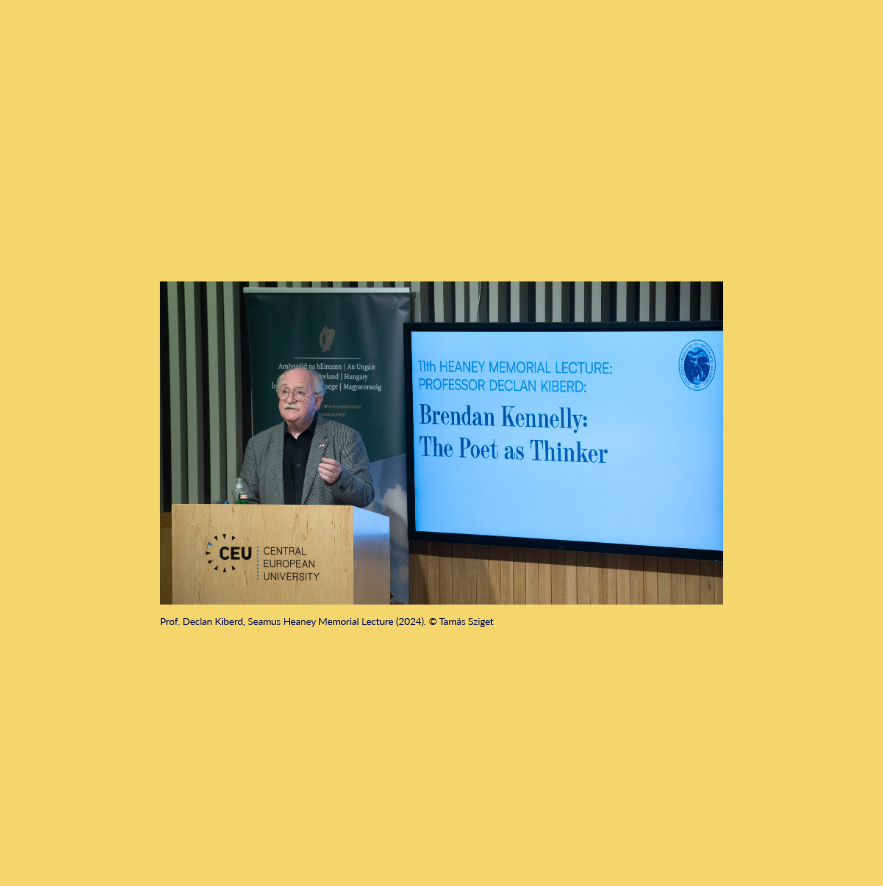
A legacy of Yeats and Joyce, our nations’ literary links are especially strong, with a network of outstanding Irish studies scholars across Hungary’s leading universities.
Since 2013 the Széchenyi Academy of Letters and Arts has held an annual lecture in honour of Seamus Heaney, bringing Ireland’s foremost scholars to Budapest.


In 2023 Müpa hosted the premiere of György Kurtág’s opera Endgame, inspired by Samuel Beckett’s masterpiece. There the Embassy presented the Magyar maestro with a commendation from President Higgins.
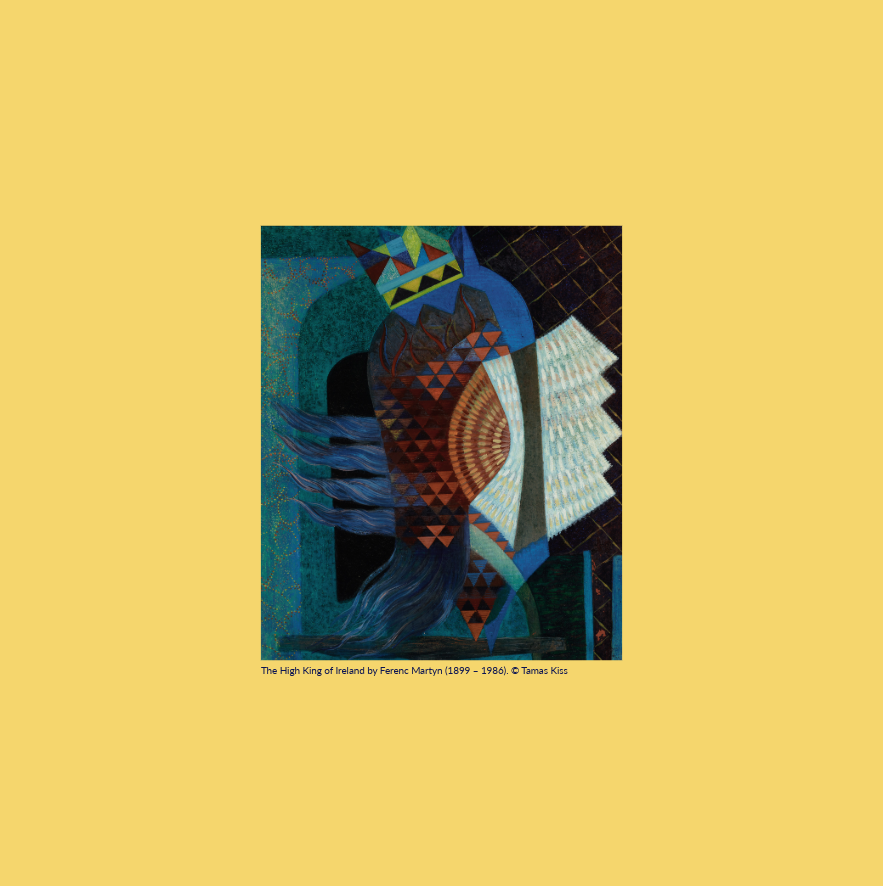
Hungary’s foremost abstract artist, Ferenc Martyn, was the great-grandson of Galway merchants, whose trade linked Ireland’s western edge with the European continent.
Martyn carried always what he called a deep ‘‘memory’’ of Ireland in his work, elections of which the Embassy in Budapest proudly displays.

Hungary’s foremost abstract artist, Ferenc Martyn, was the great-grandson of Galway merchants, whose trade linked Ireland’s western edge with the European continent.
Martyn carried always what he called a deep ‘‘memory’’ of Ireland in his work, elections of which the Embassy in Budapest proudly displays.

When Ireland and Hungary faced off in the 2026 World Cup qualifiers, Sammie Szmodics was amongst ‘‘the Boys in Green’’. Born in Colchester, the Ipswich town flyer has both Hungarian and Irish heritage and could have played for either side.
Ireland’s record goal scorer, Robbie Keane, was appointed manager of Hungary’s most celebrated football club, Ferencváros, in 2025. In his first season, alongside fellow Irish international Rory Delap, Keane led Fradi to its 35th national league title.

Although Ireland can’t match Hungary’s Olympic record, both nations are sporting strongholds, with some remarkable personal ties.
Hubert Kós, Hungary’s first gold medal winner of the 2024 Olympics and sportsman of the year, is the son of Cork man Nick Kós. Hubert visits Ireland often, recalling childhood visits: “They were great. I always loved going to Ireland because I always got a little bit spoiled. I got to eat what I wanted to. Tayto crisps, and stuff like that!”
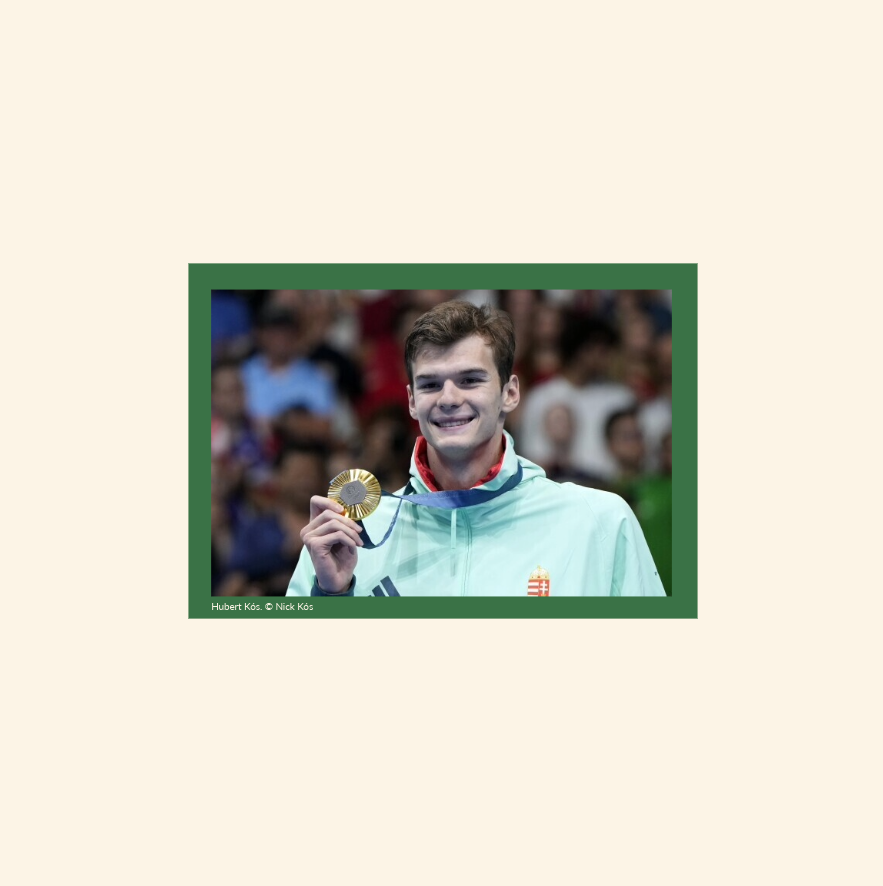
Although Ireland can’t match Hungary’s Olympic record, both nations are sporting strongholds, with some remarkable personal ties.
Hubert Kós, Hungary’s first gold medal winner of the 2024 Olympics and sportsman of the year, is the son of Cork man Nick Kós. Hubert visits Ireland often, recalling childhood visits: “They were great. I always loved going to Ireland because I always got a little bit spoiled. I got to eat what I wanted to. Tayto crisps, and stuff like that!”

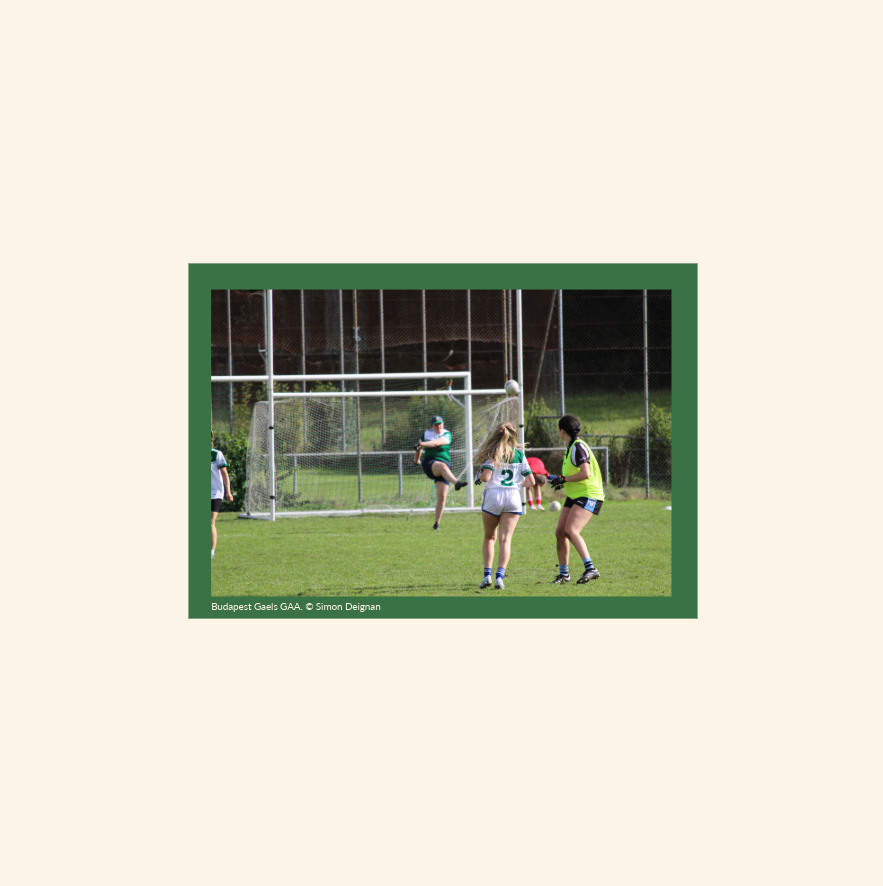
Founded in 2011, Budapest Gaels GAA have brought Ireland’s ancient indigenous games – Gaelic football, handball and hurling – to the Hungarian capital.
Backboned by Veterinary University students, both the men’s and women’s sides have claimed silverware across regional tournaments, whilst hosting Central East European Championships.

Founded in 2011, Budapest Gaels GAA have brought Ireland’s ancient indigenous games – Gaelic football, handball and hurling – to the Hungarian capital.
Backboned by Veterinary University students, both the men’s and women’s sides have claimed silverware across regional tournaments, whilst hosting Central East European Championships.