


Szombathely: Hungary’s connection to Ulysses
In Circe, the 15th episode of Ulysses, Hungary’s oldest city, Szombathely, is revealed to be the birthplace of Leopold Bloom’s father, Rudolf Virág. Since 1994, Szombathely, which literally translates to ‘‘Saturday place’’, has celebrated that heritage annually with a major Bloomsday festival.
Running over three days, the festival is attended by tens of thousands of people, with a programme comprising concerts, theatre, film screenings, literary workshops, exhibitions and most recently the new permanent Leopold Bloom Art Foundation, a major Irish collection of contemporary Hungarian art. One of the world’s largest Bloomsday festival, it is the single biggest annual celebration of Irish culture in Hungary.
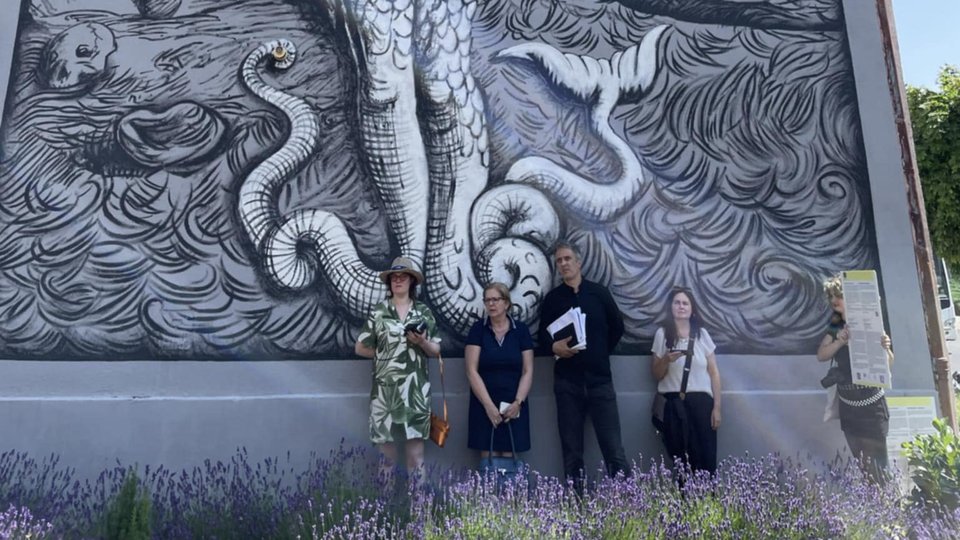
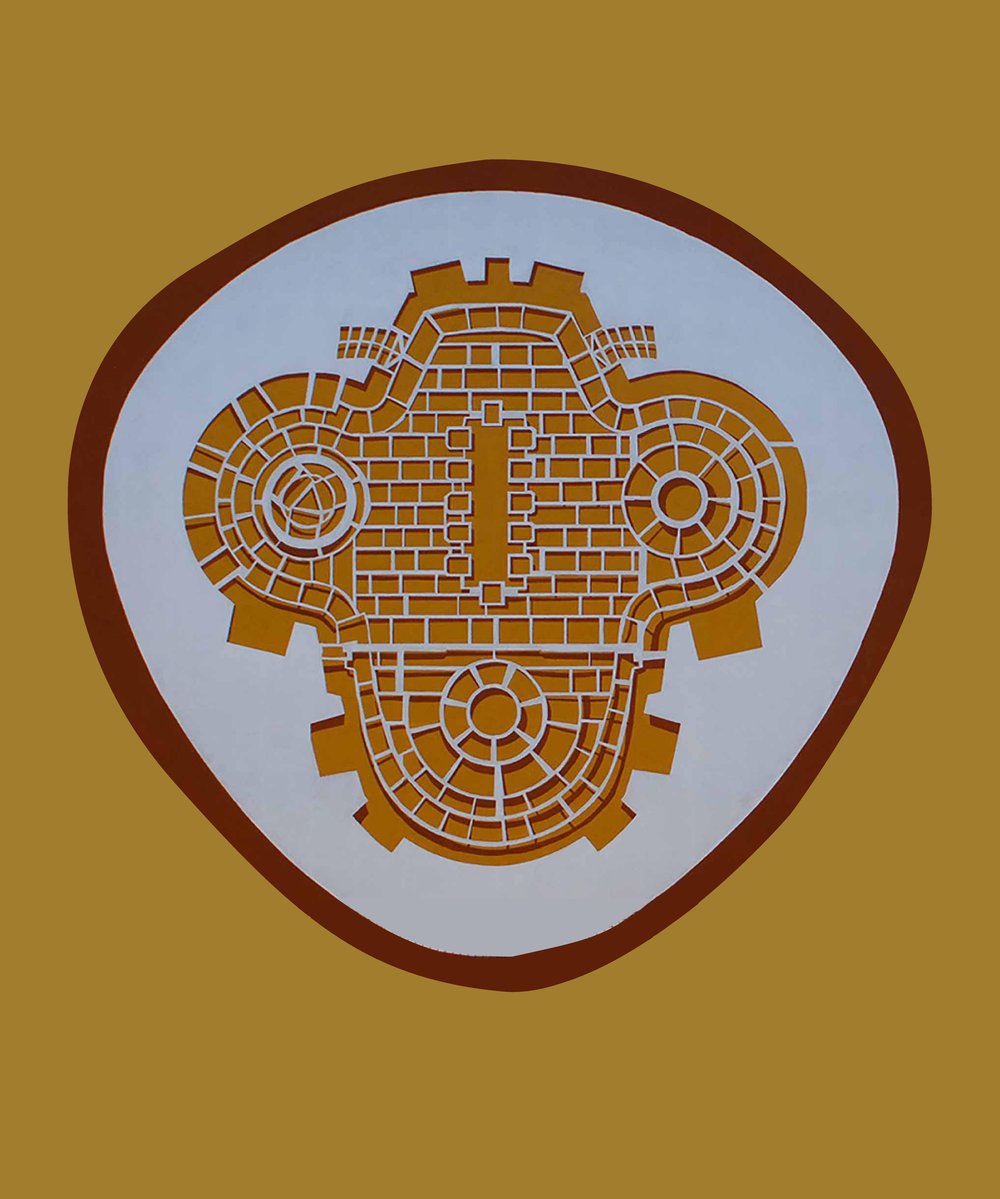
Szombathely’s Joycean heritage is imprinted throughout the city in many ways but one such project has taken over the city’s buildings with murals reflecting each chapter of Joyce’s Ulysses.
The Mural Project
In 2020, with the support of the Department of Foreign Affairs and Trade’s Culture Unit, Embassy Budapest and Dublin Project Arts Centre, Szombathely launched an ambitious new multi-year project, commissioning leading Irish and Hungarian artists to create murals inspired by each of Ulysses’s 18 episodes.
In 2025, nine murals have already been painted - three by Irish artists Aideen Barry; Garreth Joyce; Mark Joyce, with a fourth, by Roisin McGuigan to be unveiled in June 2025. With six Hungarian artists, István Szantho, András Batyko, Eszter Szabo, Zsolt Molnar, Róbert Batykó and Stella Kollesszar, also having completed work. The project has reached its half way point of immortalising Joyce’s genius in the ancestral home of his most celebrated character.
István Szantho, a Hungarian artist, initiated the first mural workshop in 2021 in Szombathely. Since then he has been the leading force of the 2 weeks long workshop every June in his hometown Szombathely.
The Embassy in Budapest sat down with the István to discuss how the project came to be and its impact on Ireland and Hungary’s lasting connection.
Read the interview with István Szantho
How did the idea for the project come about?
I initiated the first mural workshop in 2021 and the workshop has continued every June for 2 weeks in Szombathely.
Were there any particular challenges in organising the project?
At the beginning during the workshop due to cultural differences, because of language barriers the Irish artists found it difficult to cooperate with the local artisans who were instrumental in accomplishing the final phase of the mural: scaffolding, painting. Since then, art students from the local university have helped the Irish artists during their 2-week long workshop.
What advice would you give colleagues who hope to organise a similar project?
The timing of the mural project is essential: scheduling the tendering and then selecting the best applications and negotiating with the finalist takes time.
From tendering to the beginning of the actual mural painting - it took 10 months in the first year. All the partners (local municipality, the leader of the workshop, the embassy, the department) are involved in the tendering phase and the whole project. The embassy plays an active role in negotiations.
It is very important that the leader of the workshop, should be a respected local artist who can coordinate the implementation of the project successfully on the spot. He is the face of the project, he is the one that makes the actual mural acceptable for the local citizens.
What were the key benefits delivered by the project?
The benefits are straight forward: the universal values, messages that are embedded in the Ulysses are visually appear in a multicultural scenario, by means of 21st century digital and visual elements, crossing genres.
This way the murals make accessible the essence of the most debated literary work of the 20th century. The successful project proves common work inspired by universal values can overcome cultural differences and language barriers.