Key moments in Ireland's membership of the EU
For more than 50 years, Ireland’s membership of the European Union (EU) has had a positive impact across many dimensions of Irish society.
Since we joined the EU in 1973, Ireland has been committed to acting as a constructive partner in Europe, focusing on working together with our fellow member states to deliver on policy priorities for Irish citizens and citizens of the European Union.
From free movement across the EU countries to access to over 500 million consumers in the Single Market, the transformation of the Irish economy, and the ability for Irish citizens to travel, study, live and work across EU member states, there have been and continues to be many benefits for Ireland as a member of the EU.
Key moments - Ireland in the EU
As we mark Europe Day, 9 May, we are celebrating some of the big moments in Ireland’s European history, which have shaped our relationship with the EU and our fellow member states.
1. Ireland joins the European Economic Council
January 1, 1973
After holding a referendum in May 1972, Ireland voted overwhelmingly to integrate with Europe. As a result, on 1 January 1973, Ireland joined the European Economic Community (EEC), now known as the European Union (EU). This marked the beginning of our formal relationship with the institutions of the EU.

2. Ireland hosts our first European Union Presidency
March 10-11, 1975
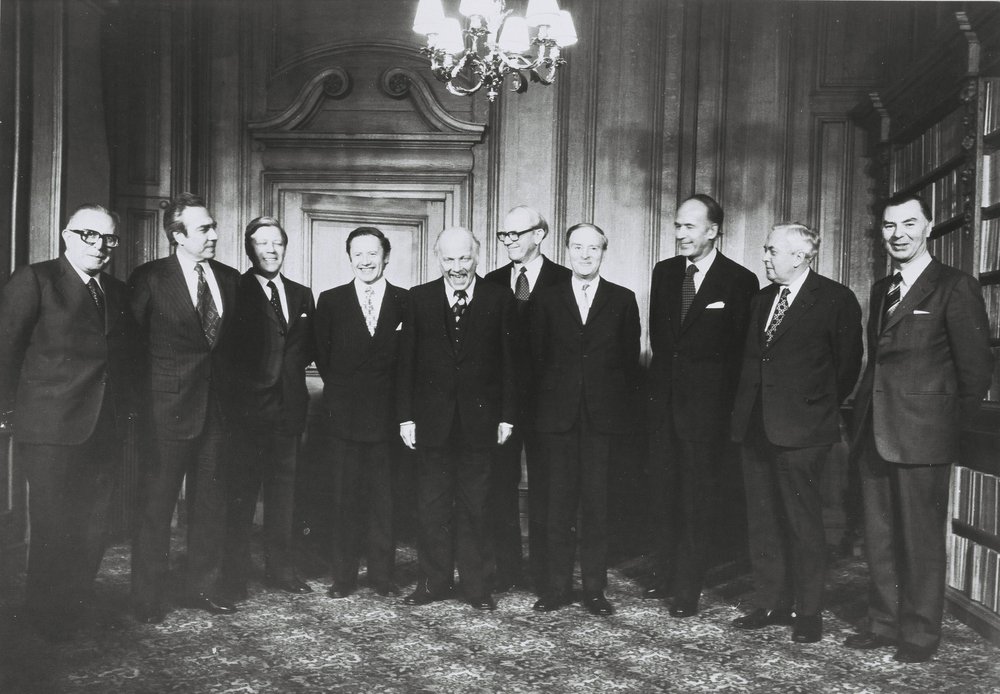
Two years after joining the EU, Ireland hosted our first Presidency. During the Presidency, Ireland hosted the first European Council meeting in Dublin in March.
This year also marked the establishment of the European Regional Development Fund (ERDF), designed to reduce the development gap between different regions of Europe.
Learn more about the 50th Anniversary of 1975 European Council in Dublin here>>
3. Ireland adopts the Euro
January 1 2002
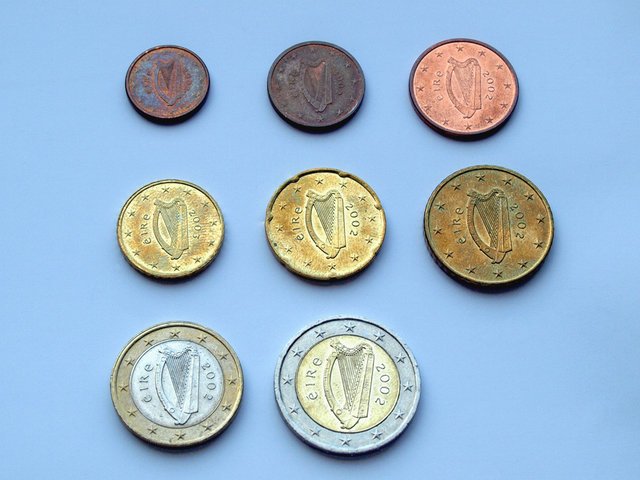
On 1 January 1999, Ireland, along with ten other member states of the European Union, adopted the Euro as its official currency in a non-physical form, and in 2002, Ireland adopted the Euro in its physical form.
Irish Euro coins feature the Celtic harp, a traditional symbol of Ireland, decorated with the year of issue and the inscription "Éire" − the Irish word for Ireland.
The single currency of the Euro across 20 EU states better integrated our financial markets, gave us greater influence in the global economy, and is a tangible sign of our European identity.
4. Ireland hosts the Day of Welcomes
May 1, 2004
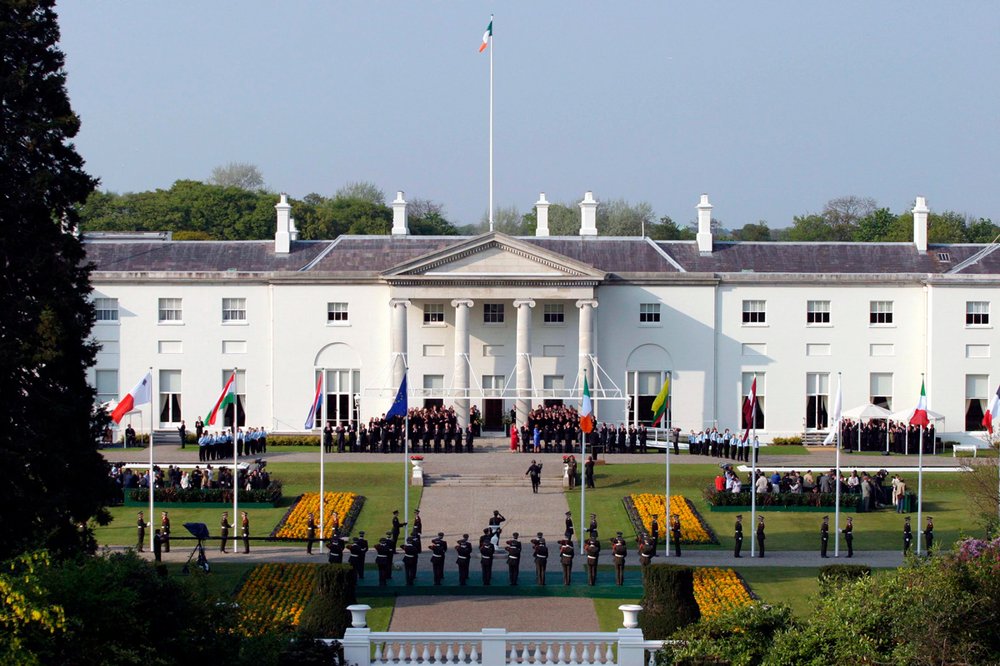
On May Day 2004, Ireland hosted the ‘Day of Welcomes’ at Áras an Uachtaráin in the Phoenix Park in Dublin, as part of our Presidency of the Council of Europe for the first half of 2004.
This was to celebrate the accession of Cyprus, Czech Republic, Estonia, Hungary, Latvia, Lithuania, Malta, Poland, Slovenia and Slovakia to the European Union.
The addition of these 10 new member states marked the largest ever expansion of EU membership since its inception.
Learn more about the 20th anniversary celebrations of the Day of Welcome's here>>
5. Launch of the Irish Stability Programme
April 1, 2013
After the global financial crisis in 2008, Ireland worked closely with the EU to secure key agreements to promote stability, jobs and growth and set the stage for economic recovery. The Department of Finance drafted an economic plan, which was implemented with the EU. This programme successfully solidified our close relationship with the EU and set a course for future stability of Ireland’s growing economy.
6. Irish becomes an official EU language
January 1, 2022
Irish has been an EU Treaty language since 1973, meaning that only the EU treaties were translated into our national language.
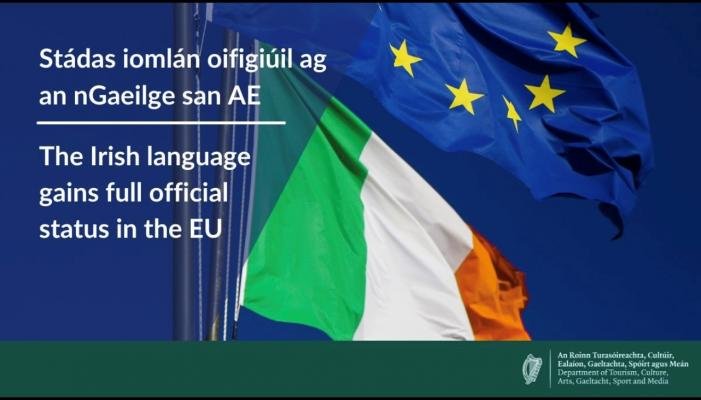
However, on 1 January 2022, Irish received full status as a working language of the EU, giving Irish the same rights and privileges as the other 23 official languages of the EU.
This came to fruition following the strong work of advocacy groups and with the support of the Irish government.
7. Ireland to host our next EU presidency in 2026
July - December 2026
Ireland will host the Presidency of the European Union from July-December 2026.
Throughout this six-month period, Ireland will lead the EU’s policy agenda, driving discussions on key legislative and policy matters. Irish ministers and officials will chair a majority of the Council of Ministers’ meetings and represent the Council in its dealings with other EU institutions, including the European Parliament.
This marks our 8th European Presidency, having previously hosted the Presidency in 1975, 1979, 1984, 1990, 1996, 2004, and 2013.