

8 key moments on the road to Marriage Equality in Ireland
The road to Marriage Equality in Ireland is one that spans decades.
Homosexuality was criminalised as recently as 1993 in Ireland. From decriminalisation to to being the first country in the world to legalise same-sex marriage by popular vote, the journey to more equal rights for LGBTQIA+ people in Ireland has been a long and winding one.
With many of these seismic changes happening just in the space of a generation, Ireland has made remarkable strides towards equality and acceptance. Much of this change has come through legal battles and hard fought campaigns by members of the LGBTQIA+ community.
Here, we are highlighting key moments that paved the way for same-sex marriage and other legal rights, and the lasting effects this has had on our nation.
Explore key moments
1970s – The beginnings of a social movement
The 1970s saw a pivotal shift in the number of Irish gay civil rights groups organising and advocating for equality. One such group was the Irish Gay Rights Movement, which was chaired by a leading gay rights activist, lecturer and former Senator, David Norris.
Norris led the Campaign for Homosexual Reform, and 7 years after the beginnings of this social movement, he began legal proceedings to overthrow the criminal sanctions in Irish law against homosexuality. He argued that the Offences Against The Persons Act contravened the Irish Constitution’s stance on privacy. He was unsuccessful in the Irish High Court and his appeal to the Supreme Court was also defeated.
1983 – Ireland's first Pride parade
Although the first Irish Pride week events date back to celebrations held in 1979, the first large-scale public demonstration against anti-gay violence was held in March 1983, when LGBTQIA+ activists marched from Liberty Hall to Fairview in response to wide-spread outrage following the murder of a member of the LGBTQIA+ community, Declan Flynn.
The unified response amongst the LGBTQIA+ community lead to the first official Pride parade, highlighting the violence prevalent at the time against LGBT men and women. Pride in Ireland has grown considerably in the decades since.
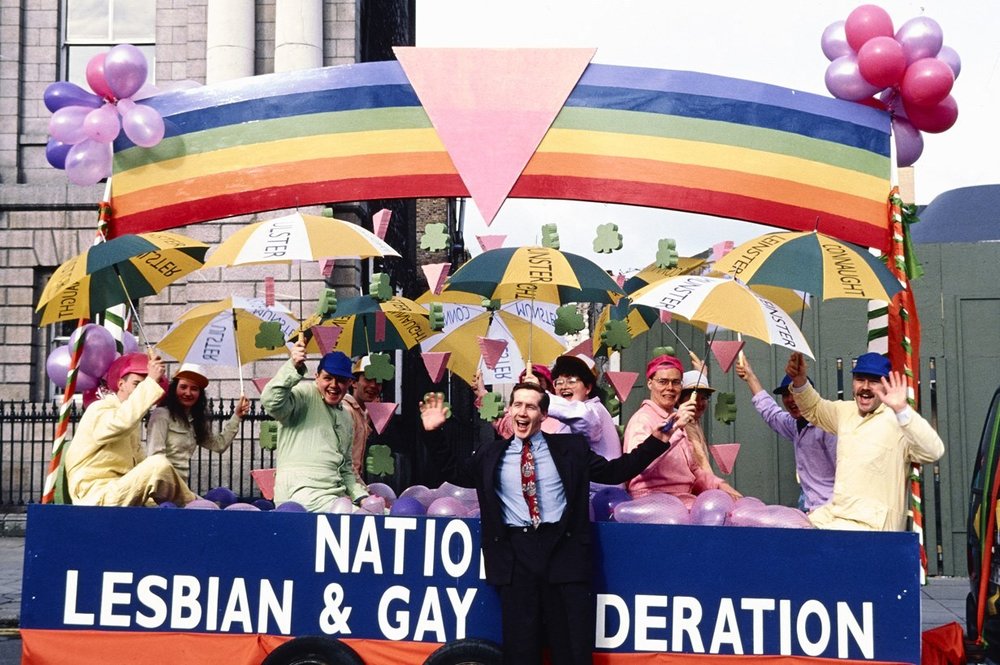
1988 – Norris vs Ireland
Senator David Norris’s case in 1977 grew into a 14-year legal battle against the Irish state. This legal battle ended in 1988 when the European Court of Human Rights ruled in Norris’s favour.
The Court stated that by criminalising homosexuality, Irish law was in breach of Article 8 of the European Convention on Human Rights. This verdict set the legal precedence for equality regardless of sexual orientation in Ireland, paving the way for decriminalisation.
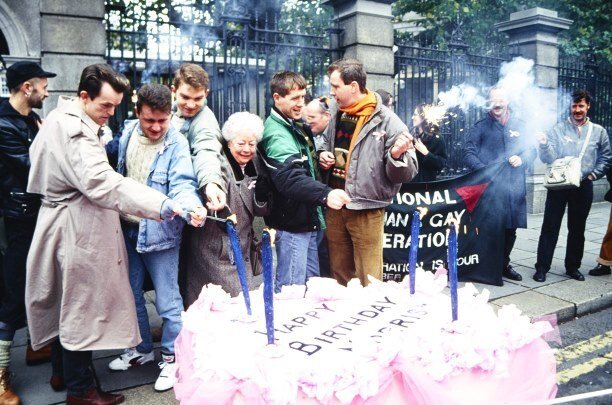
1993 – The decriminalisation of homosexuality in Ireland
On 24 June 1993, Ireland officially passed legislation that ended the criminalisation of homosexuality.
The legislation, called the Criminal Law (Sexual Offences) 1993 Bill, was proposed by the then Minister for Justice Máire Geoghegan-Quinn. The bill was a watershed moment in the campaign for equality as it removed the laws that criminalised sexual acts between men.
2010 – Civil Partnership Act
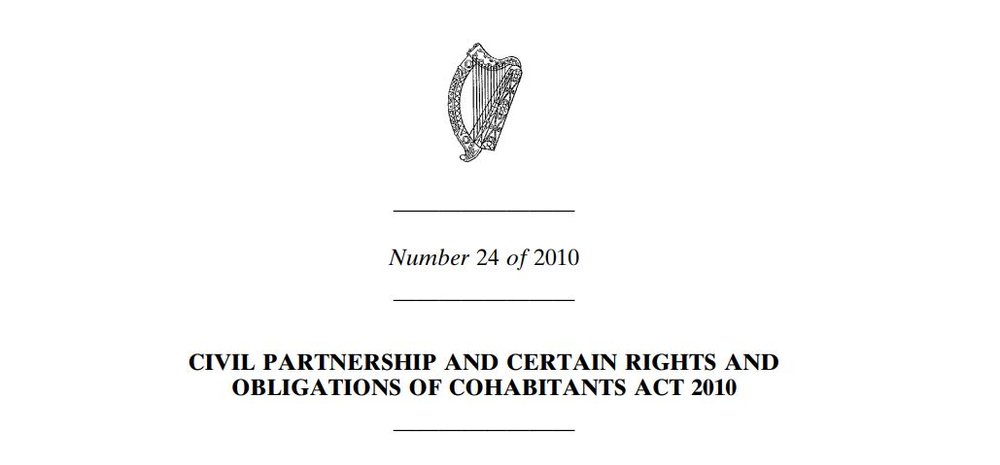
Over 15 years after the decriminalisation of homosexuality, same-sex couples still did not have the same rights as heterosexual couples. In 2010, the Civil Partnership Bill passed through cabinet, which granted same-sex couples some of the same rights as married couples.
This Act changed many laws to broadly give same-sex couples the same rights as married couples. However, it did not change or adapt the law on issues relating to children, such as custody, guardianship and adoption.
May 2015 – Marriage Equality referendum
On 22 May 2015, the Irish population took to the voting booths to cast their ballots in a historical referendum, which would amend the Constitution of Ireland to legalise the marriage of same-sex couples.
After a successful campaign by Yes Equality and many LGBTQIA+ groups, Ireland voted overwhelmingly in favour of the amendment, with a total of 62% of voters voting yes.
Ireland became the first country in the world to legalise same-sex marriage by a popular vote. It highlighted the cultural shift that had taken place in the 45 years since the beginnings of the social movement.
The Bill that enacted the Marriage Referendum results was signed into law on 29 October 2015. At the end of 2024, 5,865 same-sex marriages had been celebrated since the enactment.
July 2015 – Gender Recognition Act
Shortly after the milestone Marriage Equality referendum, the Gender Recognition Act was passed on 15 July 2015. This followed legal proceedings taken by Dr Lydia Foy in 2010 to enforce Irish High Court findings which found Irish law incompatible with the European Convention on Human Rights, Her legal battle to have her gender recognised first began in 1997.
The Act meant that a person could apply for a Gender Recognition Certificate to achieve full legal recognition of their preferred gender. Dr Lydia Foy was the first person to obtain her Gender Recognition Certificate, and she finally received the birth certificate showing her female gender that she had first requested 22 years earlier.
2021 – Same Sex couple recognised as co-parents from birth
Although, Marriage Equality was achieved in 2015, it wasn’t until 2020 where the final two sections of the Children and Family Relationships Act were enacted.
This established that same-sex couples could be jointly recognised as legal parents of their children under Irish law. In 2021, Niamh O’Sullivan and Geraldine Rea became the first same-sex couple in Ireland to have both names registered on the birth certificates of their twin babies.
Living with Pride: Photographs by Christopher Robson
Some of the images used in this piece are from the National Library of Ireland's current exhibition, 'Living with Pride: Photographs by Christopher Robson'. The photographs were taken by Christopher Robson, spanning decades as a gay rights activist.
All images below courtesy of the National Library of Ireland.