


Tracing the steps of the Irish in Ieper (Ypres)
We joined Piet Chielens and Annick Vandenbilcke from the In Flanders Field Museum to discover the Irish history of the First World War in Ieper (Ypres)
Last month, we had the privilege of taking part in a First World War tour around the historical area of Ypres.
Piet Chielens and Annick Vandenbilcke who work in the In Flanders Fields Museum have dedicated their careers to ensure the history of Ypres and those who lost their lives there will not be forgotten.
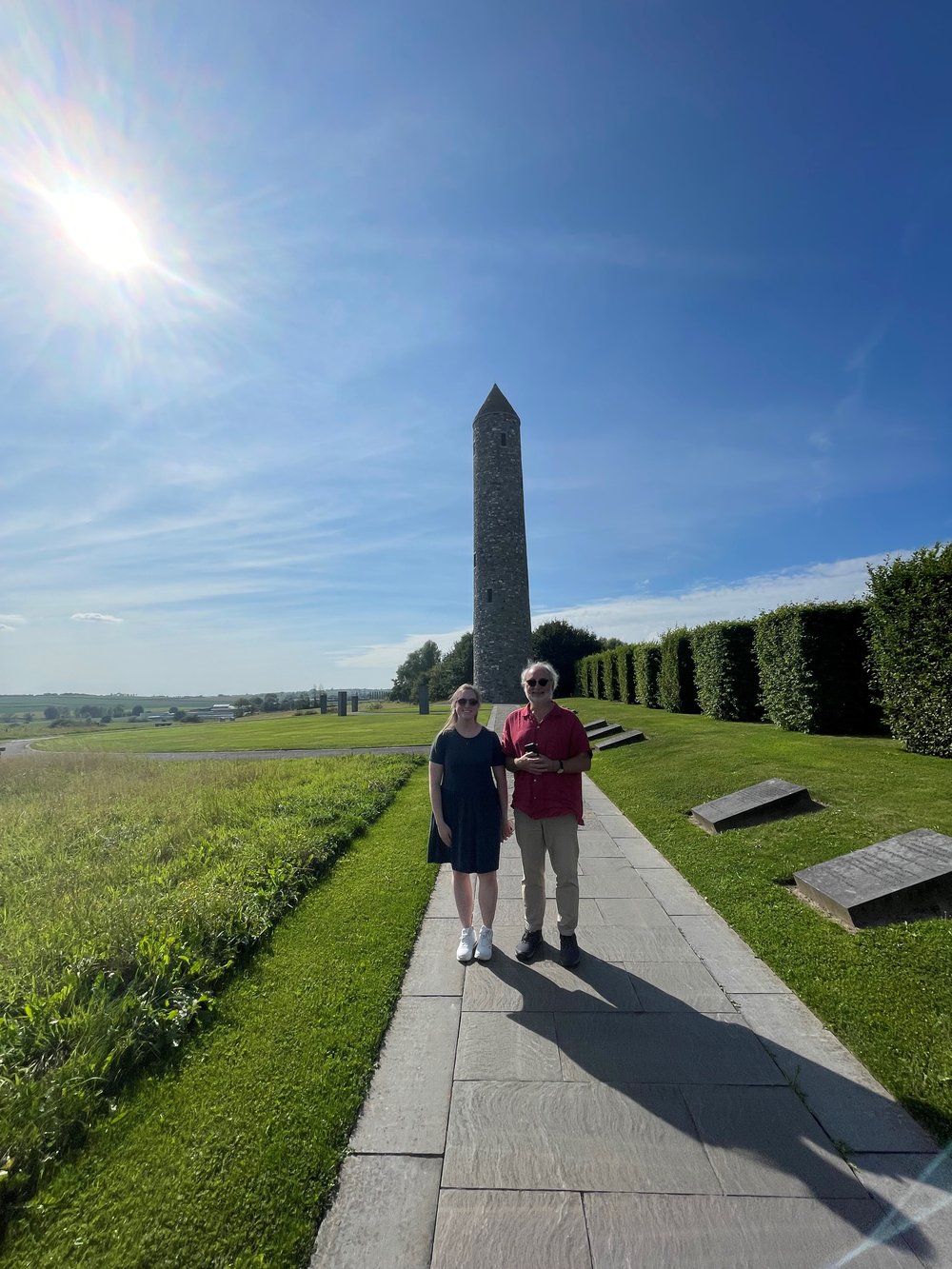
The team at the In Flanders Fields Museum have passed down their knowledge to various students from all over the world, including from the island of Ireland through the In Flanders Field Bursary Scheme.
Oliver O'Hanlon, a previous student of the programme wrote about his experience in the Irish Times which you can read by clicking the button below.
Rebekah Robinson (pictured above) is the current and last student as sadly, the scheme comes to an end this year.

"A little grave that has no name"
To begin, Piet took us on a journey to visit the graves of Irish soldiers such as Francis Ledwidge, a poet from county Meath who died in action when a shell exploded near him. Piet explained how the Irish flag came to fly here in Flanders, and showed us the monument dedicated to Francis that bears the lines of his poem 'Soliloquy'
It is too late now to retrieve A fallen dream, too late to grieve A name unmade, but not too late To thank the gods for what is great; A keen-edged sword, a soldier's heart, Is greater than a poet's art. And greater than a poet's fame A little grave that has no name.
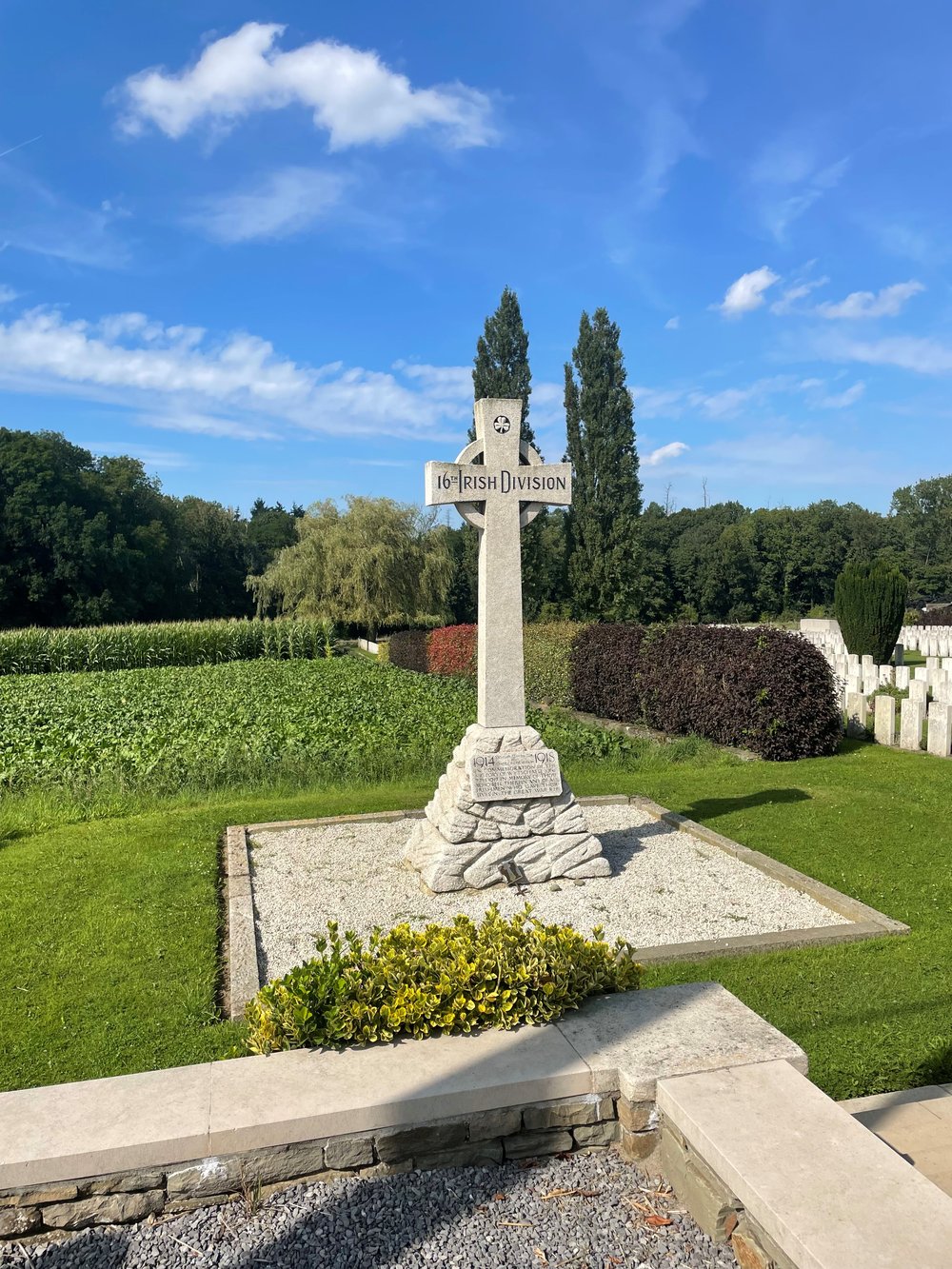
We visited the 'New Irish Farm Cemetery', named after a farm nearby with the same name. We walked along the graves of Irish soldiers, some named some not.
Piet helped to visualise the battles using his own maps and knowledge, marking out the fields where Irish men lost their lives.
Irish in Ieper
In the town of Ieper, stands a monument with an Irish inscription in memory of the 'men from Munster who died fighting for their freedom'.
We visited the grave of William Redmond, brother of John Redmond, an Irish nationalist politician who served as a Member of Parliament and died during the Battle of Messines in 1917.
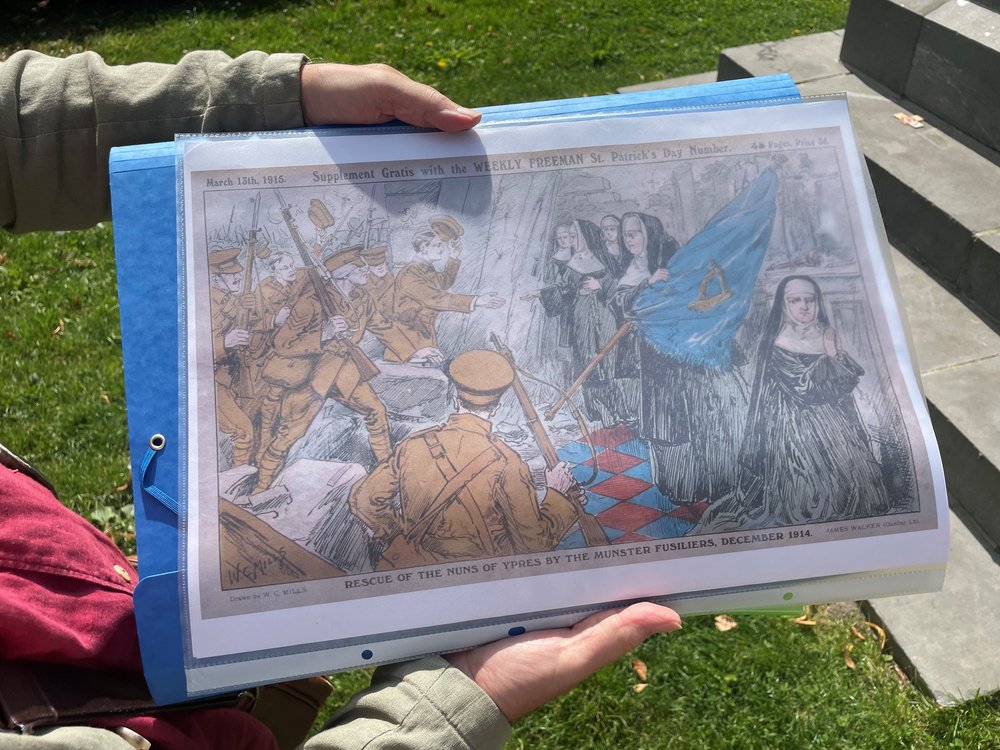
The nuns of Kylemore Abbey, were originally known as the 'Irish Dames of Ypres'. The Benedictine order first established a community of Irish nuns in Ypres in the 17th century. The Abbey of Our Lady of Grace, in Rue St Jacques, attracted the daughters of wealthy Irish families in the centuries that followed. Allied and German troops began a series of battles with Ypres as the epicentre. The nuns, known as the Irish Dames of Ypres, hung on for a few weeks as the town – and eventually their beloved abbey – was destroyed by shellfire. They eventually, and with great reluctance, decided to flee to safety – first to England, and eventually Ireland. They never returned to Belgium.
A reminder of peace
Our final stop was to the Island of Ireland Peace Park, a memorial to the soldiers on the island of Ireland who died, were wounded or went missing during the First World War.
The project was initiated to bring together people of diverse beliefs and unveiled on the 80th anniversary of the end of the war. It has since become a symbol of reconciliation and remembrance, and was conceived by the late Paddy Harte, a Fine Gael TD from Donegal, and the late Glenn Barr, a former loyalist turned community activist from Derry. They died within 10 weeks of each other in 2017 and 2018 respectively.
The design, in the form of a Round Tower, has a unique aspect that allows the sun to light the interior only on the 11th hour of the 11th day of the 11th month- the anniversary of the armistice that ended the war and the time for the minute's silence on Remembrance Day.
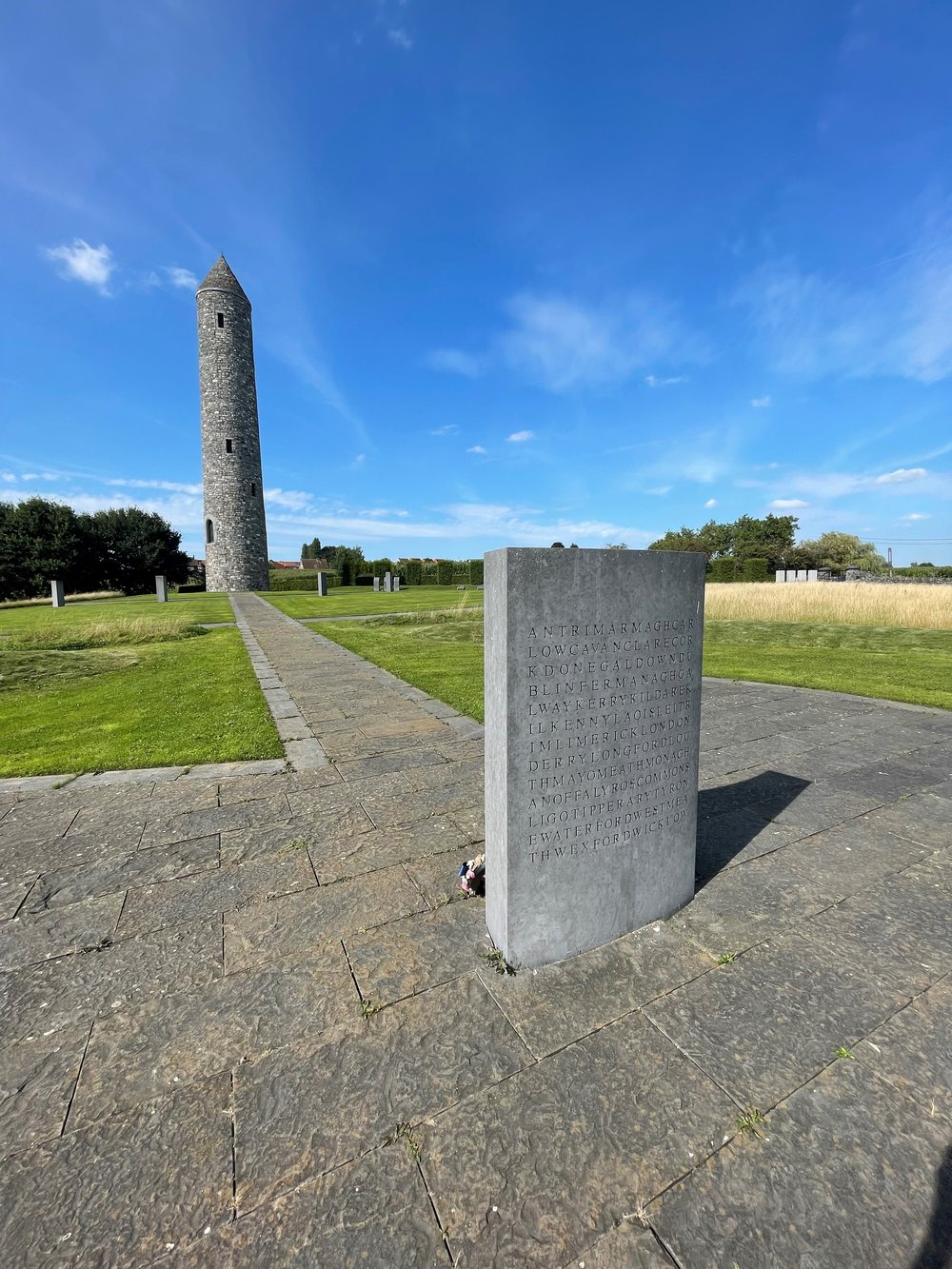
Around the tower are monuments naming the 4 provinces and the 32 counties of the island of Ireland. The tower was unveiled on 11 November 1998 by President Mary McAleese of Ireland in the presence of Queen Elizabeth II of the United Kingdom and King Albert II of Belgium.
It marked the first time that the Irish State officially recognised the soldiers from Ireland who lost their lives in the first World War.
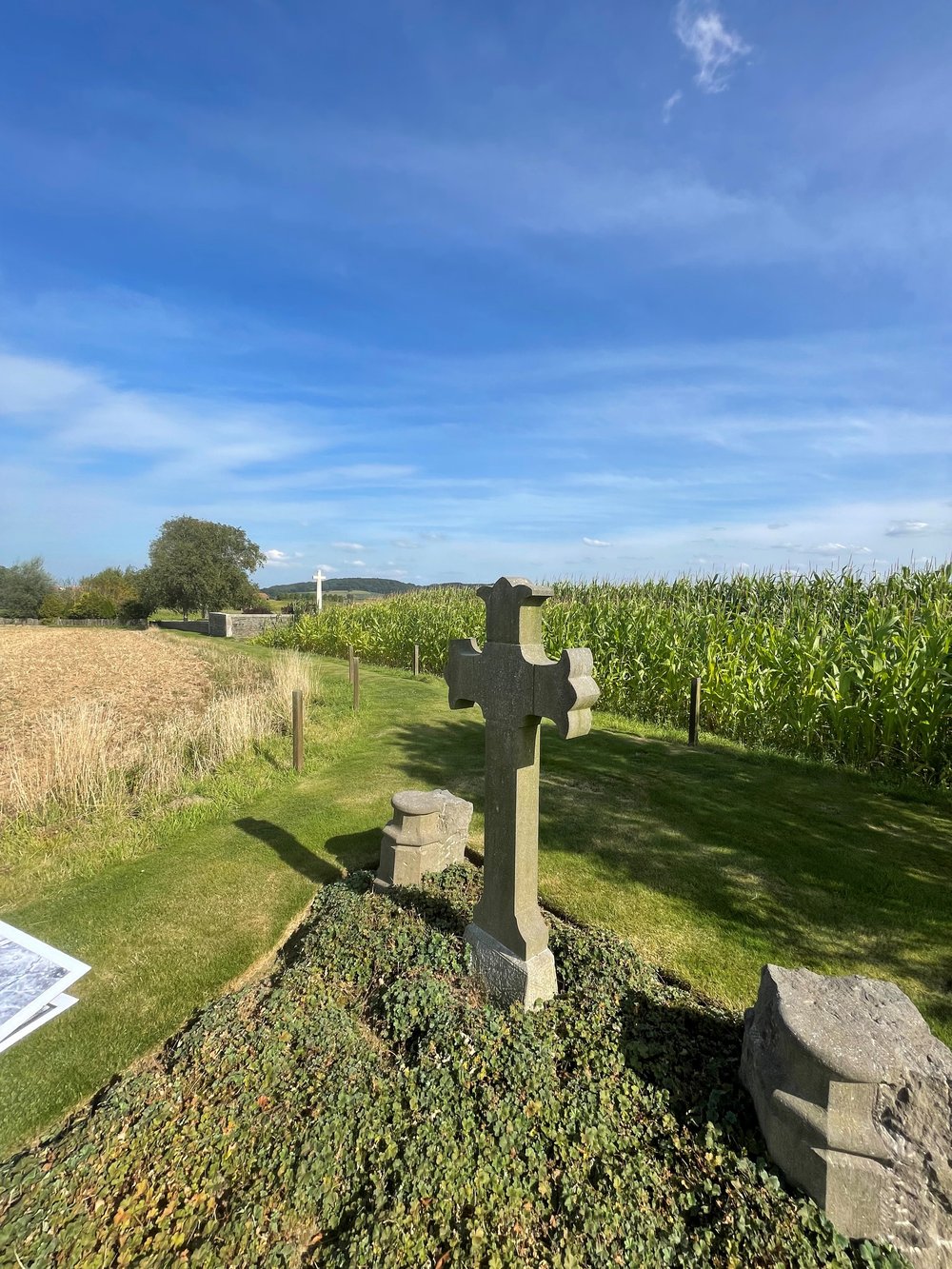
Thank you
The Embassy would like to thank the team at the In Flanders Field Museum, especially Piet Chielens and Annick Vandenbilcke, for all their hard work, and for helping to educate the young and old on the sometimes forgotten history of the Irish in Ypres (Ieper).
You may also be interested in these articles
10 August 2026
Éigse 2026
Ceiliúradh bliantúil ar chultúr, ceol, damhsa agus litríocht na nGael sa Bhruiséil. (18 - 20 Meán Fómhair)
Read more
29 June 2026
Belgium's Music Scene Turns Green
Belgium's summer festivals are packed with Irish artists, keep reading to find out who's coming and when!
Read more
25 June 2026
Bloomsday in Belgium 2026
Bloomsday celebrations took place all over Belgium, in bookshops and on beaches! Read on to see what we got up to.
Read more
19 June 2026
Irish Theatre Group Success at FEATS
ITG in Schaerbeek come home winners after competing in FEATS in the Hague
Read more