
Growing the game: Inside GAA's expansion in South America
The GAA community in Latin America has grown significantly and quickly in recent years. Clubs have been founded in Chile and Paraguay, there is promising activity in Peru and Colombia, and GAA in Argentina has continued to grow in popularity, building on a long-established tradition.
To complement this growing interest, players across the region received expert coaching in late 2025 when Roger Keenan, a professional Gaelic Football coach from Ulster GAA, delivered in-person sessions in Chile, Paraguay and Argentina, to help everyone raise their game.
Argentina GAA
Argentina has the longest history of Gaelic Games in the region, reflecting the significant emigration from Ireland to Argentina in the 19th century. These Irish emigrants brought the sport of hurling with them. There are recorded games as early as 1887, only a few years after the founding of the GAA in County Tipperary. Today, the city of Buenos Aires has two active GAA clubs: the Hurling Club and Cuenca del Plata GAA.
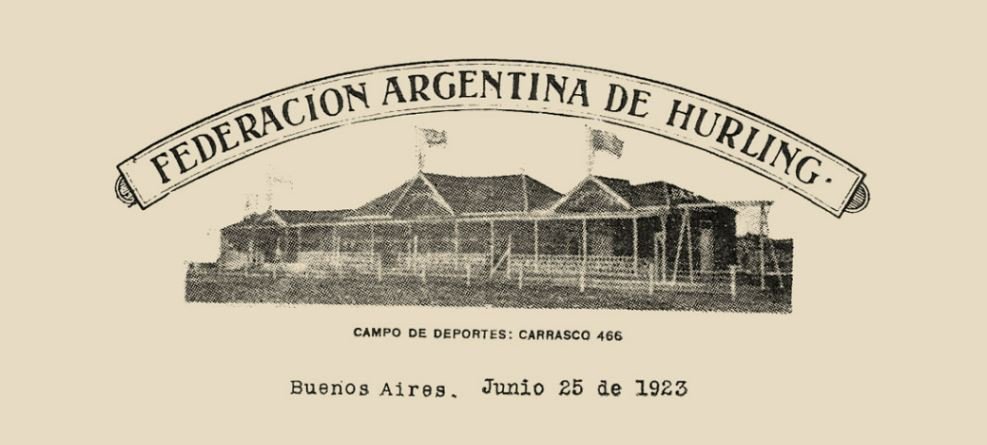
The Hurling Club is the older of the two tracing its history back over 100 years to 1922, and the founding of the Irish Hurling Federation of Argentina. Hurling was played regularly until the 1940s, when the Second World War made it impossible to import hurleys from Ireland.
The Club is today a major sporting association in the city, excelling in a variety of sports including hockey and rugby. The club’s Irish roots remain central to its identity, and both men’s and women’s Gaelic Football Teams play each week. To date, the Hurling Club has sent teams to compete in four GAA World Games tournaments, in 2015 (Abu Dhabi), 2016 (Dublin), 2019 (Waterford) and 2023 (Derry).
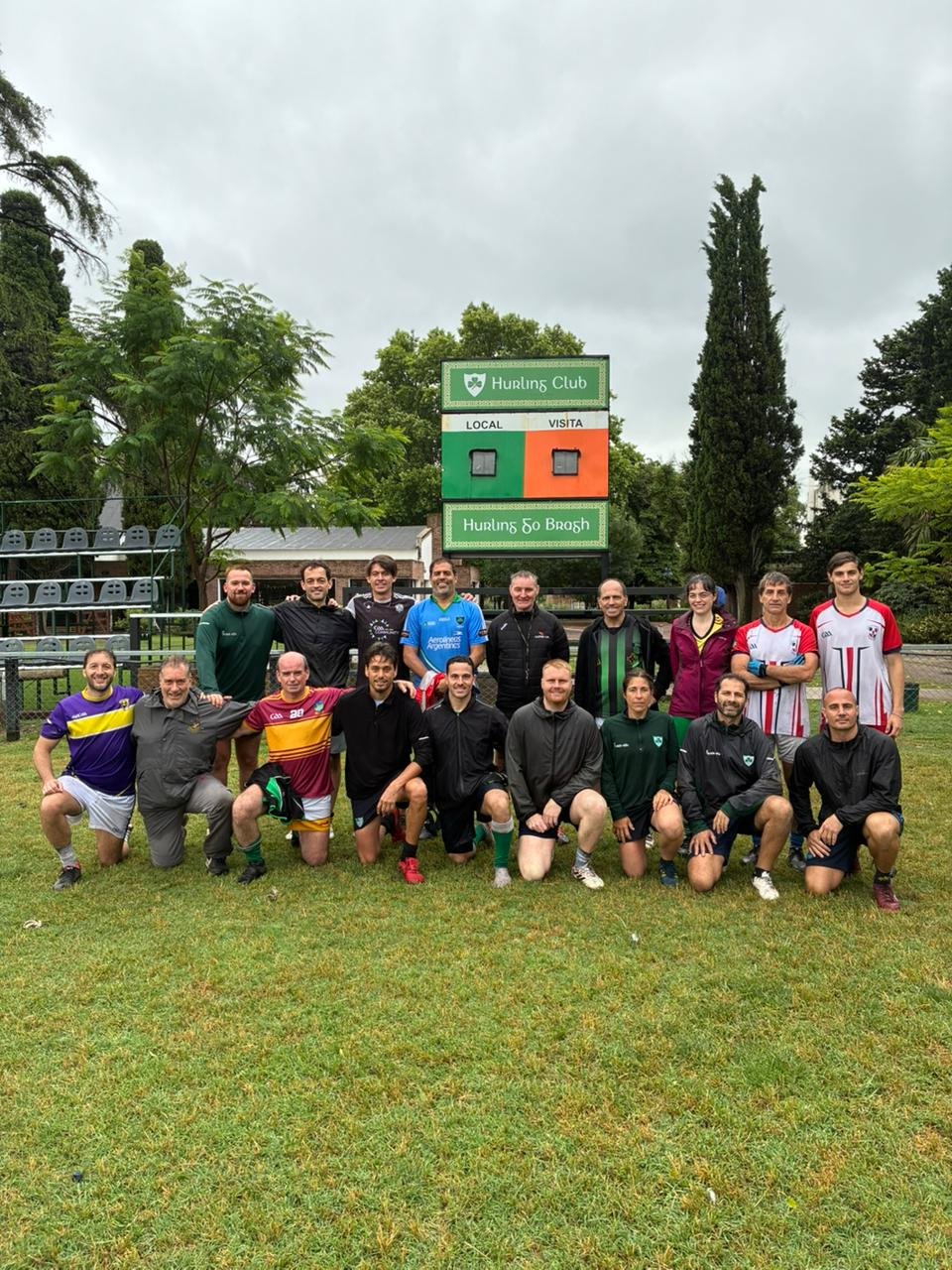
Commenting on the Club’s history, Club President Gaston Lopez Soler said: “The Club has passed down its Irish roots from generation to generation. When President Michael D Higgins visited us in 2012, he said the Club was ‘a small part of Ireland, outside Ireland’; this is what we try to be.
Far from the Irish spirit fading over time, the Club continues to uphold a clear principle: that every new member who puts on the green [club] jersey, feels Irish… that they embrace and understand the culture, history and values that gave birth to the institution. We have a very strong sense of belonging in the Club because of this.”
When President Michael D Higgins visited us in 2012, he said the Club was ‘a small part of Ireland, outside Ireland’; this is what we try to be.
Cuenca del Plata GAA is a newer but no less active GAA Club in the city. It was founded in 2017 by a group of dedicated volunteers, led by Irish-Argentine Francisco Lynch. Speaking about the founding of the Club, Francisco said:
“We were looking to play a new team sport… I’d been aware of Gaelic Sports because of my Irish heritage but it was learning about the ethos of the GAA that really made us decide to start playing. The fact the games are amateur, and that teamwork and community are central, really resonated with us.”
Cuenda del Plata has wasted no time since its establishment, having participated in the GAA World Games in 2019 in Waterford, and 2023 in Derry. Since 2021, Cuenca del Plata has hosted the annual ‘Copa Almirante Brown’ (Admiral Brown Cup) Gaelic Football Championship in the San Isidro neighbourhood of Buenos Aires.
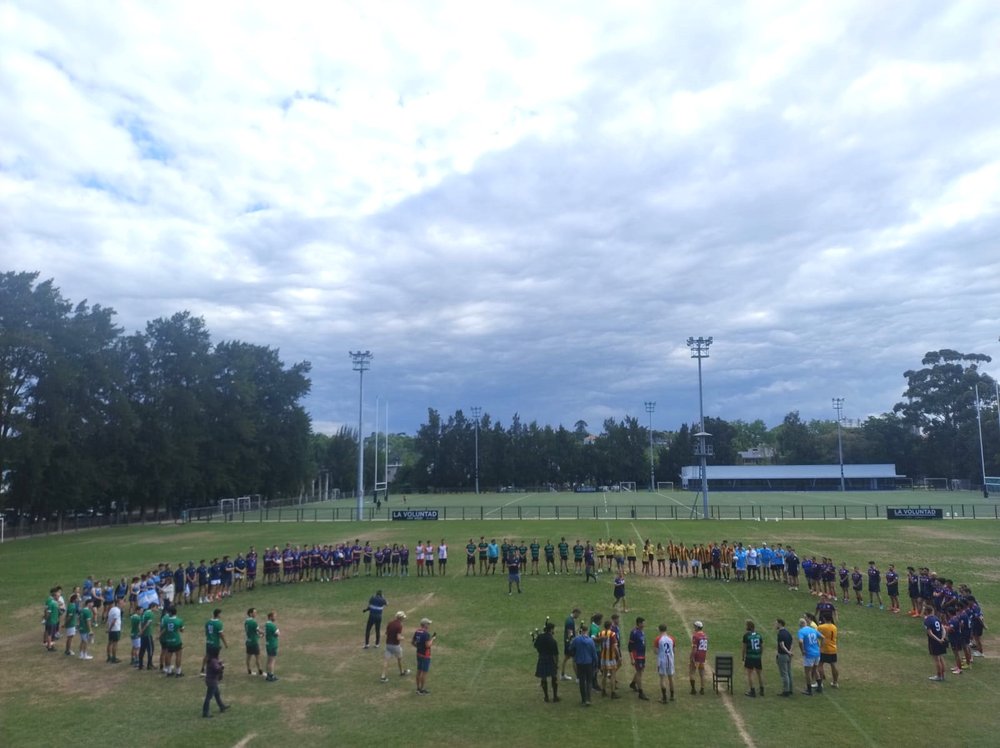
The one-day blitz is named after the famous Irish-Argentine William Brown (1777-1837), who was the founder of the Argentine navy, and ‘a symbol of bravery and of the strength of Irish-Argentine links’, as Francisco Lynch puts it.
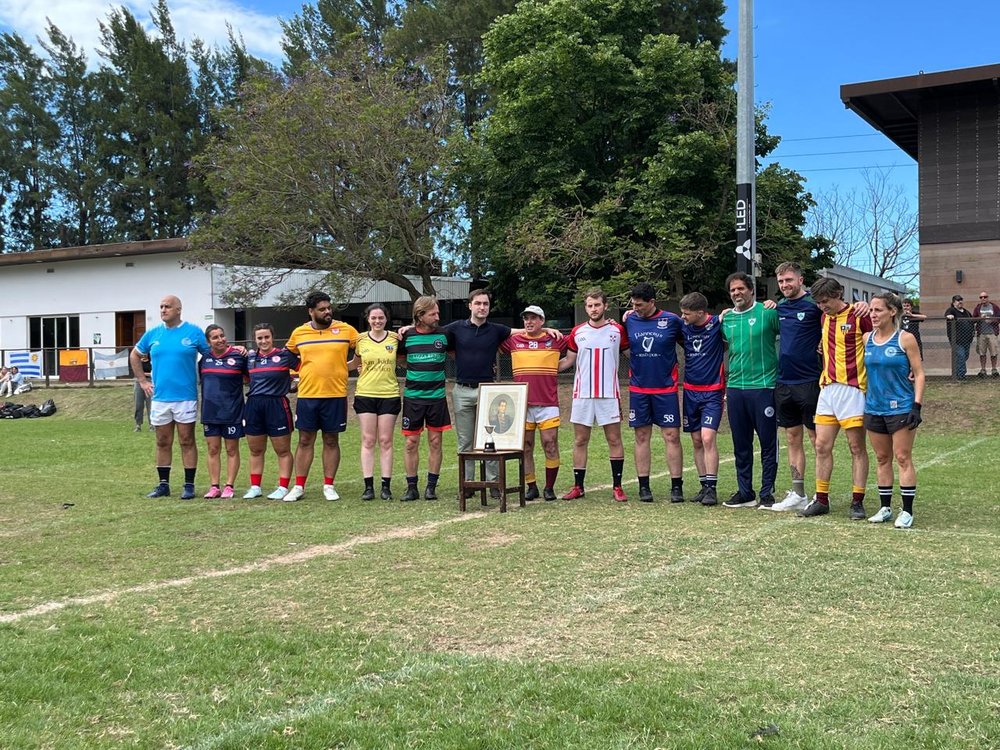
The most recent Admiral Brown Cup took place in November 2025 and was the largest ever, a testament to the growth of GAA across South America. Over 150 players took to the field in men’s and women’s competitions, representing Clubs in Argentina, Chile and Paraguay.
Paraguay GAA
Las Arpas de Paraguay (‘Paraguay Harps’) is one of the newest GAA Clubs in the region, founded in the country’s capital, Asunción, in 2024. The Club’s founder, Mozz Suraphot, epitomises the growing international reach of Gaelic Games. Suraphot learned to play Gaelic Football in Bangkok with Thailand GAA. When he moved to Asunción for his job as a teacher, he was disappointed to learn there was no GAA club to join in his new city. Speaking about his motivation for founding the Club, he says:
“I had played GAA for ten years when I moved to Asunción, but there was no Gaelic Football Team in Paraguay. It made me feel like something was missing. I also wanted to give something back to Paraguay, to build something here and create a community.”
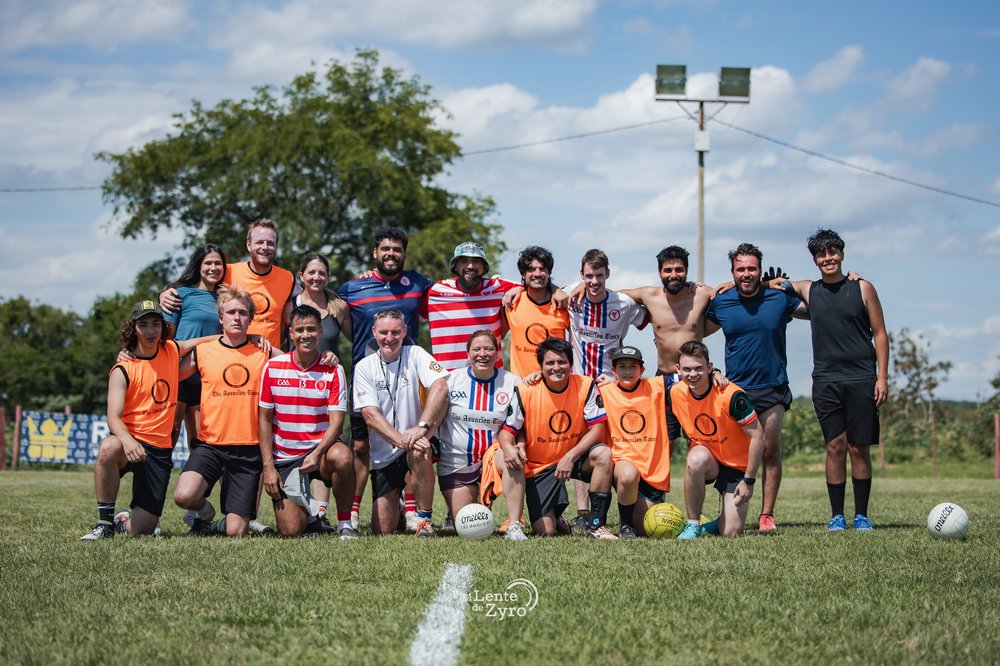
This community feeling is part of the reason the Club has grown quickly, withat least 20 players training each week, but another factor is that the Club operates entirely in Spanish. Suraphot says:
“[The Club] gives people a purpose, in terms of the competitive element, but people keep coming back because we’ve built a community around it. We do everything in Spanish, which makes it easier for local Paraguayans to join. Only about 20% of the team are Irish, the rest are Paraguayans and [other] expats.”
Chile GAA
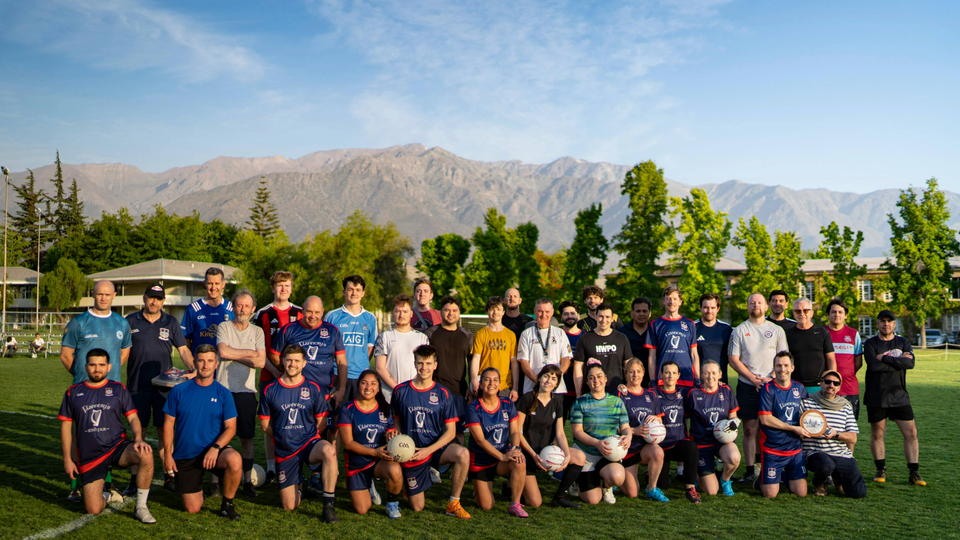
In Chile, GAA is also a new entrant onto the scene. The country’s first club, Los Andes de Santiago GAA, was founded in 2024 and named after the capital city’s iconic backdrop, the Andes Mountains.
Club President, Mark Taylor, spoke about the experience of setting up the club, sharing that;
“There was always a small Irish community here in Santiago… and we always got together for finals and semi-finals of hurling and football but the community was still very scattered and needed cohesion…With some guidance from the team in the Embassy, we decided to set up a GAA club.”
While new, the club has already proved hugely popular, drawing about 50 people per training session: a mix of Irish, other expat, and Chilean women and men. The small but active Irish community in Santiago have relished the opportunity to share their national games and culture with Chilean friends.
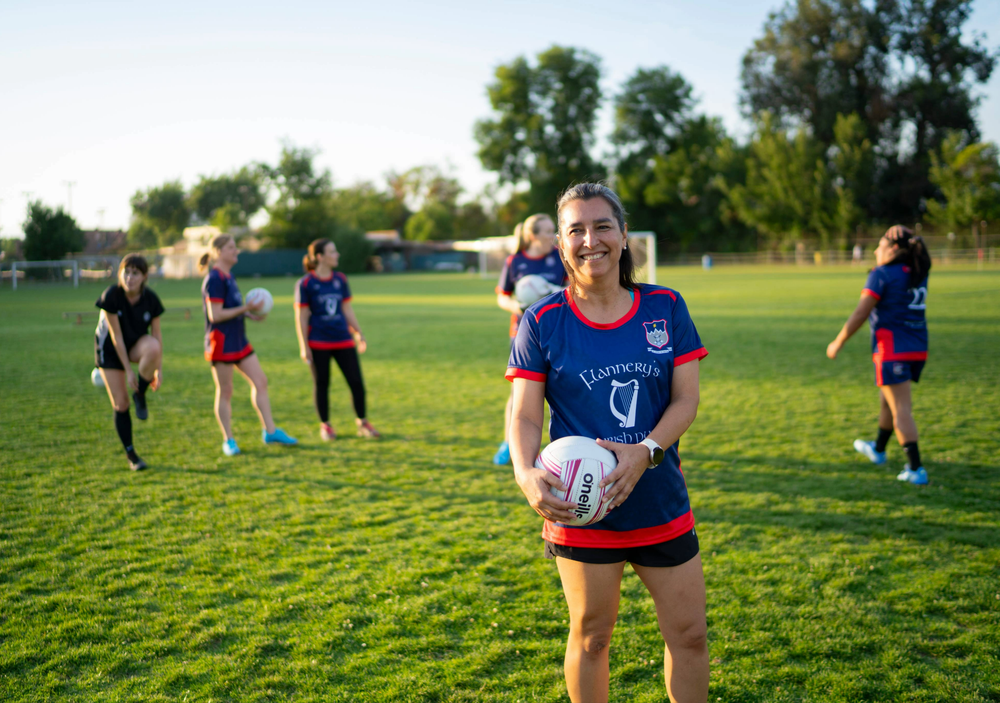
In 2025, the club completed two formalisation processes: firstly, registering as a not-for-profit sports association with the Ministry of Sport in Chile; and secondly achieving formal affiliation with World GAA and being ‘twinned’ with Ulster province.
To celebrate these two milestones, during a St Patrick’s Day 2025 visit to Chile, Minister Jack Chambers was joined by Chile’s Minister for Sport Jaime Pizarro Herrera on the pitch and together, the two Ministers participated in a Los Andes de Santiago GAA training session. Both Ministers spoke to the power of sport in cultivating community and a sense of home.
Another exciting step for the new club was its participation in the Admiral Brown Cup in Buenos Aires. Only three months after its first training session, Los Andes de Santiago GAA players travelled to Buenos Aires in November 2024 to participate in this tournament, which up until then had only featured Argentinian clubs. The teams wore their club colours with pride, delighted to get the opportunity for friendly competition.
President Taylor highlighted cross-regional support and exchange as key in promoting the development of GAA in South America.
“GAA is well-established in the Middle East, in Europe, in Australia, and all over the US but here in South America it is quite new… Collaboration is really important because we need to learn from each other. We have picked up a huge number of pointers from the clubs in Argentina [and the new clubs in] Colombia and Peru have learned from what we’ve done in Chile. That openness is important when it comes to exchanging ideas on how a club can develop… We want not only for each of our individual clubs to move forward but for the group project [in South America] to advance.”
Visit from Ulster GAA
To build on this fantastic GAA momentum in South America, Ulster GAA coach, Roger Keenan travelled to the region from Ireland in November 2025 to run a series of GAA workshops and training camps for the GAA clubs in Chile, Paraguay, and Argentina.
Starting in Chile, Roger attended Los Andes de Santiago’s weekly training session, at which he was able to get a sense of the skill-level of the club and identify areas for further development. He then conducted a tailored training session for those players seeking GAA coach certification. And finally, Roger led the newly trained budding coaches as they tested out their new skills at the club’s weekly training.
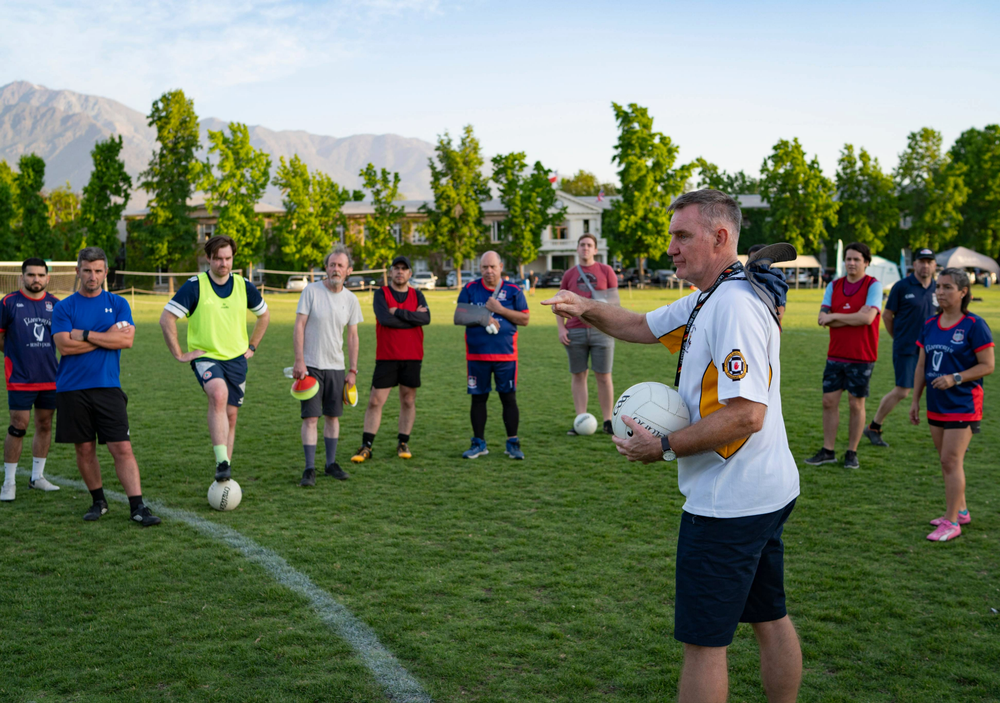
President Taylor reflected on the value of Roger’s visit, noting that it “was huge for us”. He stated that the club, still new, has benefited greatly from a “strong committee, a dedicated group of players, two excellent trainers” and “on top of that, being twinned with Ulster GAA and having Roger come see us was a great step forward for us.”
He further commended Keenan, stating that “he has GAA in his DNA”, training with “style, grace, and humility, [and his visit] was of great benefit to us because he was looking in with outside eyes and could see what we’ve got going on and what we needed.”
Keenan’s next stop was Paraguay where he led three training sessions with Las Arpas, focussing on excelling at the fundamental skills of the game. Mozz Suraphot says the team were delighted to have a coach visit less than two years after their founding: “Many players had never trained with an Irish coach before so we were excited that a top-level trainer came to Paraguay. The experience for the players was so valuable… it was fun, engaging and really empowering.”
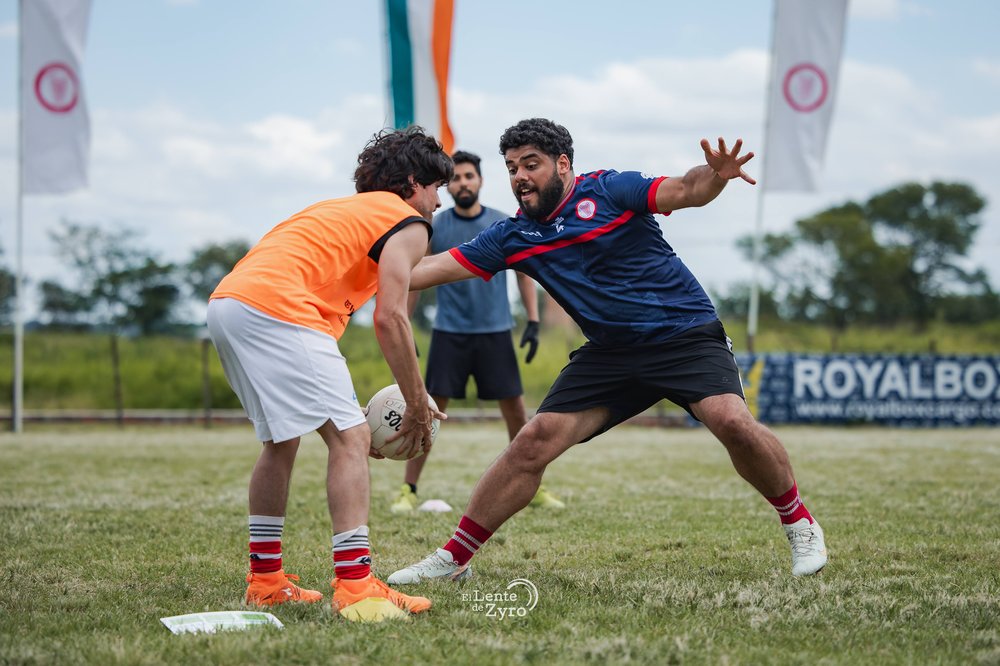
As in Chile, Keenan assessed and certified some players to teach Gaelic Football locally. Surphot says this “laid the foundation to spread GAA in Paraguay. When Roger arrived we had zero qualified coaches, we now have ten”.
The final stop on Keenan’s journey was Argentina, where the story of Gaelic Games in South America began. Players from both GAA Clubs in Buenos Aires turned out for three days of GAA, including a tough but rewarding three-hour session in persistent drizzle on the grounds of the Hurling Club. After spending time in the Clubhouse after the session, Keenan was struck by the prominence of the Hurling Club’s Irish heritage, saying:
When you visit [Argentina GAA] you’d think you were in any part of Ireland with the plaques on the wall. All the names, Casey, Reilly, Lynch, Fahy, it's really amazing. They’re completely Spanish speaking, but they're really steeped in the Irish culture.
Gaston Lopez Soler, President of the Hurling Club, said it was invaluable for an Irish coach to share knowledge “not only in sporting terms but also about the spirit and traditions of the GAA”. He added that “his guidance left a lasting impact on and off the field.”
The final training session was played in typical Argentinian sunshine on a pitch overlooking the Río de la Plata estuary, and players demonstrated their skills to receive their coaching qualification. Underage players from Cuenca del Plata GAA attended this session too and Keenan was impressed by the quality of play from Buenos Aires’ youngest GAA cohort:
“Their U15s wouldn't have been out of place playing in a grade three or four level at underage in Tyrone. They have been coached well and their skills are very developed. I was pleasantly surprised to see how good they are.”
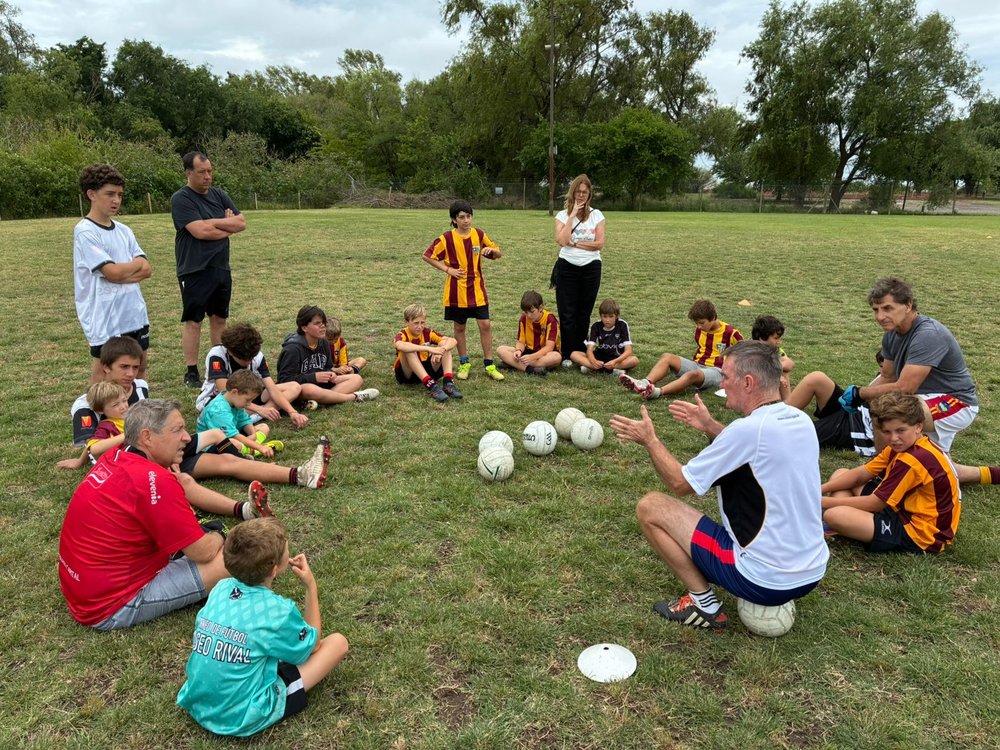
Francisco Lynch of Cuenca del Plata GAA was also very positive about the value of the visit, saying: “I viewed it as a symbol of exchange between Ireland and Argentina. We were delighted to welcome Roger and show him the very best of our Club. Roger truly embodies the GAA values which are so important to us.”
A growing footprint for GAA in South America
The footprint of Gaelic Games in South America has historically been very small. However over the past few years, there has been a flurry of activity, which has seen new Clubs founded in Chile, Paraguay and Argentina.
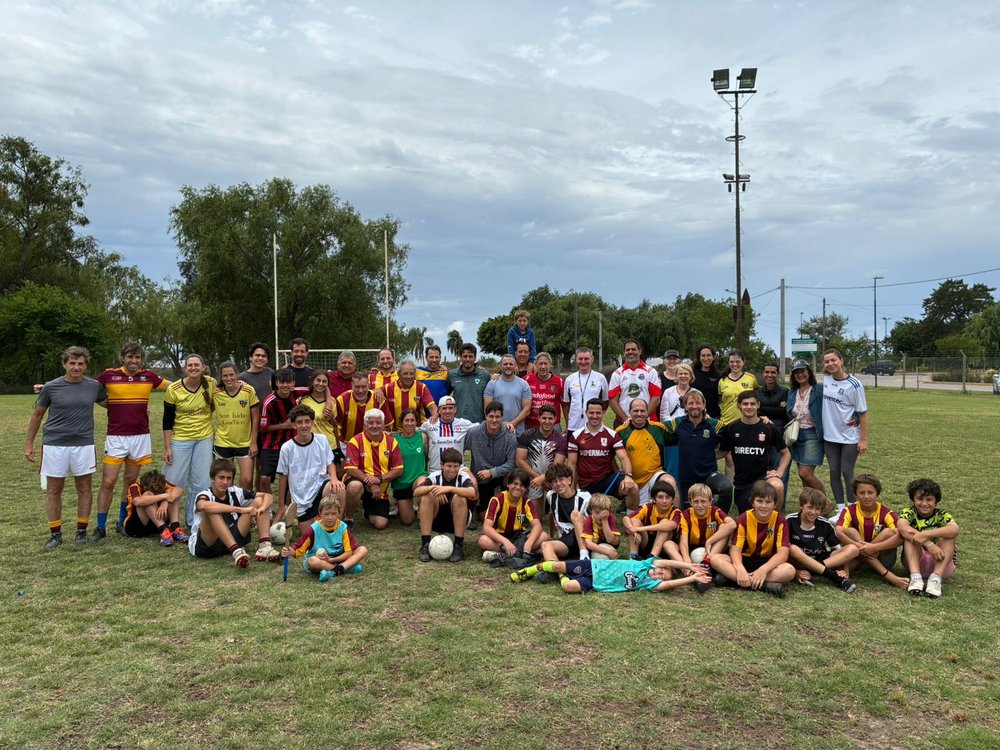
GAA Clubs in the region are providing a sense of belonging and community, the chance learn a new skill and stay fit, and also the opportunity to connect with Irish culture.
While still less developed than the international GAA leagues in Europe and Asia, it’s fair to say that Gaelic Games in South America is gaining momentum and, with dedicated members and growing interest, the future looks bright.