


Farmer Field Schools
Growing livelihoods in a changing climate in Zambia
For farming communities in Zambia, changing weather patterns are making it increasingly difficult to grow food and earn a reliable income.
With support from Irish Aid, Oxfam and its partners are helping farmers develop the skills, resources and resilience they need to adapt.
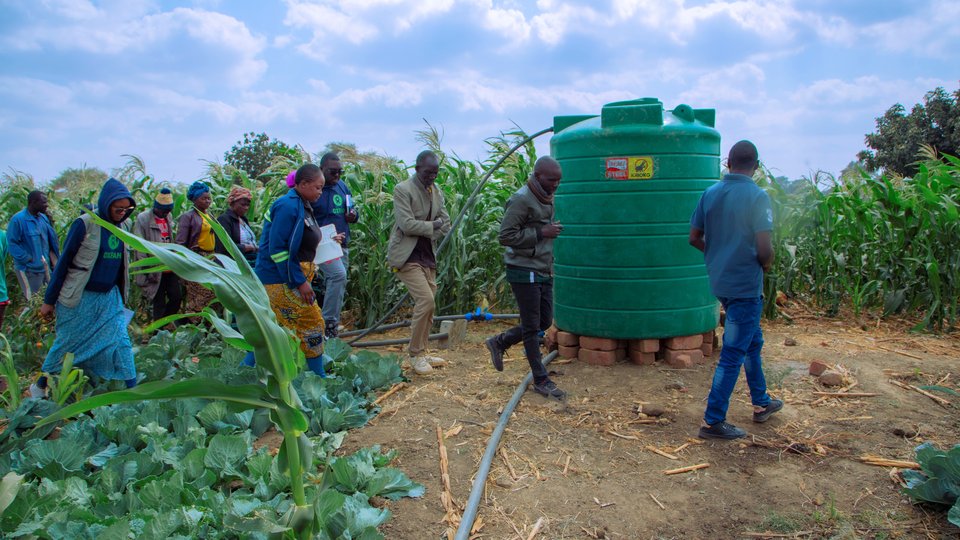
One way they are doing this is through Farmer Field Schools, which bring groups of farmers together to learn and experiment with sustainable farming practices in their own fields.
The schools are supported as part of Oxfam’s work through Ireland’s Civil Society Partnership, an Irish Aid funding scheme that funds civil society organisations working to tackle poverty, vulnerability and inequality around the world.
Turning farming skills into tangible community improvements
For 20 farmers taking part in Nsole Farmer Field School in Namwala in Zambia, the programme has helped turn new farming skills into tangible improvements for their community.
We started with nothing but hope and a few seeds. Now we’re building a future.
The farmers began by growing cabbage and tomatoes. Their first harvest generated a profit of ZMV 6,600, approximately €320. Rather than stopping there, the group reinvested the money into buying six goats.
They later purchased a 2,500 litre water tank worth ZMV 4,800, approximately €230. The investment has helped them improve productivity throughout the year and strengthen their ability to cope with changing weather conditions.
Growing food and building leadership
The benefits of the Farmer Field Schools go beyond simply increasing agricultural production.
Tiyango Chinenge, the Chairperson of the Kulikafela Farmer Field School, has taken on a leadership role both in the field, and in her community. She now shares her experience with other women and encourages them to take on greater leadership roles in their communities.
Supporting women’s participation and leadership is an important part of Oxfam’s wider climate work. Its programmes aim to ensure women’s voices and needs are included in decisions about how communities prepare for and respond to climate change.
Preparing communities for a changing climate
Through its Irish Aid supported work, Oxfam helps communities prepare for climate shocks and build more resilient livelihoods.
Alongside sustainable farming, this includes improving access to weather information and early warning systems s communities can plan ahead. They also support better water services and more sustainable management of natural resources.
Oxfam’s future climate work will continue to focus on helping people adapt to climate change while reducing its impacts. This includes supporting climate-resilient livelihoods, green enterprises and skills development for women and young people. Measures such as clean cookstoves, agroforestry, ecosystem restoration and sustainable land and forest management are also being implemented to reduce emissions.
For farming communities such as those in Namwala, these efforts can provide practical ways to respond to a changing climate, while building more secure and sustainable livelihoods for the the future.