


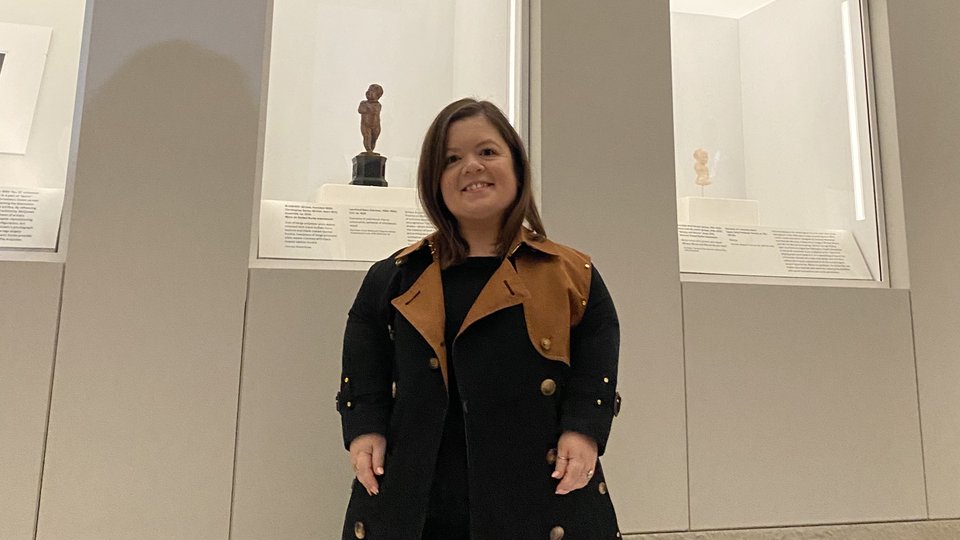
How Sinéad Burke helped reshape the 2026 Met Gala and Costume Institute
Every year, the Gala funds the work of the Costume Institute at The Metropolitan Museum of Art, one of fashion’s most influential cultural institutions. And this year, an Irish voice helped reshape who that world was designed for.
‘Always advocating, always learning’
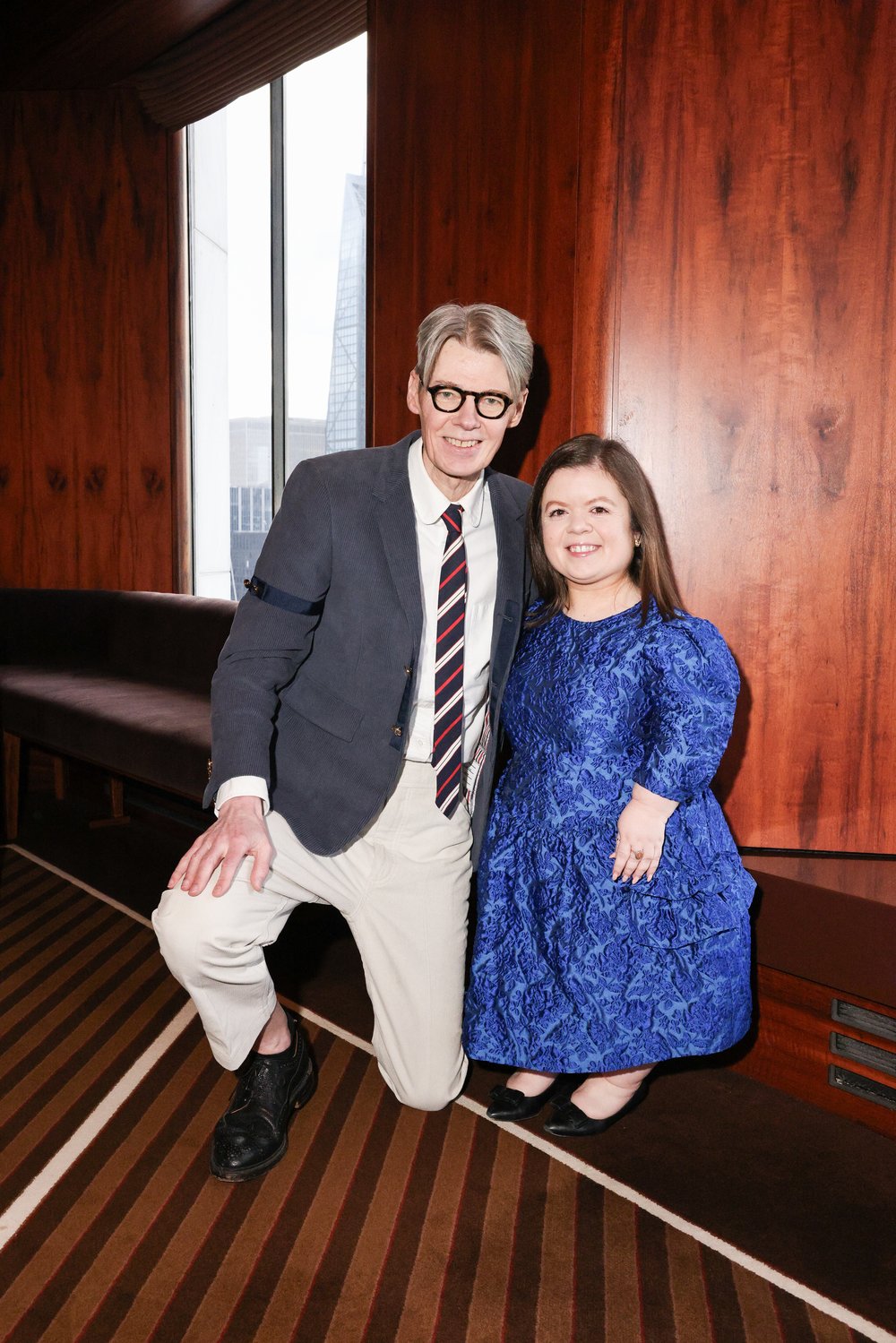
When Sinéad Burke received an email from Andrew Bolton, curator in charge of the Costume Institute, it marked the beginning of an 18-month collaboration that would ultimately change both the 2026 Met Gala and the accompanying exhibition, Costume Art. It is a collaboration that came about after many years of discussions and learnings together.
“I first met Andrew in the restaurant at the Victoria and Albert Museum in London during the press preview of his touring exhibition, ‘Savage Beauty’,” she remembers. “That was over 15 years ago, and in the time since, I have had the privilege of spending considerable time with Andrew and the wider team at the Costume Institute – always curious, always advocating, always learning.”
Beyond symbolic representation
For Burke, founder and CEO of strategic accessibility consultancy Tilting the Lens, the work went far beyond symbolic representation.
The Costume Art exhibition explores the relationship between fashion, embodiment and art. Her team consulted on the curation of “The Disabled Body” section of the exhibition, contributed to catalogue development, trained tour guides and advised on accessibility measures for both the exhibition itself and the Met Gala.
In naming this section ‘The Disabled Body’ we wanted Disabled people to feel welcome, to be invited, and to see themselves in the pieces and objectives, and to challenge the absences that continue to exist.
“For Tilting the Lens to consult and support the development of this section [The Disabled Body] of the exhibition was a significant challenge.
Our remit began with the title of this thematic section. We were specific and explicit in our naming and referencing, as while the etymology of the words disability and disabled often focus on absence, lacking, or deficiency, we were clear that in our naming of the Disabled Body, it is an exercise in Disability Pride, and an act of continued reclamation.
In naming this section ‘The Disabled Body’ we wanted Disabled people to feel welcome, to be invited, and to see themselves in the pieces and objectives, and to challenge the absences that continue to exist,” she says.
Offering a broad view of Disability
For ‘The Disabled Body’, Burke’s team researched design archives for disability-related collections, and lived experiences of designers. They suggested key pieces and object pairings, and tried to ensure the exhibition was as broad as possible.
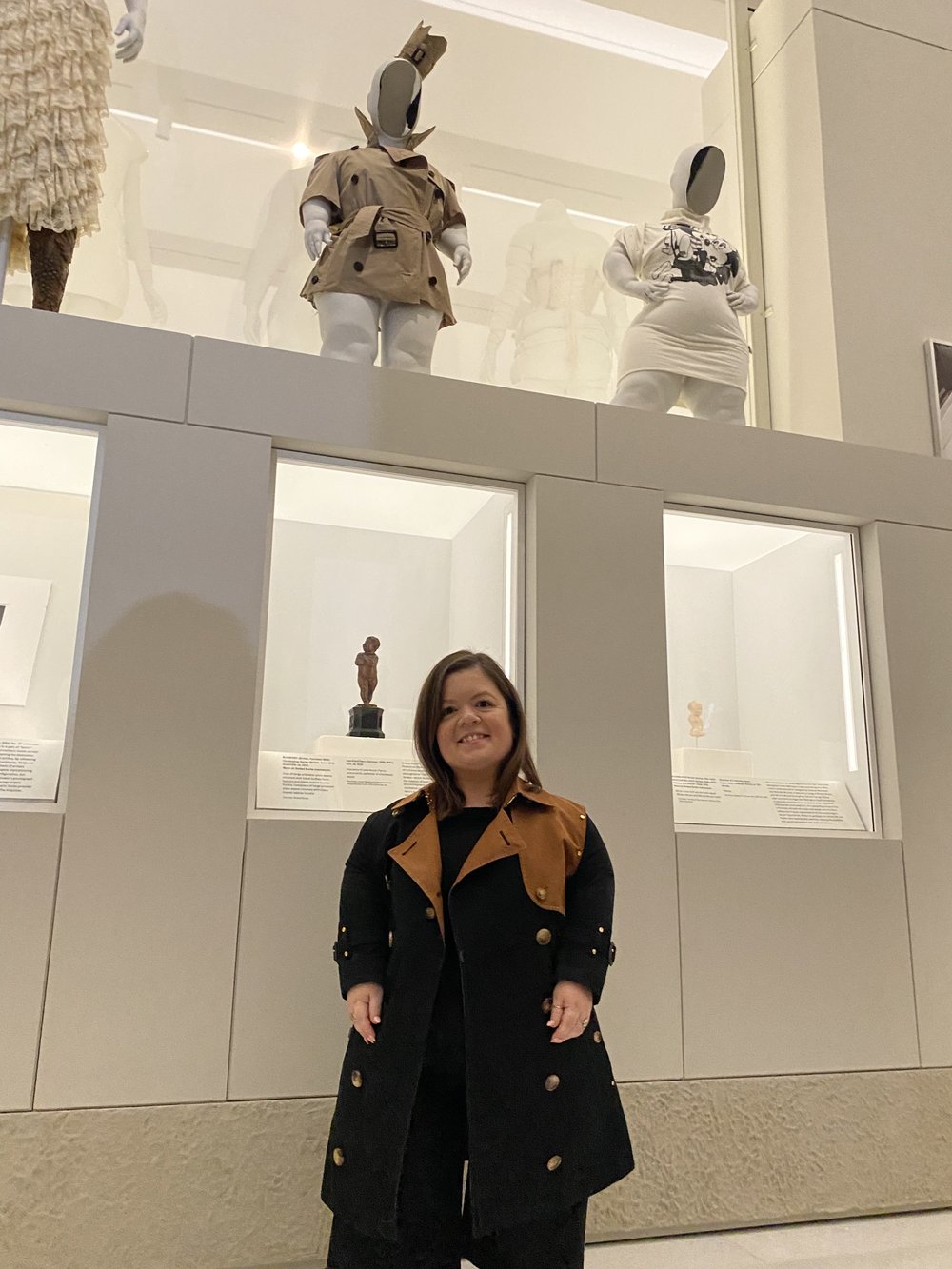
This section of the exhibition features Disabled designer Sugandha Gupta, and showcases designers, painters and sculptural works that reference Deafness, Blindness, physical disabilities, neurodivergence, and mental illness.
Creating new mannequin forms
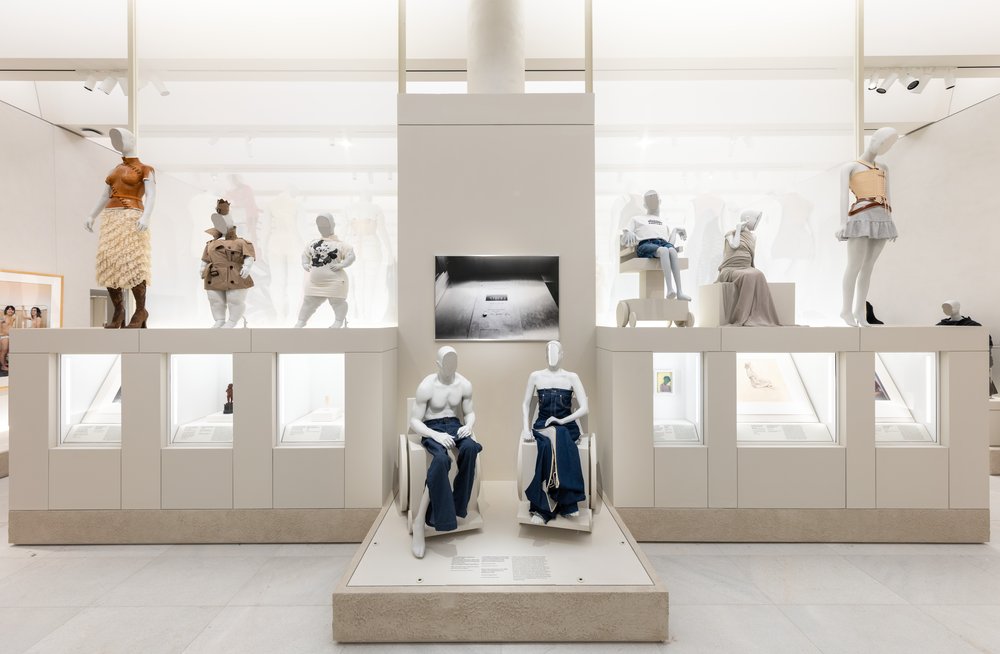
They also played a key role in one of the exhibition’s most striking interventions: the creation of nine entirely new mannequin forms based on Disabled bodies.
Rather than adapting existing mannequin shapes, the Costume Institute commissioned bespoke forms using scans and measurements of real people, including Burke herself, model Aariana Rose Philip, athlete and model Aimée Mullins and performer Goddess Bunny.
Burke had previously had a mannequin of her body made in 2018 for the Body Beautiful exhibition at the National Museums of Scotland. It was the first mannequin of a person with dwarfism to exist.
It was made using casting material to create moulds and was an inflexible model with limited movement or range. For the Costume Art exhibition, the Costume Institute used photogrammetry to record, measure and interpret the photos so that artist Frank Benson could transform them into ‘digital clay’ for the new mannequin forms.
“In practice, it was a cylindrical machine, with cameras placed three inches apart, covering the entire surface area. There was a small space to step into, and in the centre, every part of your body was in the centre of a lens,” says Burke. “It was an intimidating process.
The purpose of including the Disabled Body in this exhibition is to communicate that disability is part of the human experience. We are all likely to experience disability and a Disabled body, particularly if we have the fortune to age.
"Standing in my underwear and a pair of shoes that didn’t fit, I was encouraged by the team at the Costume Institute to move my body into positions that could be used in this exhibition or a future one.
Seeing your body from all angles and perspectives is an act of empowerment, but starts with the need to unpick, challenge, and silence the perspective that with bodies, there is a norm, an ideal, a desirability. We are all the norm, the ideal, and desirable,” she explains.
Shaping cultural understanding
Burke believes exhibitions like this one have enormous power in shaping cultural understanding because they decide what is preserved, elevated and remembered.
“The purpose of including the Disabled Body in this exhibition is to communicate that disability is part of the human experience. We are all likely to experience disability and a Disabled body, particularly if we have the fortune to age. Historically, to be Disabled, was to be less than others, to be worthy of pity or shame. Costume Art rejects these ideas and instead, honours the beauty and validity of the Disabled body,” she explains.
For many Disabled people, climbing the steps to the Met Gala has always been inaccessible. It has meant that very few physically Disabled people have attended the Met Gala. To the best of our knowledge, it’s Aimée Mullins, and me.
Making the Met Gala more accessible
This idea also extended to Burke’s mission to make the Met Gala itself, more accessible. “I have been advocating for a more accessible Met Gala for almost 20 years. The Met Gala is a fundraiser, a party, and over 80 years, has evolved to become a litmus test for who and what is accepted and valued in fashion," she says.
"That can be both a positive and a negative, but for many Disabled people, particularly those with physical disabilities, climbing the steps to the Met Gala has always been inaccessible. It has meant that very few physically Disabled people have attended the Met Gala. To the best of our knowledge, it’s Aimée Mullins, and me. I attended the Met Gala once before in 2019.”
When Vogue contacted Burke about being part of the host committee for the 2026 Met Gala, she made it a priority to address the physical accessibility issues for guests and media. This presented many challenges – the famous steps of the Met, on which all red carpet photos are taken, are too steep to allow for a ramp, and the handrails at their side are not robust enough to hold a stair lift.
The solution, in the end, was remarkably straightforward: “My suggestion has always been to extend the tent. Typically at the Met Gala, the width of the tent spans two city blocks; 82nd to 84th street. It covers an entry point, check-in and the stairs up to the main entrance.
Yet, the Met has a step-free entrance on 81st street. It’s clearly labelled and used by visitors daily. Why can the tent not be extended to include the 81st street step-free entrance? Yes, Disabled guests will still not be able to climb the steps, it will not be an equal experience, but they will be able to attend and participate in the red carpet moment.”
Building a legacy
While Burke recognises it is not a perfect solution, it is progress. And her work with Tilting the Lens has consistently been about exactly that, not to ensure change for herself alone, but to have a wider impact.
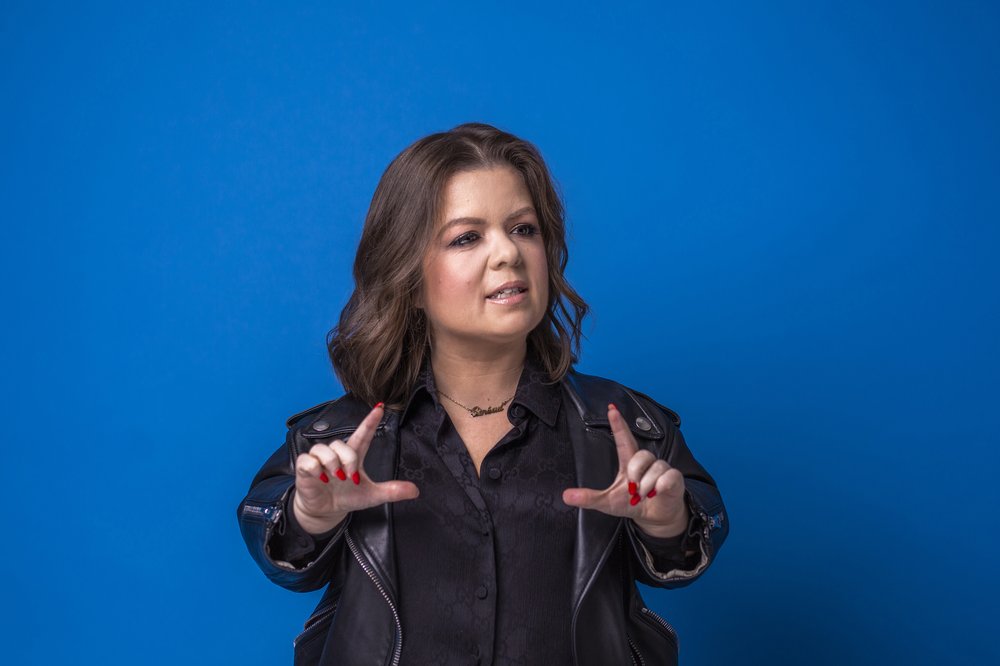
“One of Tilting the Lens’ principles is building legacy memory," she says. "We want change and the tools for change to not just live with one person, or one department in a company or organisation, but for it to be part of the fabric in how things function long term. This is important, because if that catalyst is taken away for any reason, everything stalls. That’s not the fault of the person, but a failure of the institution. Our work is about cementing that in every project that we do. This project was no exception."
A remarkable trajectory
For Irish audiences, Burke’s involvement with the Met Gala and Costume Institute carries a particular resonance. Ireland has long produced globally influential voices in literature, theatre and design, but Burke occupies a distinct space at the intersection of culture, activism and systems change. Her work has consistently challenged industries that have historically excluded Disabled people from decision-making, visibility and participation.
While Burke has attended the Met Gala previously, this year her role evolved from attendee to collaborator, helping to shape the Institute itself in many ways. It marks a remarkable trajectory for an Irish advocate, whose work began with challenging assumptions around accessibility and representation in fashion and media.
For this project, it was not simply about accessibility, access ramps or logistical accommodations. It is about recognition: recognising Disabled people not as an afterthought or separate within fashion and culture, but as part of the story. As participants, collaborators and subjects worthy of visibility in their own right. At one of the world’s most influential cultural institutions, that recognition is no small thing.
Exhibition images were provided courtesy of The Metropolitan Museum of Art, shot by Anna-Marie Kellen and Nicholas Calcott. To find out more about the exhibition visit metmuseum.org.
To learn more about Sinéad Burke's work, visit tiltingthelens.com.