
Irish eyes on the universe
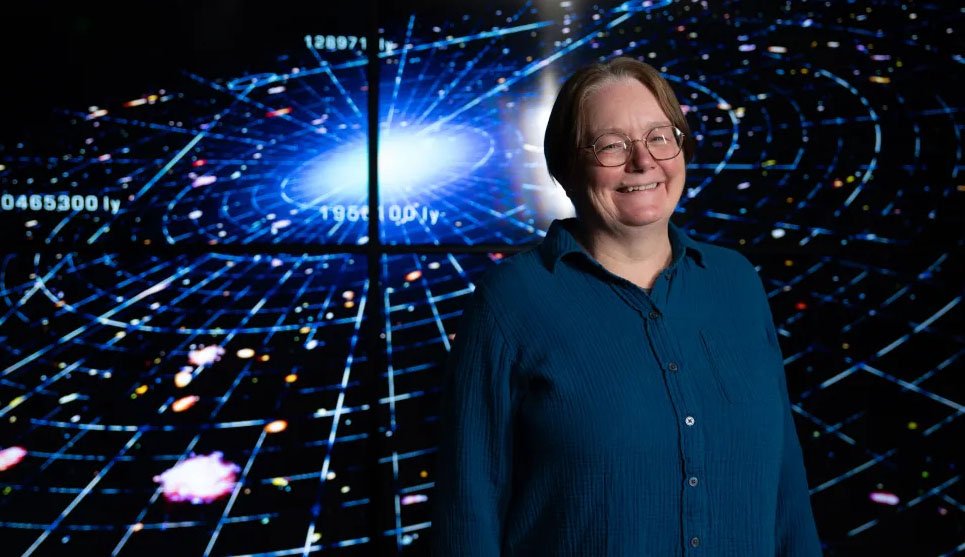
Meet Irish-born astrophysicist Dr Julie McEnery, Senior Project Scientist for NASA’s Nancy Grace Roman Telescope launch
When NASA’s Nancy Grace Roman Telescope launches into space and history, Irish eyes and indeed the eyes of world will be watching.
Few, however, will be following the moment more closely than Irish-born astrophysicist Dr Julie McEnery, the mission’s Senior Project Scientist.
After years of helping steer one of NASA’s most ambitious scientific projects mission from concept to launchpad, McEnery has plenty to think (and even worry) about. Yet among the technical checks, countdowns, and inevitable nerves that are part and parcel of an undertaking of this scale, another concern weighs on her mind.
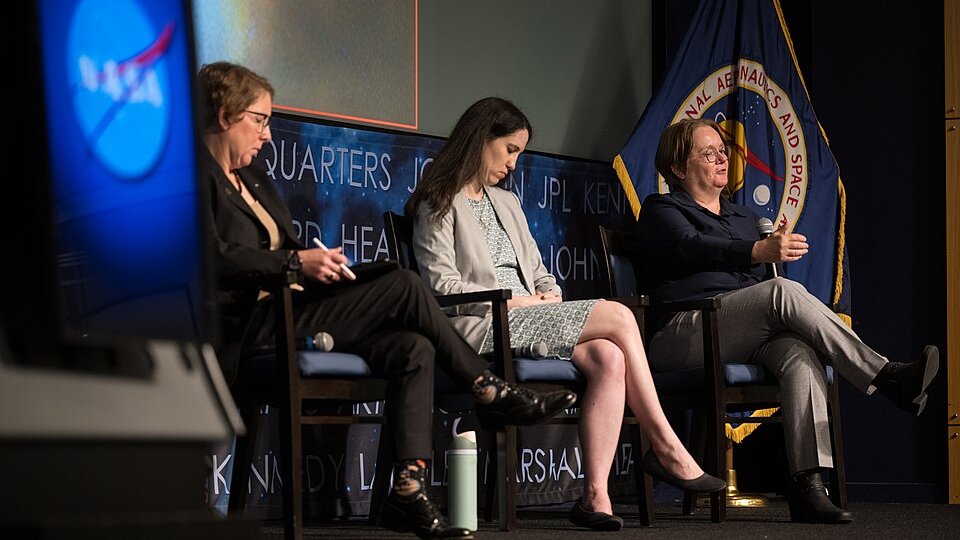
"They’re all coming out for the launch, the whole [McEnery] tribe. We’re from Dublin but my dad now lives in Cork, so my youngest brother has a broad Cork accent, so I’m going to be interested to see how that plays out [here]." says McEnery
'Mother of the Hubble'
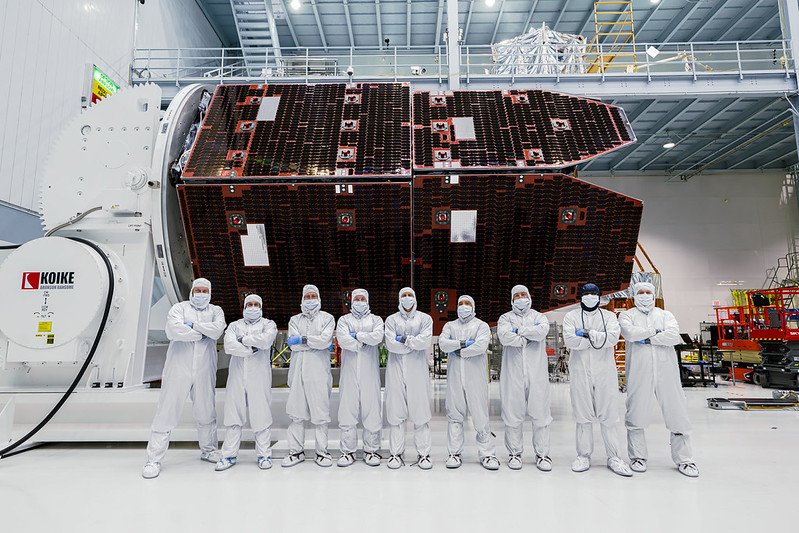
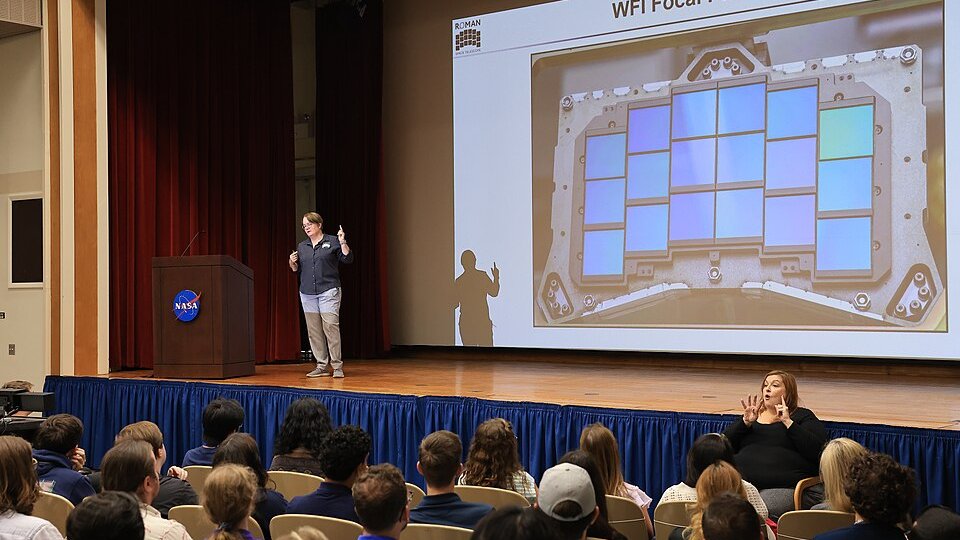
Named after NASA’s first chief astronomer, the ‘mother of the Hubble Space Telescope,’ the Nancy Grace Roman Telescope is NASA’s next flagship infrared space observatory. Designed to investigate dark energy, discover planets beyond our solar system and transform our understanding of the cosmos, Roman combines Hubble-level sensitivity with speed.
“Roman has the ability to sweep out large regions of the sky with exquisite performance and sensitivity,” McEnery explains. "So it takes the kind of performance that we have become familiar with from the Hubble Space Telescope, but it will survey the sky a thousand times faster.”
Astronomical scale
“With one month of Roman data, we will take an observation of our own galaxy, our own Milky Way. We'll see 20 billion objects. It'll be the largest catalog of astronomical objects that have ever been produced with just one month of Roman observations,” McEnery marvels. “And our main surveys are designed to study the fundamental nature of the universe itself.”
Picture: Beyond the Deep Field: Hubble’s Legacy and the Future of Cosmic Observation
From Green Grass to Greenbelt
Long before she was spearheaded observations of distant galaxies, McEnery was asking questions about the world around her in Dublin.
“I really loved understanding how the universe worked. You know, why are rainbows the colours that they are? Why is the grass green? Why is the sky blue? How does everything work? Where are the planets?”
First encouraged by great primary school maths teachers, McEnery followed those questions wherever they led, with curiosity as her compass, as opposed to any predetermined destination. That journey would eventually take her from Dublin to Arizona and New Mexico, and almost to Japan, before NASA's Goddard Space Flight Center in Greenbelt, Maryland, came calling.
McEnery attributes her landing at NASA to “a bunch of random chances” and “happenstance.” What was not random was her consistent pursuit of her scientific interests.
“I didn't ever have you know, all my life's dream is to work for NASA,” she says. “In fact, if you told me that as a grad student, I'm going to say, well, actually, I want to work on ground-based stuff.”
Instead, she attributes her path to NASA to her openness to opportunity, investigating interesting questions, and teamwork.
“It’s great place to work because there are very, very good engineers and technologists. So if you have an idea of something that you want to do or something that you want to build, and there's lots of fantastic people around you to help make it a reality.”
Astrophysics’ ‘Irish Mafia’
That scientific philosophy was reinforced during her training in Ireland.
McEnery’s leadership of the Roman mission is the latest in long record of Irish investigation and accomplishment in gamma-ray astrophysics, a field devoted to some of the universe’s energetic and elusive phenomena. Gamma-ray astrophysics studies events such as exploding stars, rapidly spinning neutron stars and supermassive black holes by detecting gamma rays, the highest-energy form of light. As McEnery succinctly describes it, “where particle physics and astrophysics combine.”
Ireland has played a foundational role in ground-based gamma ray astrophysics.
This expertise in high energy travelled down the mountains north to Belfield and University College Dublin’s physics department, where McEnery completed her PhD. It was here that McEnery what she affectionately refers to as the “Irish mafia,” a core group of peers that were proud to carry forward this tradition of established expertise to impressive lengths in every corner of the world.
“You find us all over the world…And that really opened a lot of doors…I think we got excellent training, not just in gamma astrophysics, but in how to be a scientist, how to think problems, how to solve them.”
The strength of those relationships remains one of the qualities she associates most strongly with home.
"I've developed an appreciation for how important people are in Ireland. We're very people-focused. People remember who people are. They stay in touch with one another. The network of contacts from being Irish and from having gone to college there really extends in ways that are delightful."
Reaching further together
McEnery's journey from Ireland to NASA also reflects the increasingly international nature of scientific discovery. The existential questions astronomers pursue transcend national borders, as do the collaborations required to answer them.
From her desk in Greenbelt, McEnery has observed Ireland’s own space ambitions and capabilities expand dramatically: “When I left, I would sometimes joke that the reason that I work in the U.S. is that the Irish space programme is nothing to write home about, but I can’t make that joke anymore now…Ireland is getting more involved and it’s great to see.”
Through its membership of the European Space Agency, Ireland’s universities, researchers, and technology companies contribute to missions and instruments that observe Earth, study the solar system, and probe our wider universe.
Ireland also recently joined the Artemis Accords, aligning itself with international principles for peaceful, transparent, and sustainable civil exploration of the moon, Mars, and beyond. An international research spaceflight mission with the International Institute for Astronautical Sciences is primed to send the first ever Irish astronaut to space, Dr. Norah Patten.
For McEnery, these developments reinforce a lesson she has learned throughout her career.
"International partnerships allow you to reach much further…together, you’re much more than yourself alone."
Dr Julie McEnery
Opening eyes
As Roman takes flight, McEnery remains drawn to not only the questions Roman was built to answer, but also the unpredictability of discovery.
“We're going to be mapping out large regions of the sky to study the things that we know about and to find the things that we didn't know to look for. And that I find incredibly exciting. Because exploration is always good.”
The telescope’s launch will mark the beginning, not the conclusion, of its scientific trajectory. In the years that follow, its observations could sharpen our understanding and challenge today’s assumptions, giving us a glimpse into our own context.
“It has been a long journey. It's been a long journey developing the concept, and then it's been a long journey to actually build it. And it's incredible to think that after, you know, so many years of applying for the mission, we're… opening its eyes on the universe for the first time.”
Perhaps one of the most remarkable aspects of the mission is that its window will be fully open to the world. As the telescope maps the vast sky, its processed data will flow freely to researchers across the globe, publicly and freely available to anyone, anywhere in the world.
In McEnery’s eyes, that possibility remains Roman’s greatest attribute.
I'm most excited just to see what it sees. When you look at the universe in a new way, with a new telescope, with new capabilities, you find the things you didn't know to look for.
Roman was developed by some of Ireland and the world’s greatest scientists to survey the cosmos on an unprecedented scale. But its greatest discoveries may be the ones that answers questions no one has even thought to ask.
And for the Irish scientist at the helm, that is precisely the point of exploration.
>> Learn more about the mission at Nasa.gov/roman.
Photo credits in gallery: NASA Jolearra Tshiteya | NASA Sydney Rohde | NASA Chris Gunn