


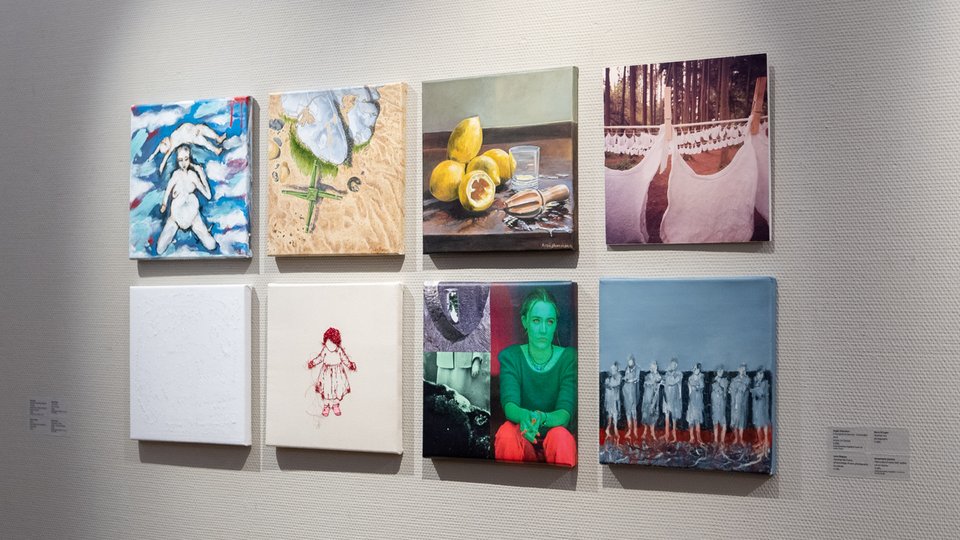
Bloodroot: a powerful exhibition celebrating the resilience and strength of women
Donegal-born poet Annemarie Ní Churreáin’s debut poetry collection, Bloodroot, was partly inspired by a family connection to the Irish mother and baby homes in the 1950s. The collection explores the frailty and complexity of human relationships, often addressing the question of what it means to ‘belong’ in the world.
The collection name, Bloodroot, came from the plant of the same name. “It’s a tenacious plant with a lot of personality,” says Ní Churreáin. “I first came across it when I was on a residency in Florida at the Jack Kerouac House. I learned from a local herbalist that bloodroot can be used to heal wounds but, if used incorrectly, can also be poisonous. To me, it’s a title that speaks of family, the power of wild things and, also, the risks and gifts involved in the making of poetry.”
As part of St Brigid’s Day celebrations, the Embassy of Ireland in the Netherlands in collaboration with the Hamilton Gallery in Co. Sligo, Ireland, and Pulchri Studio in The Hague, hosted an exhibition of works from over 100 female, Irish artists who were inspired by a selection of Ní Churreáin's poetry.
“Irish culture is full of great stories about powerful female figures like Brigid and so I decided to select poems that would honour that tradition. Some poems explore the violence and injustice forced upon Irish women and girls in recent times. Other poems celebrate the enduring capacity of Irish women for community, solidarity and truth telling. Women like my grandmother lived through moments of intense pressure and grief but they were also protestors, change-makers and survivors. These four poems seeks to embrace the dark and light of Irish history and to celebrate the resourcefulness and creativity of Irish women,” she explains.
Watch Annemarie Ní Churreáin explain the inspiration behind Bloodroot
For the exhibition, Ní Churreáin hoped that her poetry would function like a portal, allowing the artists to enter into a world of their own making. “It has been magical to see the results of that process. Each artist has brought the atmosphere of their own life to these poems of witness. Each artwork is evidence of courage, community and a faith in creativity. I feel incredibly grateful that the poems have found a place in the work of these artists and that their art has found a home in my imagination,” she says.
The exhibition was curated for St Brigid’s Day, but long beyond the national holiday, Brigid serves as figure for the spirit of Irish women and their journey through time. “Brigid exists in my mind as a woman of protest. It’s said that when her outlawed son died in battle, Brigid’s keen was the first keen heard in Ireland. She’s a figure of rootedness, power and female strength,” says Ní Churreáin.
“It’s vitally important that we support and embrace art that acts as a witness to violence, injustice and change. Ireland has changed immensely over the last 100 years and we have much to be proud of but we must also remember that women and girls in Ireland and around the world still face challenges and dangers. I’m grateful for art that gives us a way to elevate the voices of our mothers, sisters, daughters. Brigid heralds spring light, community and our onward revolution.”
For more from the Bloodroot exhibition, explore the 110 paintings created in response to the poetry collection on the Hamilton Gallery’s website.