


Building better: Irish architect Alice Clarke on sustainable design in Switzerland
Alice Clarke is an architect, educator and researcher and is a founding member of BothAnd Group. After graduating from TU Dublin, she achieved her masters in Urban and Territorial Design from ETH Zurich and EPFL.
Originally from Meath, Clarke practiced for a number of years in Ireland but found her way to Zurich, Switzerland where she now practices, researches and teaches for the Architecture of Territory Chair in ETH Zurich.
Her work is rooted in understanding the relationship between circularity, landscape, architecture, ecology and the food system from the site to the territory. We had the opportunity to sit down, discuss Clarke’s journey to Zurich, Irish heritage, and focus on sustainability in architecture.
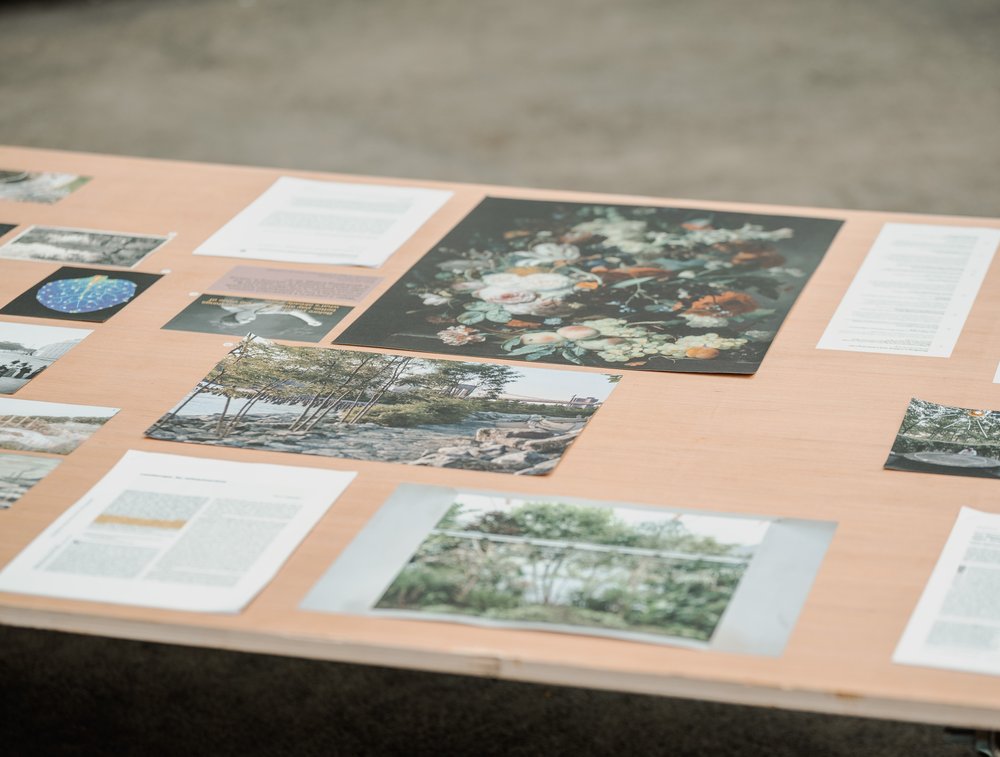
Read our interview with architect and co-founder, Alice Clarke:
What brought you to work in Switzerland?
“Twelve years ago, I came to Zurich for a one-year architecture internship. After a few years practicing in Ireland, I returned to further my studies at EPFL / ETH Zurich, completing a postgraduate degree in Urban and Territorial Design.
Since then, I have stayed on as a researcher at the university, while also briefly working on circular construction and reuse projects at Zirkular, a reuse focused firm. Switzerland has a strong focus on sustainability and practical innovation in the built environment, both in academia and in practice, which is why I decided to stay here to build my career.”
Tell us about the projects you have worked on, and your work in BothAnd Group
“As well as a researcher, I am a co-founder of BothAnd Group, a research and design studio that investigates the social, ecological and political forces that shape both urban and rural territories, working through the fields of architecture, landscape architecture, and exhibition focusing on the link between design and land management.
As a result over the past few years I have been working on design and research projects both within the University and at home in Ireland. I have learned from many projects which have formed strong references for various initiatives that we are developing at home.”
Collaboration with the City of Zurich’s Open Space Department
“One of these includes a collaboration between ETH and the City of Zurich’s Open Space Department, which explored the potential of urban agroecological design across both built and unbuilt public spaces in the south of the city.
Our report outlined the potential of stakeholder networks, productive land and even vacant buildings that could be harnessed by the city to create a more ecological vision.
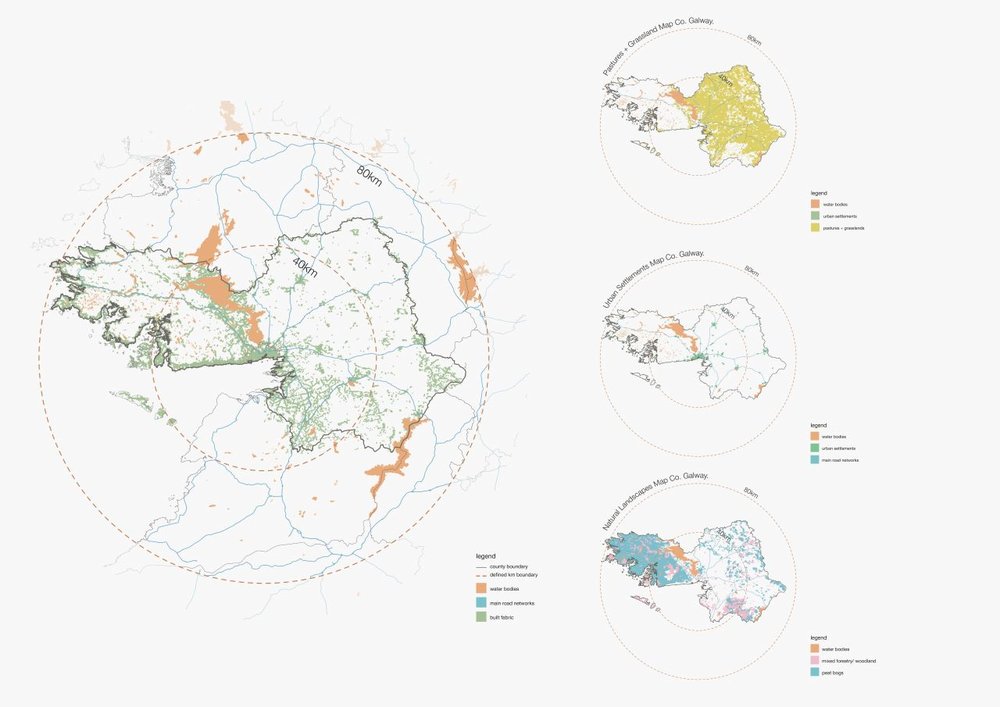
It has influenced parallel work we are developing in the west of Ireland, where we collaborate with the social enterprise group Hinterland in examining the spatial implications of developing a sustainable urban food system in Galway. Both projects are trying to understand the wider spatial impact of a healthy food system in cities.
The first results of our work with Hinterland has led to a food atlas that visualised the invisible systems running Galway city, making them more legible to policymakers, practitioners, and the wider public."
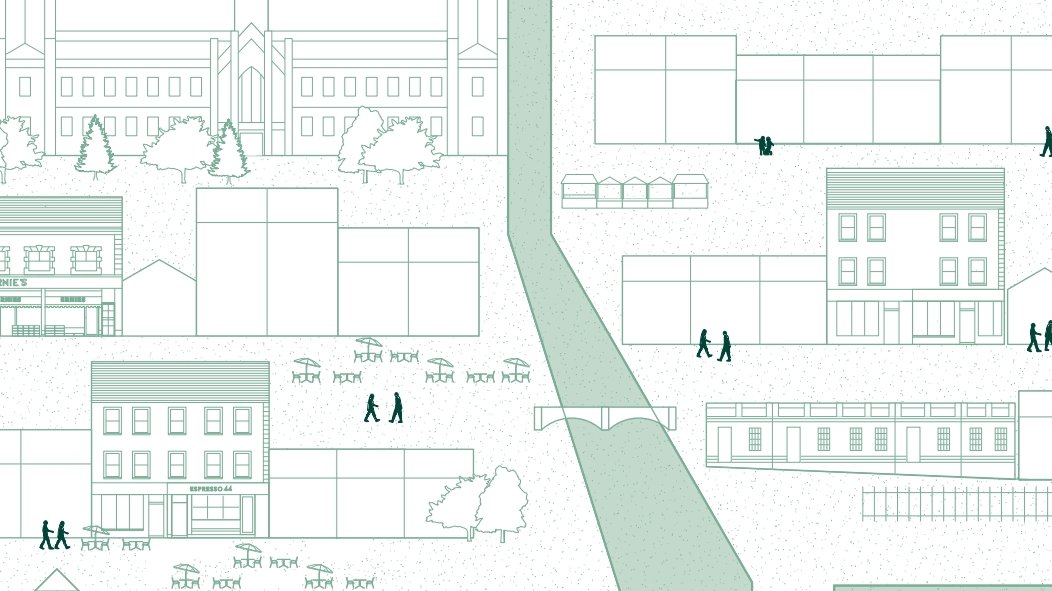
Visualising How Our Food Systems Work - Galway’s Food Hinterland
Learn more about the project
"A second project, opening in Edinburgh this April, builds on lessons learned from my practical experience in Switzerland. The installation explores the relationship between landscape and public space in the context of climate adaptation, particularly in relation to water management.
Using reclaimed materials from previous installations, we are constructing a water-collection infrastructure that enables visitors to physically engage with processes of capture, storage, and reuse. The work reflects a broader interest in circular design principles and the role of landscape thinking in shaping more resilient urban environments.”
How important is considering ecological factors in design and architecture?
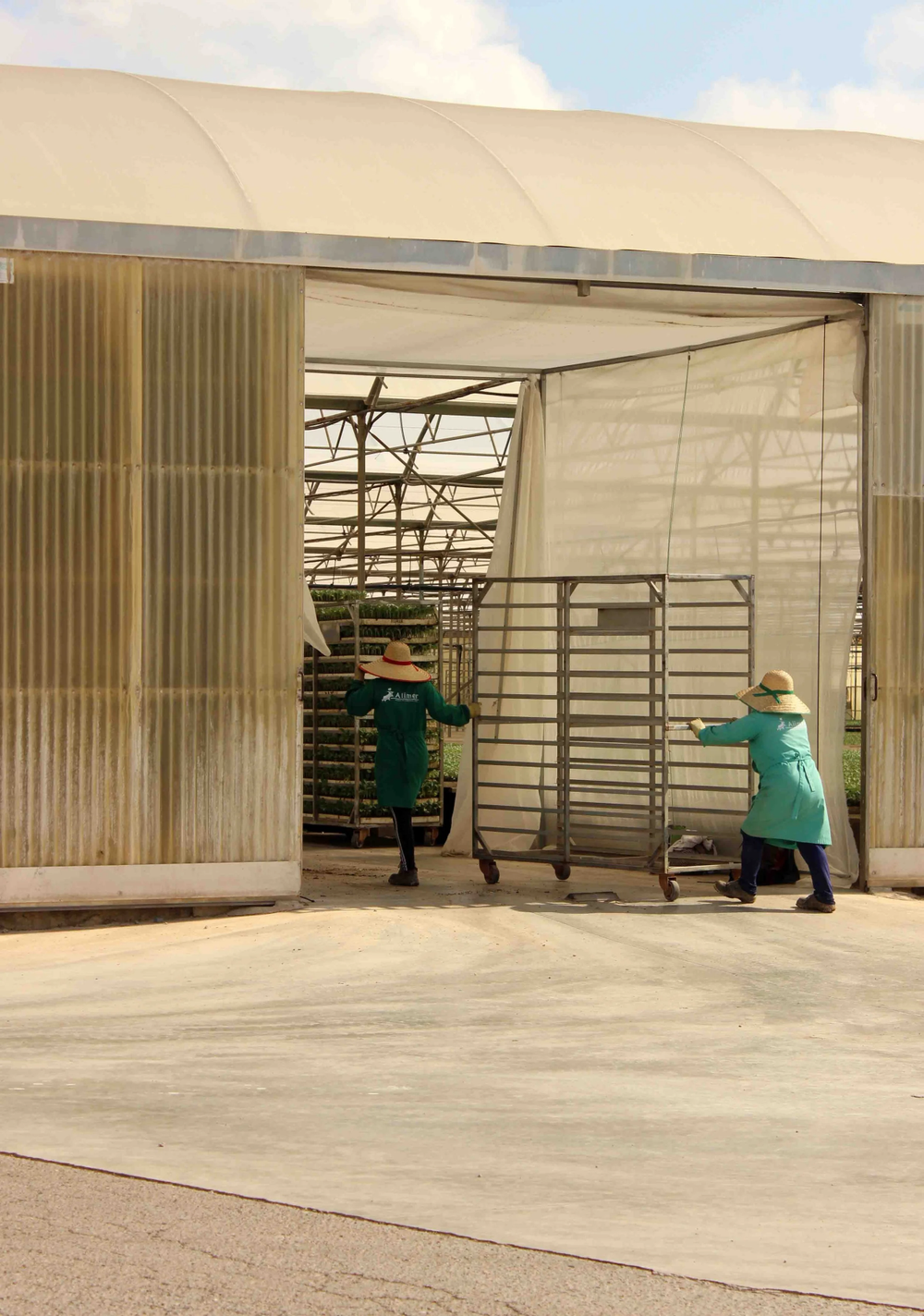
“Recent statistics reveal that the construction industry accounts for nearly half of all extracted raw materials in the European Union. At the same time, industrialised agriculture in Ireland was directly responsible for more than one third of the country’s greenhouse gas emissions in 2023.
“Taken together, construction and agriculture represent two of the most powerful forces shaping land use in Ireland and across Europe.”
"These figures are not abstract. They describe the material reality of how we build, how we eat, and how we inhabit the land. When we consider ecological factors in our work, we are shaping systemic responses to how society will live in the decades ahead determining not only the form of buildings, but also housing, movement, material use, and land management that support them.
It determines whether a home can accommodate remote work, whether an office building can be transformed into a school, whether growing food in the city should be an integrated part of housing and whether demolition is replaced by reuse. The built environment is inseparable from the ecological and social systems that underpin it.
To think sustainably through design is therefore not simply to make buildings more efficient, but to engage with the wider systems that determine extraction, waste, emissions, and land use so that we can keep improving the way we live and will live in the future.”
How does your Irish heritage affect your work?
“Irish heritage has remained a constant reference point throughout my career and in our work with BothAnd Group. We often return to Irish precedents, trying to understand how design questions can learn from examples rooted in Ireland’s cultural and spatial history, focusing on the intelligence of these systems.
Much of our vernacular architecture has been shaped by climate and material scarcity, or collective land management practices such as the Clachán village structure and the Rundale system. These models reveal ways of living that were inherently communal, resource-conscious, and deeply attuned to landscape. Focusing on our own heritage allows us to attempt to understand how inherited knowledge might inform contemporary approaches to sustainability, land use, and shared space.”
The work of Irish architects today has played a huge role in my work and provided a reference for how to integrate knowledge of a place into buildings.
“From the solid brick and stone Georgian houses of Dublin to the thatched Clachán farm buildings scattered across the west of Ireland, this connection to local materials and heritage is found in contemporary Irish architecture. We have produced some of the most inspirational designers over the past few years, with many being recognised internationally for the work they have done both at home and abroad.
Ireland and Switzerland differ in many ways, but comparing the two has encouraged me to think critically and to learn from each context. They have become important influences that are constantly shaping my design perspective.”