
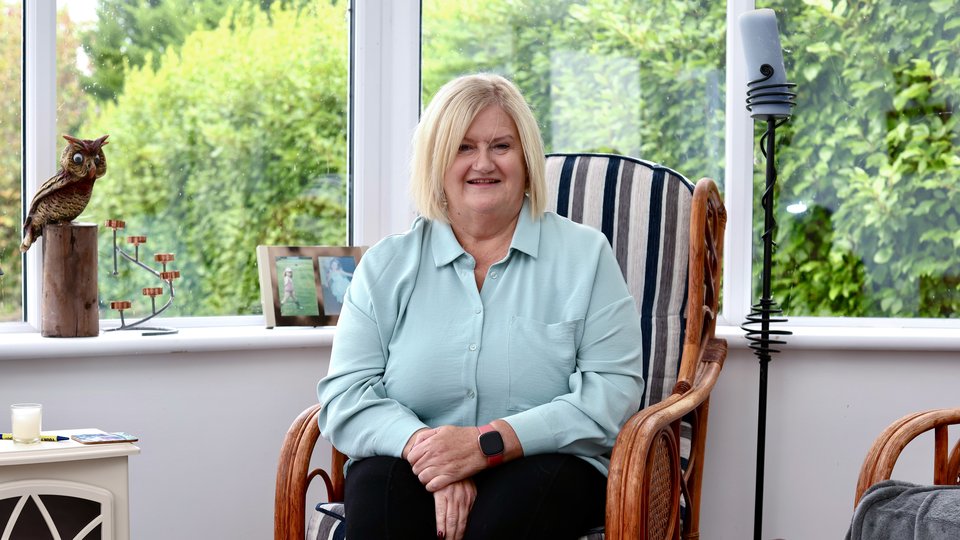
Mary Manning, Dunnes Stores striker
My connection to South Africa
“In July 1984, 11 shop workers in a branch of Dunnes Stores in Dublin went on strike over their right not to handle goods from South Africa. The Dunnes Stores strike lasted until April 1987. The strike made international headlines and led to the Government of Ireland banning fruit and vegetables from South Africa.
None of us knew anything about South Africa before the strike. I knew about Nelson Mandela and Steve Biko but that was it. Nimrod Sejake was a trade unionist from South Africa who was exiled in Ireland. He told us a lot about what people in South Africa were going through. Nimrod explained that South Africa was like a pint of Guinness: a small number of whites on top and all the black people underneath.
The thing that got us was that it was based on your colour. You can hide your religion or your political party but you can’t hide your colour. It started as a union instruction but it became something we truly believed in. We thought we’d be on strike for a couple of days but it lasted two years and nine months. We were living on £21 a week strike pay. We were there six days a week. It was tough. We had low points. We all had moments when we felt down. We had to support each other.
Marius Schoon spoke at an event and thanked us for what we were doing. His wife and daughter had recently been murdered. We realised that the worst that could happen to us was that we’d lose our jobs, but in South Africa people were losing their lives. That made us more determined.
A lot of people told us what we were doing was going to hurt the black people of South Africa because we were affecting their income. Some people pushed passed us and said we were stupid little girls.
A turning point was when Bishop Tutu asked to meet us. That changed people’s attitude. People began to think that maybe we were right. Bishop Tutu asked us to go to South Africa to see what was happening there. We raised money and in July 1985 we went, but when we got off the plane we were met by soldiers. We were held for eight hours and put on a flight home. The fact that they didn’t let us in made it front page news. People began to ask ‘well why won’t they let them in?’ We achieved more than we thought we would.
We just wanted the right not to physically handle South African goods but the Government banned fruit and vegetables from South Africa. Ireland was the first country in Europe to do it.
When Mandela died, someone on radio suggested that we should go to South Africa to represent Ireland. Within two days we were on the plane. It was incredible. The funeral was a celebration of his life. The atmosphere was so special. It was unbelievable to see people’s response to what he had done. We were told that what we were doing was harming people in South Africa, so to have people come up to us and thank us felt like a vindication. We’re all still close to this day. We’re very proud of what we did.”