
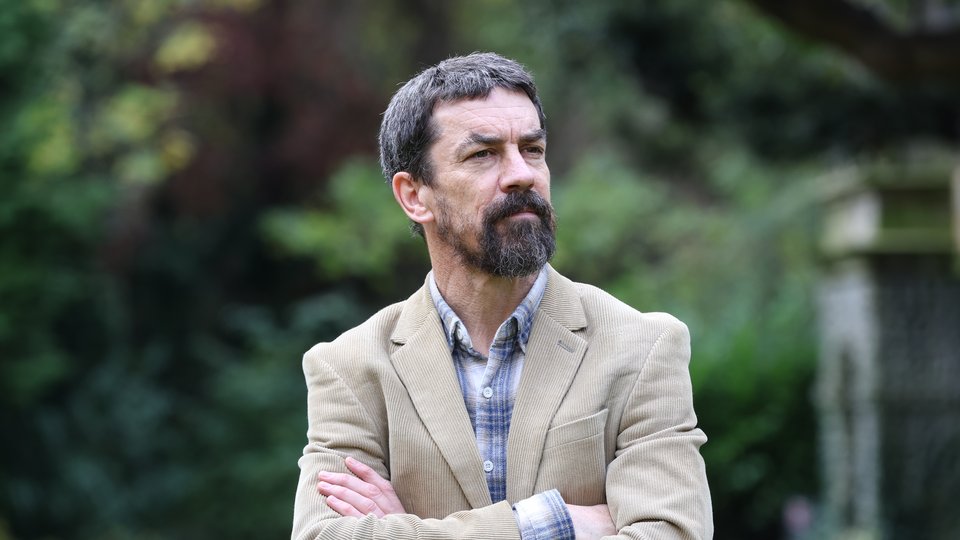
Colin Murphy, Irish columnist and playwright who lived in Soweto and studied at WITS
My connection to South Africa
At the beginning of the century, I spent two years doing aid work in Angola, with Concern Worldwide. The work was challenging and rewarding, but the environment was oppressive and bewildering. We were regularly dispatched for R&R to Johannesburg, and I grew interested in this city that seemed to bridge the Africa that I was working in with the Europe that I came from.
I started to think of returning to college, to understand the deeper context for the work I was doing; a journalist friend recommended me to Tom Lodge, professor of politics at Wits University. I went to meet him in his chaotic, book-strewn office in the Central Block in Braamfontein, and I was immediately smitten.
But when I started as a MA student, having finished my contract in Angola, I was quickly lonely: campus life seemed sparse and uncollegiate; Johannesburg seemed remote and hostile; I missed the solidarity of aid work. On a taxi tour of Soweto I was struck by the more familiar sense (from Angola, but also from Europe) of life being lived on the streets. I found a family who offered rooms, and moved in. I vividly remember arriving into Mama Connie's home after dark one evening, with some trepidation, and being immediately disarmed by the welcome she and her (adult) children gave me: as I had in Tom Lodge's office, I felt I was somewhere familiar.
I spent an invigorating year at Wits and then came home to Ireland to write a thesis, with the intention of returning to Johannesburg soon to seek work. But life had other plans. The next time I returned was as a visiting journalist; and then I went back for Mama Connie's funeral. I had some rough-edged experiences there, of course, and witnessed a society and politics struggling to confront problems that were daunting. But what I most remember are the warmth of the friendships, the sense of possibility, the cultural energy. I miss it still.
So, for me, the relationship between Ireland and South Africa is firstly a deeply personal one - it means friends and memories. It also means a certain shared affinity as countries that were deeply affected, and scarred, by British imperialism, and which experienced 20th-century traumas that may have been very different, but which were part of that post-colonial inheritance - something that helps to explain the strong connection felt in Ireland with the anti-Apartheid movement. Another connection that I witnessed first hand was the enduring legacy of Irish missionaries in South Africa, where many were taught by Irish clergy, and where I visited Irish clergy who were working with the poorest of the poor.
These connections fall into the realm of what political scientists call "soft power" - the social capital that states can draw on on the world stage, thanks to their history, reputation and connections. The South African transition to democracy remains one of the great examples of peaceful conflict resolution; the Good Friday Agreement is another. This mutual success in conflict resolution (albeit incomplete) should be the bedrock of Ireland-South Africa relations; they create the potential for a partnership with a unique joint offering to a conflict-ridden world.