The Pontifical Irish College and its rich and varied communities
The Communities of the College today
The Pontifical Irish College in Rome is one of Ireland’s oldest institutions abroad and has been a presence in the heart of the Catholic Church since its foundation in 1628. For almost four centuries, it has served as a place of formation, learning and hospitality, maintaining a unique connection between Ireland and the Holy See. Today, as it approaches its 400th anniversary in 2028, the College has undergone a transformation in recent years, bringing new perspectives and dimensions to its work, but always retaining the heart and soul of its mission.
Many Irish people are familiar with the College through having experienced a wedding there, a Sunday Mass or other examples of the College’s hospitality. Less people however, are familiar with the recent changes that have taken place there to ensure the stability and continued existence of this important institution.
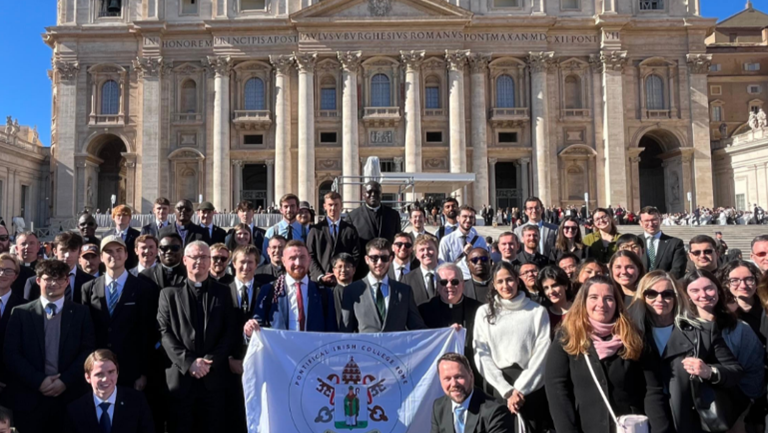
Many people may not realise that the modern College, under the stewardship of Limerick man Rector Fr. Paul Finnerty, is home to three distinct communities: an international community of postgraduate priests, visiting seminarians from the United States, and lay students from Ireland and the US. Together, these communities form a vibrant and international institution that reflects both the College’s history and its continuing role in contemporary Rome.
The post-graduate priest community
The community of priests based at the College while they undertake studies in Rome’s Pontifical Universities is a true melting pot of nationalities.
The community of visiting seminarians from the USA
The partnership with the St. John Vianney Seminary in Minnesota offers the opportunity to live and study in Rome while soaking up both Roman and Irish traditions.
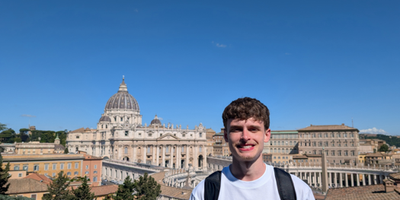
The community of Irish and American lay students
A programme of study abroad for lay students of Catholic studies has been developed in the College with a number of Irish and American third-level institutions.
A brief history of the College
Founded on 1 January 1628 by the Irish Franciscan scholar Fr. Luke Wadding and Cardinal Ludovico Ludovisi, the College was initially located in today’s St. Isidore’s College. It was established at a time when the Penal Laws and religious restrictions made the training of Catholic priests in Ireland extremely difficult. It provided Irish seminarians with a place of formation, education, and spiritual development in the heart of the Catholic Church.
Over the centuries, the College has moved location several times, finally coming to its current location on the Coelian Hill in 1926. No matter where in the city it was located, it has always stood as a place of formation and hospitality. Countless Irish couples were married at the Irish College through the centuries, and it holds a special place in the hearts of those who have experienced its legendary welcome.
During the early years of the Irish Free State, the Pontifical Irish College in Rome served as an important unofficial channel of communication between Éamon de Valera and the Vatican. At the centre of this network was Monsignor John Hagan, Rector of the Irish College from 1919 to 1930, whose close personal relationship with de Valera enabled him to act as both confidant and intermediary. Hagan cultivated extensive contacts within the Roman Curia and used his position to explain Irish nationalist aspirations to Vatican officials at a time when formal diplomatic relations between Ireland and the Holy See did not yet exist.