

The world of Samhain in Irish Folklore
What we now call Halloween has been known for centuries in Ireland by the Irish word Samhain.
Traditionally understood as the beginning of winter for ancient Celts, it was a time associated with storytelling, visits between neighbours, journeys of the dead, and the heightened presence of the otherworld.
Samhain stood at the threshold between seasons, bringing with it stories of fairies, spirits, and memories of those who had gone before.
Given Halloween’s Irish origins in Samhain, there’s a rich history to be told about the festival we celebrate today through Irish folklore.

The first definition of the word Samhain
The historian and scribe Mícheál Ó Cléirigh, of the Annals of the Four Masters fame, compiled a dictionary Focloir na sanasan nua that was published in Louvain in 1643 – the first dictionary published in the Irish language.
Under the headword Samhain he identifies it as a compound word, samhfhuin .i. fuin an tsamhraidh; fuin .i. criochnughadh – where samh means ‘summer’ and fuin ‘end’.
This explanation appears in earlier texts, like the medieval text Tochmarc Emire (‘The Wooing of Emer’) which also describes the division of the year as, in samraid o beltine co samfuin ┐ in gemred o samfuin co beltine ‘summer from May to November and winter from November to May’.
The term samsun .i. sam-suan is offered as an alternative in the same text – samh ‘summer’ suan ‘sleep’; when the summer goes to sleep.
Another theory is that it is derived from a different word meaning ‘summer’ that is found in the alternative name for the month of May, Céitemain, ‘first summer’. At any rate, Samhain does usually mark the beginning of winter in Ireland.
'Chuaidh an chloch fhuar i dtalamh inniu' meaning 'The cold stone went into the ground today', ie it is the first day of winter
On the first of November, the people of Teileann, south Donegal, would say, Chuaidh an chloch fhuar i dtalamh inniu – the cold stone went into the ground today, ie., it is the first day of winter.
We must wait until the 17 March for an improvement in the weather when the patron saint of Ireland is said to intervene; according to one Connacht proverb, 'Lá Fhéile Pádraig, tóigtear an chloch fhuar as an uisce' meaning ‘St. Patrick’s Day, the cold stone is taken out of the water’.
There are many references in English to this in the Schools’ Folklore Collection on Dúchas.ie, this example being from Carlow: ‘St. Martin put the cold stone in the water and St. Patrick took it out’. Interestingly, St. Martin’s Day, 11 November, coincides with ‘Old Halloween’.
From Samhain to Bealtaine:
The season of stories
With the last day of October, or Deireadh Fómhair in Irish literature ‘end of harvest’, the hard agricultural work of the year had traditionally been completed.
As the long dark winter nights were setting in and people had a bit more time on their hands, the traditional storytelling and airneán (‘night-visiting’) season began.
A good storyteller was said to be able to tell stories ó Shamhain go Bealtaine, ‘from November to May’.
A long, rambling story is called scéal ó Shamhain go Bealtaine lit. a story from November to May. It also denotes a very long period of time, something almost endless.
If a person is always complaining about something and people were getting tired of listening to them, they would say to the grumbler in Munster, Sé an scéal ó Shamhain go Bealtaine agat é, ‘that’s the story you have from November to May’, you’re always going on about it.
Likewise, in relation to work that was taking ages to do – especially a task not considered overly difficult – it was said, sé an gnó ó Shamhain go Bealtaine é (‘it is the business from November to May’).
The feast of the dead in pagan and Christian times
The renowned Kerry-born lexicographer Fr. Pádraig Ó Duinnín gives this interesting all-encompassing definition of Samhain in his 1927 Foclóir Gaedhilge agus Béarla: ‘the feast of the dead in pagan and Christian times, signalising the close of harvest and the initiation of the winter season lasting till May, during which troops (esp. the Fiann) were quartered, the fairies (aos sídhe) were imagined as particularly active at this season’.
The Fianna would spend from May to November engaged in hunting and were said to depend solely on the meat and skins of the wild animals they killed as pay.
After that, we are told in Foras Feasa ar Éirinn by Seathrún Céitinn: Is amhlaidh do bhídís an Fhian ag coinnmheadh ar fhearaibh Éireann ó Shamhain go Bealltaine ‘the Fian used to be quartered on the men of Ireland from Samhain to Bealltaine’.
November in some parts in commonly called Mí na Marbh ‘the month of the dead’.
The spirits of Samhain
As for the dead, the 2 of November, All Souls’ Day is called Lá (Fhéile) na Marbh, and the night before is Oíche (Fhéile) na Marbh. November in some parts in commonly called Mí na Marbh ‘the month of the dead’.
It should be said that the dead were said to be active most nights and not just around Halloween. Night-time was ordained as am codlata do bheoibh agus am siúil do mhairbh ‘sleep time for the living and journey time for the dead’.
As Ó Duinnín mentions, the fairies are also said to be on their travels at this time, and a line in Stair Éamuinn Uí Chléire, a text from 1700 refers to it as Lá sítheach siabhrach sidheogach Samhna – the eerie, elfin, fairy-enchanted 1of November.
There are said to be many types of fairies and many names for them: na daoine maithe ‘the good people’, na daoine beaga ‘the wee people’, bunadh na gcnoc ‘the hill folk’, na huaisle ‘the gentry’ as well as many other names. Lucht na mbearád dearg ‘the red caps’ is also another name used in Donegal, a reference to the clothes worn by the fairy folk.
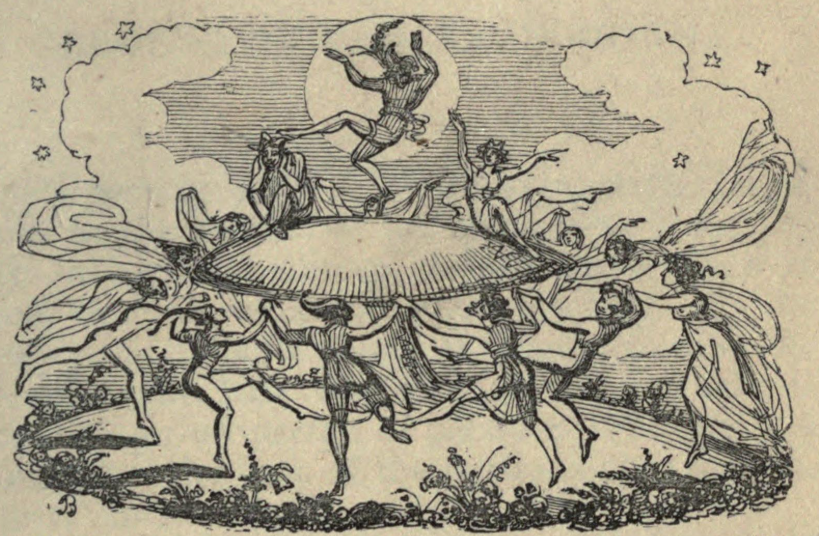
Of course, some people had no fear of the fairies, and in Galway, it was said of someone who was not easily scared, Ghabhfadh sé thríd an mbruíon ‘he would go through a fairy dwelling!’
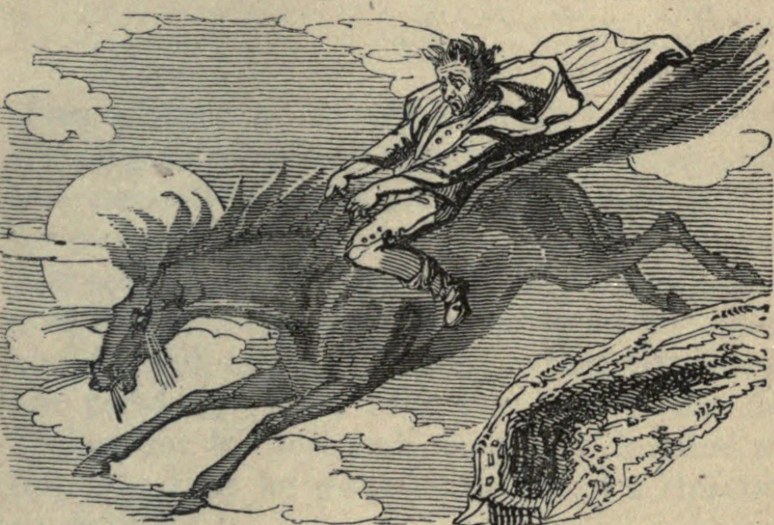
The púca, a shapeshifting sprite that was variably imagined as taking the form of a horse, goat, dog or some other animal, was possibly the most feared of the fairy folk. He was also used as a bogeyman to scare children; Tiúrfaidh an púca breilleach leis thú! ‘The ragged púca will snatch you away!’, or Íosfaidh an púca breilleach thú! ‘the ragged púca will eat you!’ were issued as warnings in Galway.
In many places it was believed this trickster would soil the blackberries on Halloween Night and they were not to be eaten after that. Consequently, in Galway blackberries after this date were called sméara cac púca ‘púca poo berries’!
The threshold between seasons
With the coming of Samhain means the arrival of winter, but if you don’t get snatched by the púca, there is a sliver of hope that the summer might give a last hurrah. The writer Amhlaoibh Ó Súilleabháin writing in his diary from Callan, Co. Kilkenny, described Thursday the 14 of November, 1833, as a fine day, Samhra na Samhna ‘November Summer’. This Indian summer phenomenon is also known as ana (bheag) na Samhna; 'ana' being a word for a spell of fine weather.
Many of the customs, sayings and beliefs associated with Samhain belong to a bygone world but they reveal how people throughout the centuries understood the changing seasons and their place within them.
To this day, Samhain remains deeply rooted in Irish tradition and is still a widely celebrated festival every October in Ireland. It reminds us that the turning of the seasons has long been marked not only by the weather, but by language, community and the rich world of folklore.
>> Visit the Royal Irish Academy