
50 years of Ireland and Greece
While Ireland and Greece stand at opposite corners of the European continent, the connections and commonalities between the two countries are strong.
These connections range from the ancient Greek explorer, Pythias of Massalia, recording the first encounter between the Hellenic and Irish worlds, to the role of Irish Philhellenes in the Greek War of Independence, and the huge influence of Ancient Greek literature in shaping the Irish cultural sphere.
The relationship between Ireland and Greece was further solidified in 1975 through the establishment of diplomatic relations. In recognition of the 50th anniversary of this relationship, this exhibition showcases the people and stories that populate this rich common history.
Ptolemy's Map of Ireland
Did you know that the first known geographer to mention Ireland was the Greek explorer, Pytheas of Massilia, and that Ireland’s landscape was first described and mapped by a Greek geographer, Claudius Ptolemy, writing in Alexandria in the second century AD?
Ptolemy, one of the most important geographers in the ancient world, gave the most detailed account of Ireland in classical literature, describing six promontories, fifteen river mouths, ten settlements and nine islands, and naming sixteen population groups.
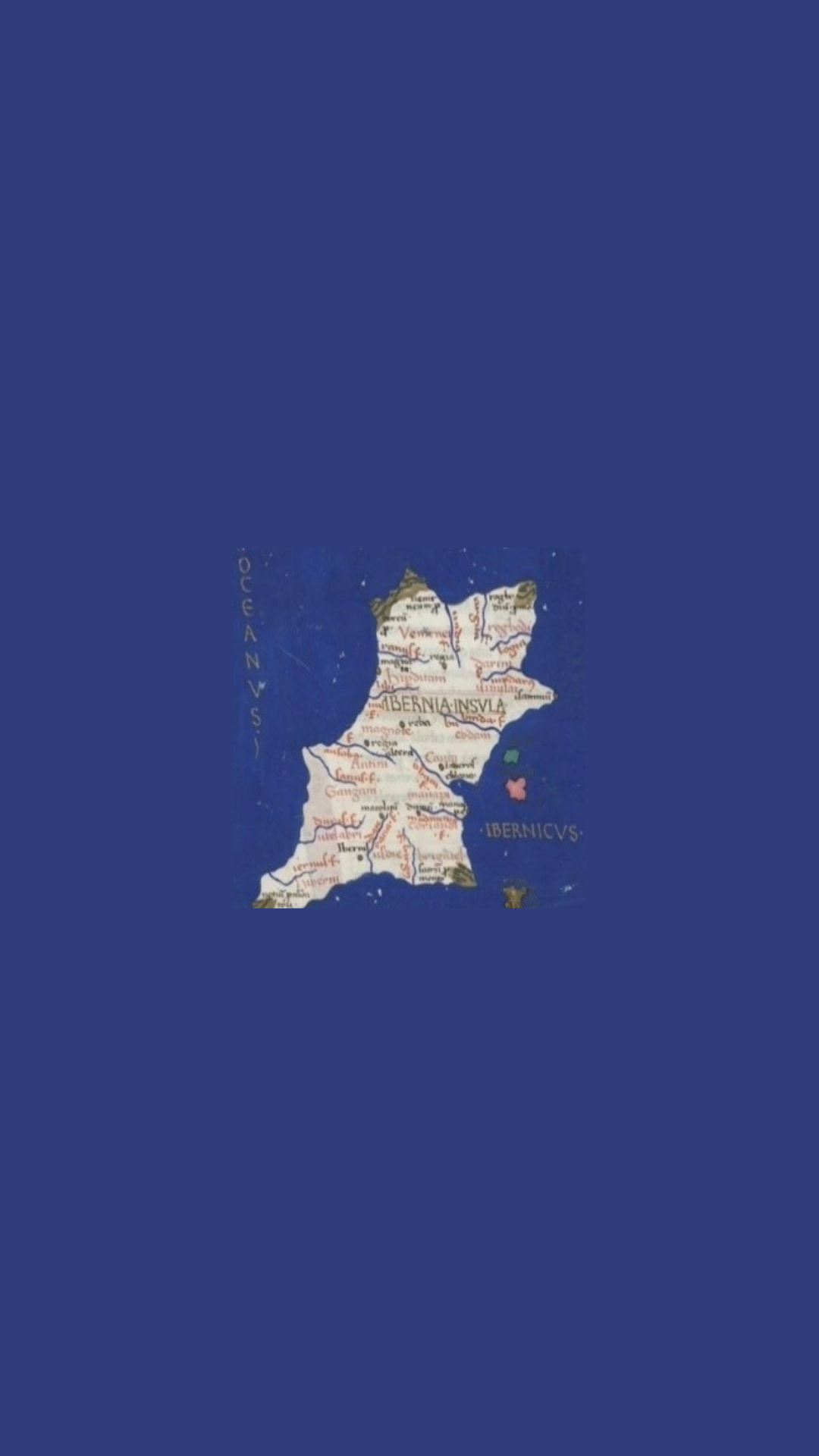
Ptolemy's Map of Ireland
Did you know that the first known geographer to mention Ireland was the Greek explorer, Pytheas of Massilia, and that Ireland’s landscape was first described and mapped by a Greek geographer, Claudius Ptolemy, writing in Alexandria in the second century AD?
Ptolemy, one of the most important geographers in the ancient world, gave the most detailed account of Ireland in classical literature, describing six promontories, fifteen river mouths, ten settlements and nine islands, and naming sixteen population groups.
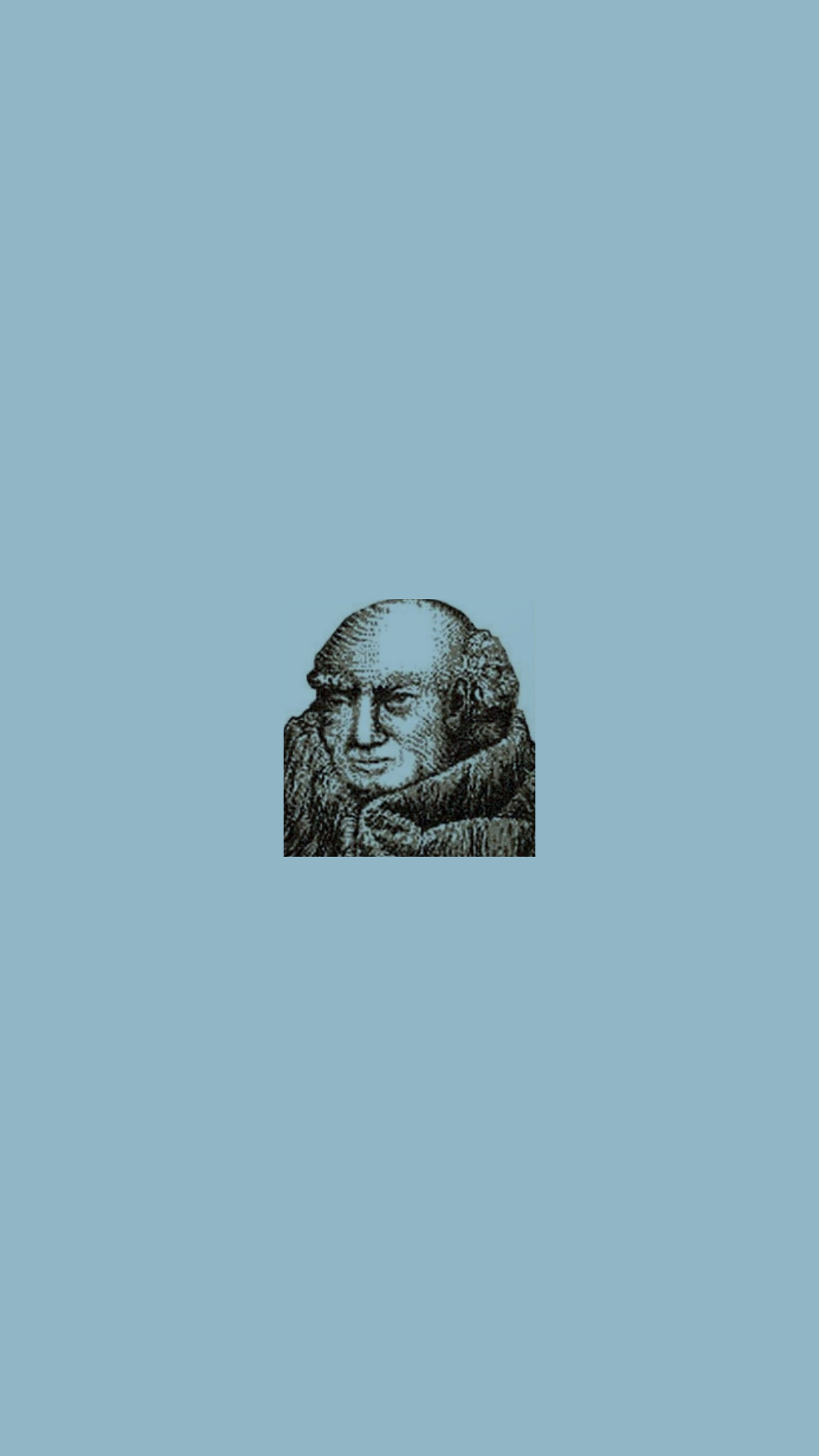
Have you heard of John Scotus Eriugena?
This 9th century Irish philosopher is now recognised as the most outstanding philosopher of the Carolingian era, and he took the lead in upholding the Greek tradition of bold philosophical speculation during the Dark Ages.
Eriugena was a noted scholar of the Greek language, a skill which was very rare at that time in Western Europe, allowed him to translate the work of Dionysius the Areopagite, patron saint of Athens, among others.
Have you heard of John Scotus Eriugena?
This 9th century Irish philosopher is now recognised as the most outstanding philosopher of the Carolingian era, and he took the lead in upholding the Greek tradition of bold philosophical speculation during the Dark Ages.
Eriugena was a noted scholar of the Greek language, a skill which was very rare at that time in Western Europe, allowed him to translate the work of Dionysius the Areopagite, patron saint of Athens, among others.
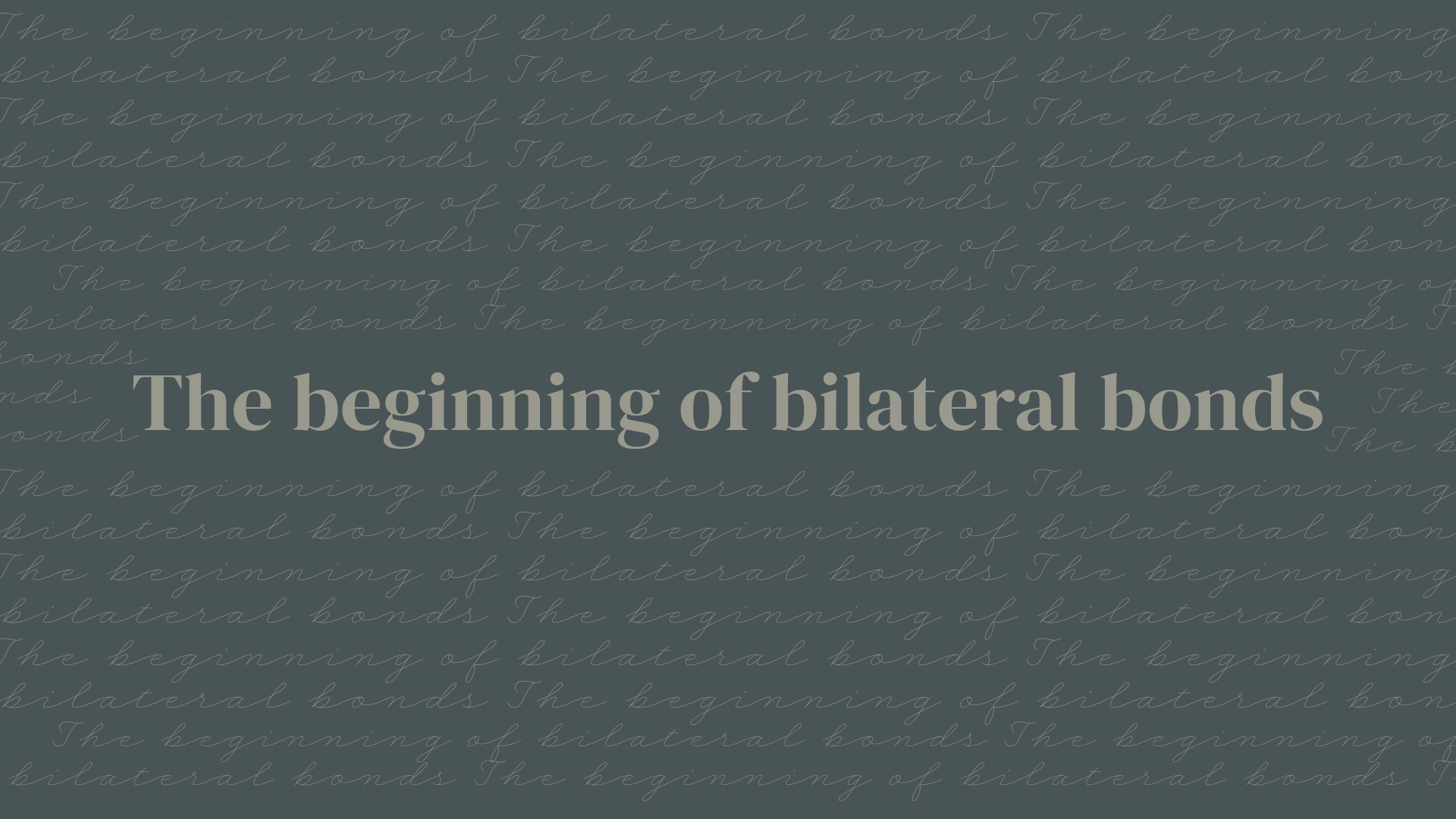
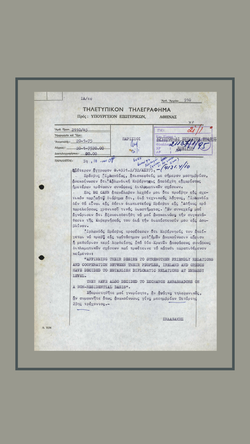
20 January 1975
The Ambassador of Greece in Paris, Aristides Pilavakis, informs the Greek Ministry of Foreign Affairs that Ireland, through its Ambassador in Paris, confirmed its agreement to Greece’s proposal for the establishment of diplomatic relations between the two states.
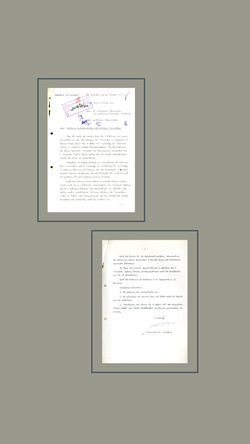
20 August 1977
Telegram by which the Greek Minister of Foreign Affairs, Dimitrios Bitsios, informs the Embassy in Dublin about the text of the Press Release regarding the upcoming visit of the Minister of Foreign Affairs of Ireland to Athens on 7-8 September 1977.
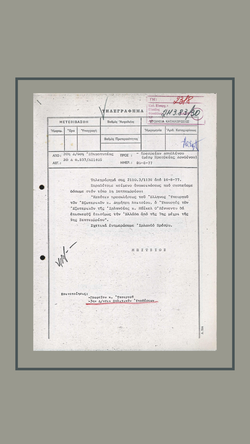
20 August 1977
Telegram by which the Greek Minister of Foreign Affairs, Dimitrios Bitsios, informs the Embassy in Dublin about the text of the Press Release regarding the upcoming visit of the Minister of Foreign Affairs of Ireland to Athens on 7-8 September 1977.

A timeline of connections
-
2002
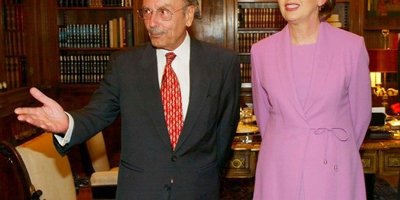
President Konstantinos Stephanopoulos and President Mary McAleese at the first visit of an Irish Head of State to Greece
-
2018
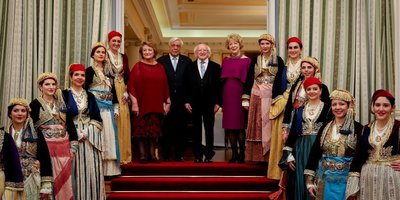
President Michael D.Higgins and President Prokopios Pavlopoulos at the State Visit to Greece
-
2020
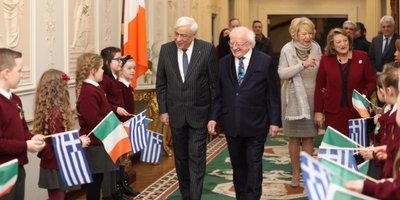
President Prokopios Pavlopoulos and President Michael D.Higgins at the State Visit to Ireland
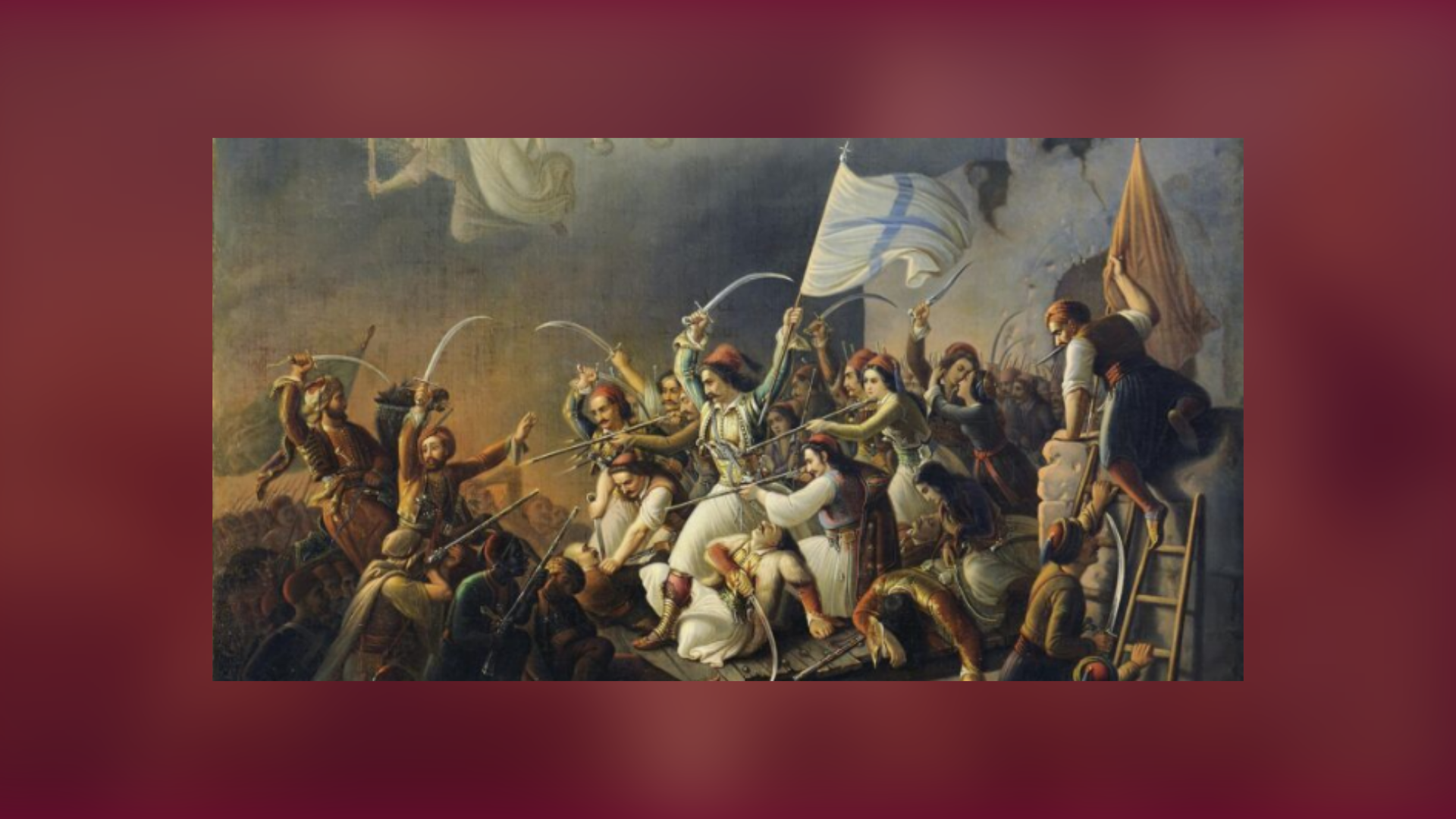
“The Greeks are more like the Irish than any other people, so like, even to the oppression they suffer, that if I could not do good to Ireland the next pleasure was to serve men groaning under similar tyranny” - Charles James Napier
Did you know that many Irishmen participated in the Greek War of Independence?
Sir Richard Church from Cork remains well-known for his role as Commander in Chief of the Greek forces from 1827 to 1829, but there were many more Irishmen who filled the Greek ranks, including Edward Balquière, a Dublin seaman of Huguenot descent and Charles O’Fallon (Church’s aide de camp).
Unlike Lord Byron, the motivations of many Irish philhellenes tended to be much more political than romantic. Many had complex histories, having served in the British Army while also having radical links, including with the revolutionary United Irishmen group behind the 1798 rising against British rule in Ireland.
Commodore Gawin William Rowan Hamilton (suspected of waging his own wars against the Turkish fleet contrary to British orders) was the son of Archibald Hamilton Rowan, a founding member of the United Irishmen; and Charles James Napier was the first cousin of Lord Edward Fitzgerald, one of the leaders of the 1798 uprising.
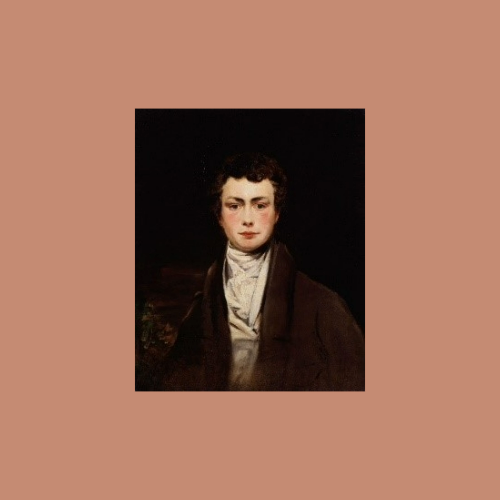
Thomas Moore
Thomas Moore (1779-1852), the most famous Irish poet and musician of the first half of the 19th century, was one of the first members of the Philhellenic Committee of London, and a committed advocate of the Greek War of independence.
Moore had been close friends with several leading United Irishmen revolutionaries, and he saw echoes of Ireland’s own struggles for freedom and justice in the Greek struggle for Independence.
Together with Lord Byron, he supported the Greek liberation struggle with money, armaments and propaganda, and included multiple references to Greece in his work in particular ‘Evenings in Greece’.
Thomas Moore
Thomas Moore (1779-1852), the most famous Irish poet and musician of the first half of the 19th century, was one of the first members of the Philhellenic Committee of London, and a committed advocate of the Greek War of independence.
Moore had been close friends with several leading United Irishmen revolutionaries, and he saw echoes of Ireland’s own struggles for freedom and justice in the Greek struggle for Independence.
Together with Lord Byron, he supported the Greek liberation struggle with money, armaments and propaganda, and included multiple references to Greece in his work in particular ‘Evenings in Greece’.
In his poem, ‘The Ghost of Miltiades’, Moore criticised those who supported the cause of Greece due to ‘selfish’ intentions rather than in the cause of freedom:
“Of Liberty foes the worst are they
Who turn to a trade her cause divine
And gamble for gold on Freedom´s shrine”

“We Irish are too poetical to
be poets, we are a nation of
brilliant failures, but we are
the greatest talkers since the
Greeks"
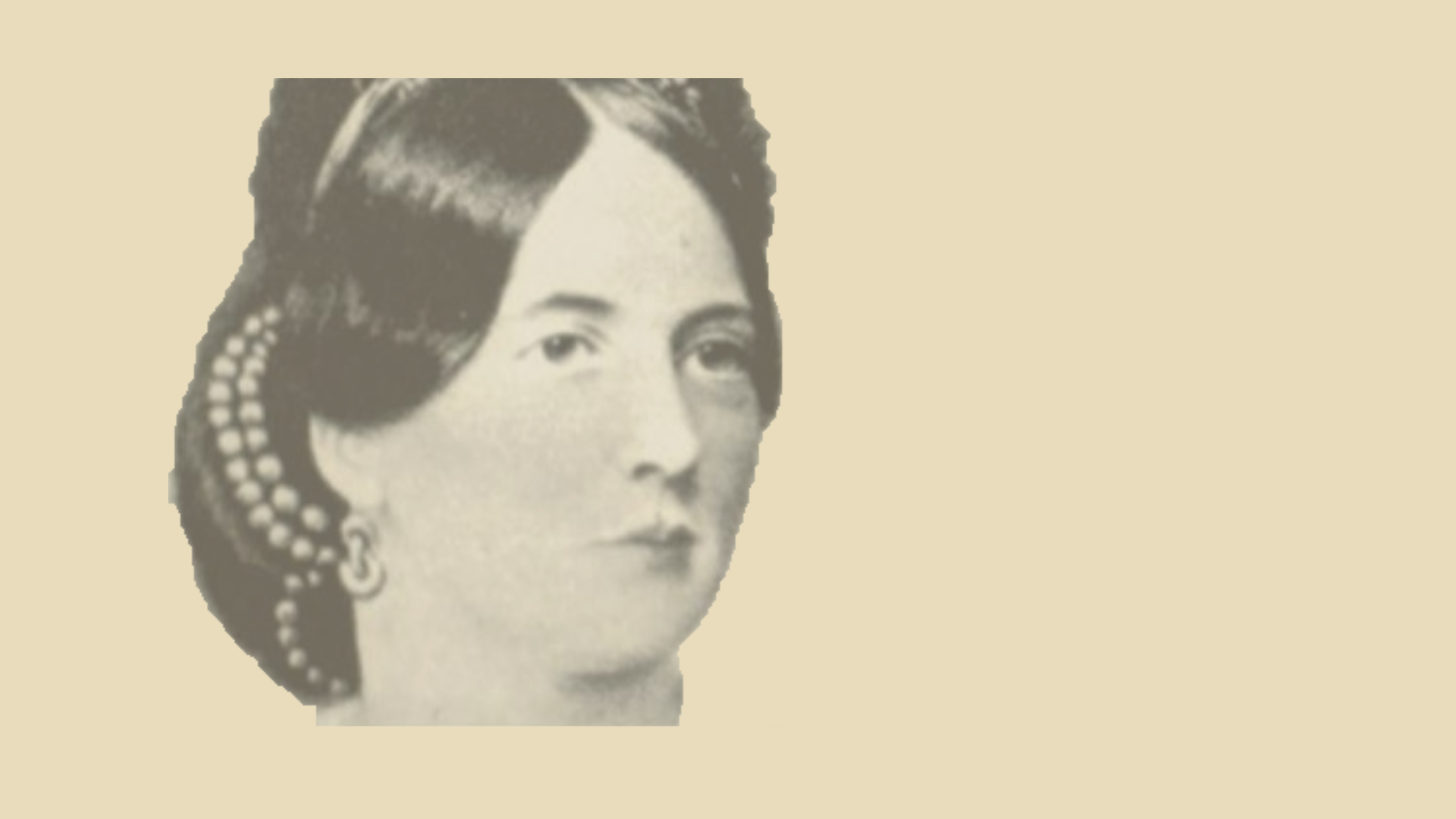
Oscar Wilde, the Irish poet and playwright, was born in Dublin in 1854 and was introduced to the Greek language as a child, particularly from his mother Jane Francesca Wilde (‘Speranza’), who had studied Greek from an early age.
Wilde excelled academically and his aptitude for Greek translation won him multiple prizes, including the Berkeley Gold Medal in Greek, the highest academic award at Trinity College Dublin. “It was the fascination of Greek letters and the delight I took in Greek life and thought which made me a scholar”
Wilde’s love for Greece and Greek literature was further reinforced by his tutor, Professor J.P Mahaffey, with whom he visited Greece in 1877 – a visit marked in his poem 'Impression de Voyage’.
“And a red sun upon the seas to ride, I stood upon the soil of Greece at last!”
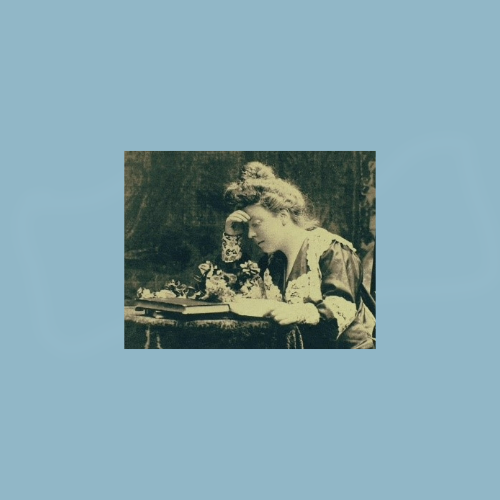
Hannah Lynch (1859-1904), the Irish writer and feminist, was born into a politically active family in Dublin. Both her father and he stepfather had been Young Irelanders, involved in the 1848 rebellion.
Identified in a 1902 Harper’s Bazaar column as ‘the most gifted woman Ireland ever produced’, during her short life she wrote multiple novels, articles and translations.
In addition to her writing, she was an executive member of the radical political organisation, the Ladies’ Land League, which was devoted to the reduction of rents and the eventual seizure of land from landlords.
Lynch travelled throughout Greece between 1885 and 1887, and again in 1902, learning Greek and spending more than six months living in a convent on Tinos.
‘Greece lay upon the sea splendidly coloured by the gathering tints in the east’
Lynch would later publish two novels in which the island is a central setting i.e. Rosni Harvey and her “Greek” work of fiction Daughters of Men, originally published only in English but later translated into Greek by Dimitrios Vikélas.
In addition to her writing, she was an executive member of the radical political organisation, the Ladies’ Land League, which was devoted to the reduction of rents and the eventual seizure of land from landlords.
Lynch travelled throughout Greece between 1885 and 1887, and again in 1902, learning Greek and spending more than six months living in a convent on Tinos.
‘Greece lay upon the sea splendidly coloured by the gathering tints in the east’
Lynch would later publish two novels in which the island is a central setting i.e. Rosni Harvey and her “Greek” work of fiction Daughters of Men, originally published only in English but later translated into Greek by Dimitrios Vikélas.

“I wanted to hear Greek tragedy, spoken with a Dublin accent”
- William Butler Yeats
William Butler Yeats, the Irish poet and dramatist, is widely considered one of the greatest poets of the 20th century. He received the Nobel Prize for Literature in 1923. Yeats repeatedly drew upon Greece for inspiration, whether presenting the 1916 Rising as Ireland’s Battle of Salamis, or putting on translations of Sophocles for a Dublin audience.
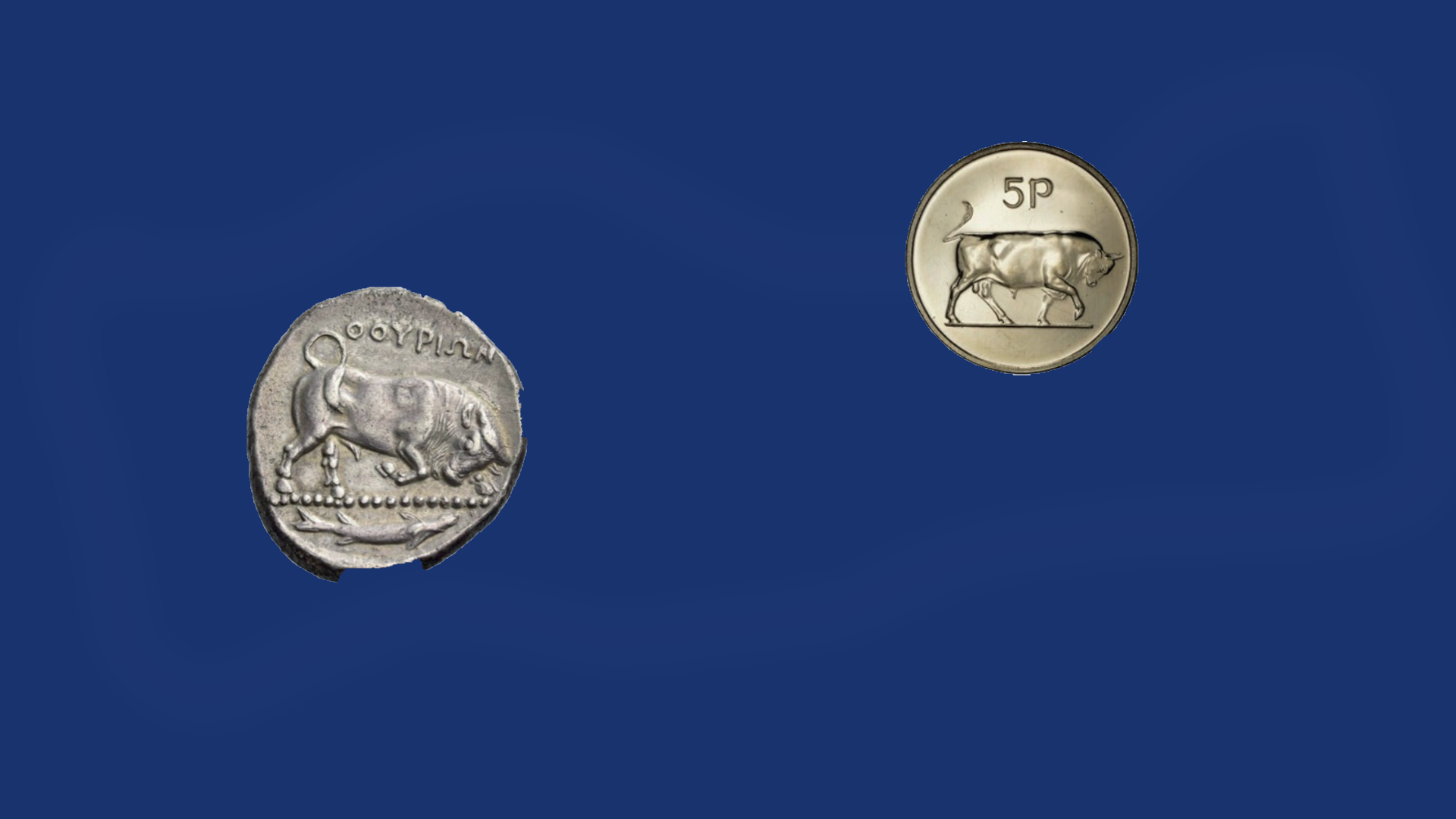
Of particular note, Yeats was asked to oversee the design of Ireland’s coinage in 1924, and decided to model the new Irish coins on those of ancient Greek colonies, namely the hare of Messana and the bull of Thurii.
The ‘beastly’ coins were denounced by one priest as intending to “beget a land of devil-worshippers where evil may reign supreme” – they were quickly embraced by the Irish people and remained in use until the introduction of the Euro.
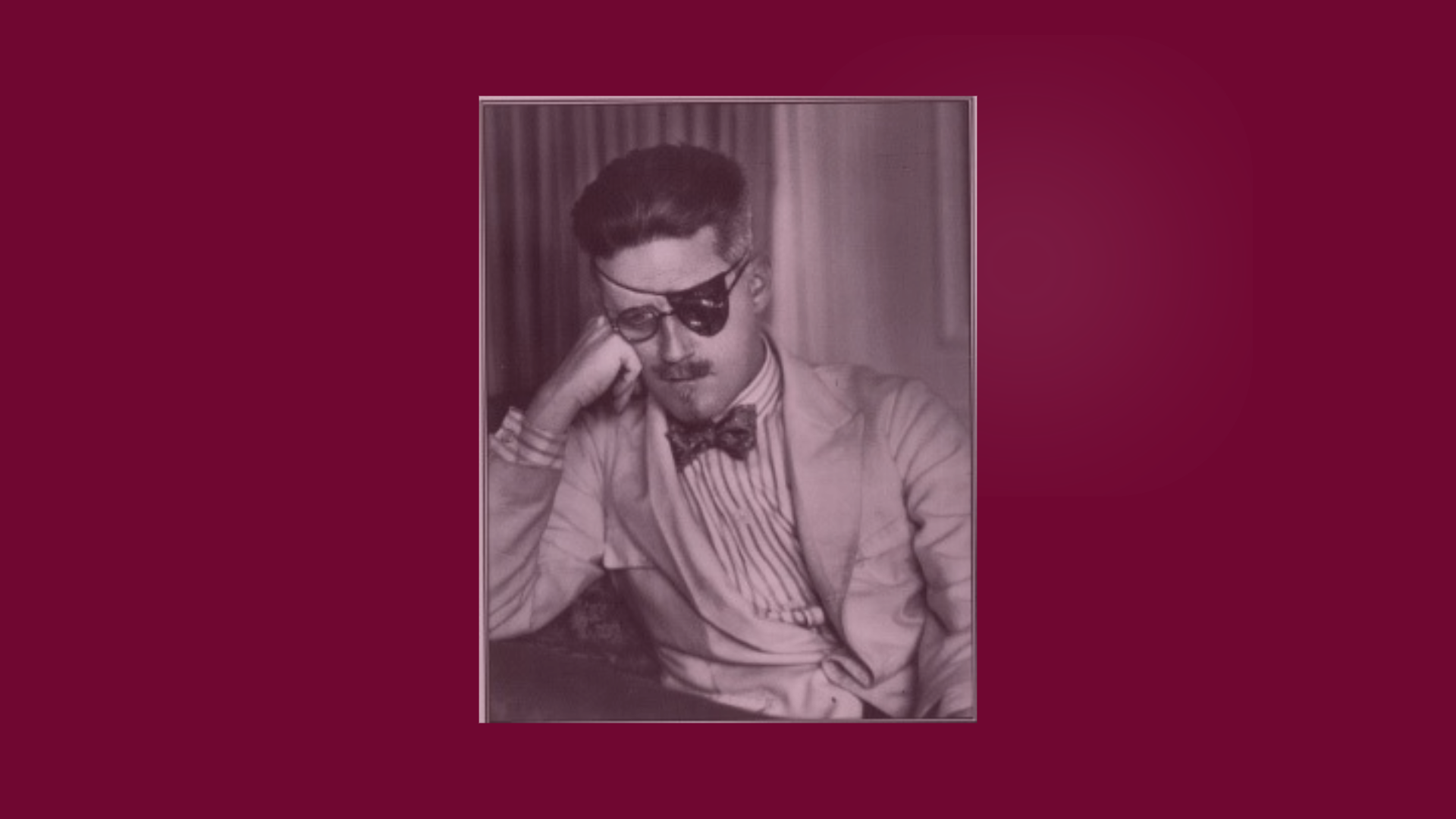
“If you want to read Ulysses you had better first get or borrow from a library a translation in prose of the Odyssey of Homer”
- James Joyce
James Joyce (1882 –1941), the Irish novelist and poet, is regarded as one of the most important and influential writers of the 20th century. Joyce was a committed philhellene with a fascination for the literature of ancient Greece.
When Joyce was asked at the age of twelve to write about his favourite hero, he chose Odysseus. His seminal novel Ulysses, considered to be the most important work in modernist literature, is closely modelled on the Odyssey.
Joyce insisted that the cover of Ulysses should match the blue of the Greek flag (which hung in his Paris apartment) and as the printer was unable to find the correct shade of blue, only two copies were ready by the date of publication - 2 February 1922 - Joyce’s 40th birthday.
Joyce also started to learn Modern Greek while writing Ulysses -
“I spoke…modern Greek not too badly and have spent a great deal of time with Greeks of all kinds from noblemen down to onion sellers, chiefly the latter. I am superstitious about them. They bring me luck.”
Until his last day, Joyce maintained an interest in Greek affairs and was known to end his birthday celebrations by singing the Greek National Anthem.

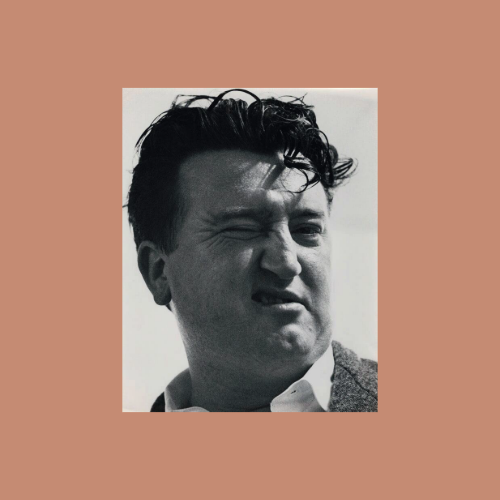
As a 12 year old, Behan wrote the poem in honour of Michael Collins, the Irish revolutionary who played a leading role in Ireland’s 1919-1921 War of Independence against British rule. Collins was killed in 1922, during the Irish Civil War.
Behan would later incorporate the poem into his 1958 play The Hostage, where it came to the attention of Mikis Theodorakis who decided to set it to music.
The song morphed into an anthem of resistance when a version sang by Maria Farantouri was included in the soundtrack to Costa-Gavras’ 1969 film Z about the assassination of MP Grigoris Lambrakis. Farantouri also sang the song at the historic concert in Athens in October 1974 to mark the fall of the junta and the restoration of democracy.
The award winning 2022 documentary - An Buachaill Geal Gáireach/ The Laughing Boy - examines the background to this remarkable anthem of resistance.
As a 12 year old, Behan wrote the poem in honour of Michael Collins, the Irish revolutionary who played a leading role in Ireland’s 1919-1921 War of Independence against British rule. Collins was killed in 1922, during the Irish Civil War.
Behan would later incorporate the poem into his 1958 play The Hostage, where it came to the attention of Mikis Theodorakis who decided to set it to music.
The song morphed into an anthem of resistance when a version sang by Maria Farantouri was included in the soundtrack to Costa-Gavras’ 1969 film Z about the assassination of MP Grigoris Lambrakis. Farantouri also sang the song at the historic concert in Athens in October 1974 to mark the fall of the junta and the restoration of democracy.
The award winning 2022 documentary - An Buachaill Geal Gáireach/ The Laughing Boy - examines the background to this remarkable anthem of resistance.
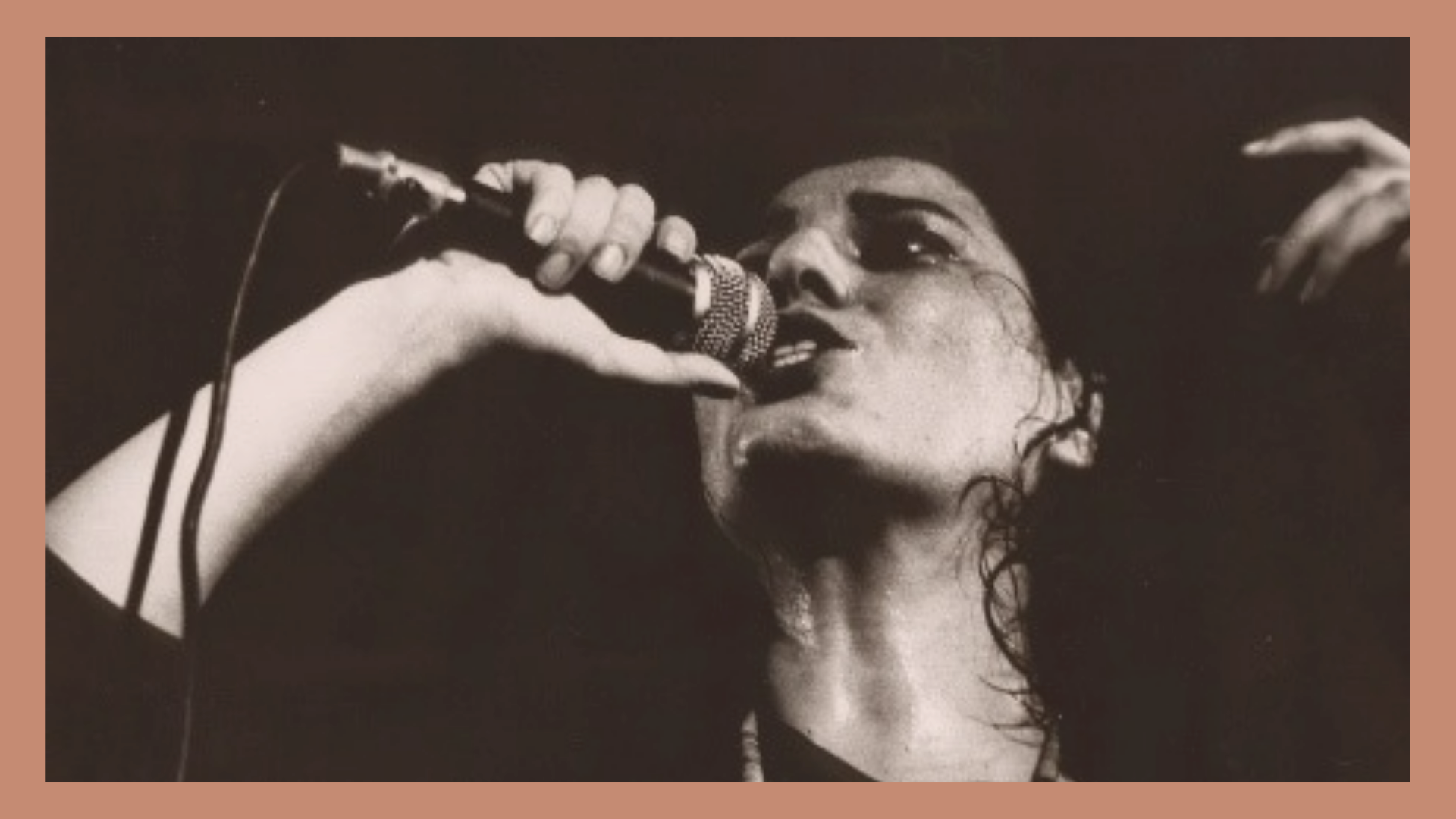
“It became a hymn…for every liberation
movement in the world,
and Greek democracy"
- Maria Farantouri
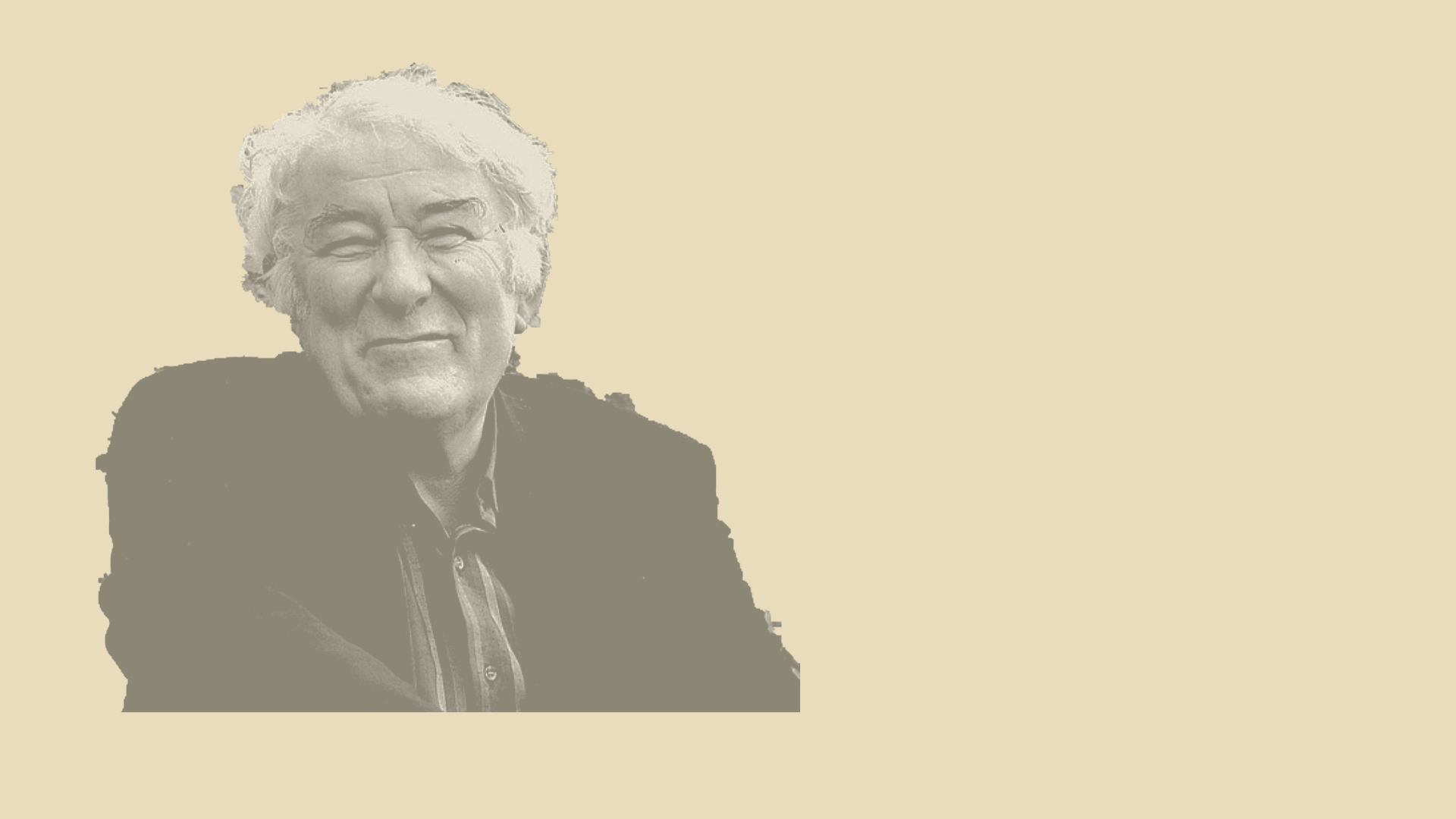
Seamus Heaney, Irish poet and playwright (winner of the 1995 Nobel Prize for Literature) was deeply Influenced by the literary and cultural legacies of Ancient Greece.
Heaney came to prominence as the conflict in Northern Ireland was escalating, and the literature of ancient Greece gave Heaney a way in which to examine the conflict.
Given the importance of Greece to his work, it was fitting that Heaney was in Pylos when he discovered he had won the 1996 Nobel Prize.
The Cure at Troy, Heaney’s verse adaptation of Sophocles’ play Philoctetes, became strongly associated with the Irish peace process. It is in the closing lines of this work that we find some of the most famous and celebrated lines of Heaney’s career:
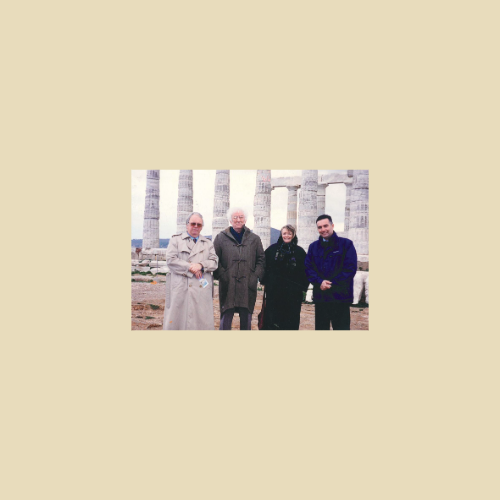
Seamus Heaney, Irish poet and playwright (winner of the 1995 Nobel Prize for Literature) was deeply Influenced by the literary and cultural legacies of Ancient Greece.
Heaney came to prominence as the conflict in Northern Ireland was escalating, and the literature of ancient Greece gave Heaney a way in which to examine the conflict.
Given the importance of Greece to his work, it was fitting that Heaney was in Pylos when he discovered he had won the 1996 Nobel Prize.
The Cure at Troy, Heaney’s verse adaptation of Sophocles’ play Philoctetes, became strongly associated with the Irish peace process. It is in the closing lines of this work that we find some of the most famous and celebrated lines of Heaney’s career:
‘History says, don’t hope
On this side of the grave.
But then, once in a lifetime
The longed-for tidal wave
Of justice can rise up,
And hope and history rhyme.’
- Seamus Heaney
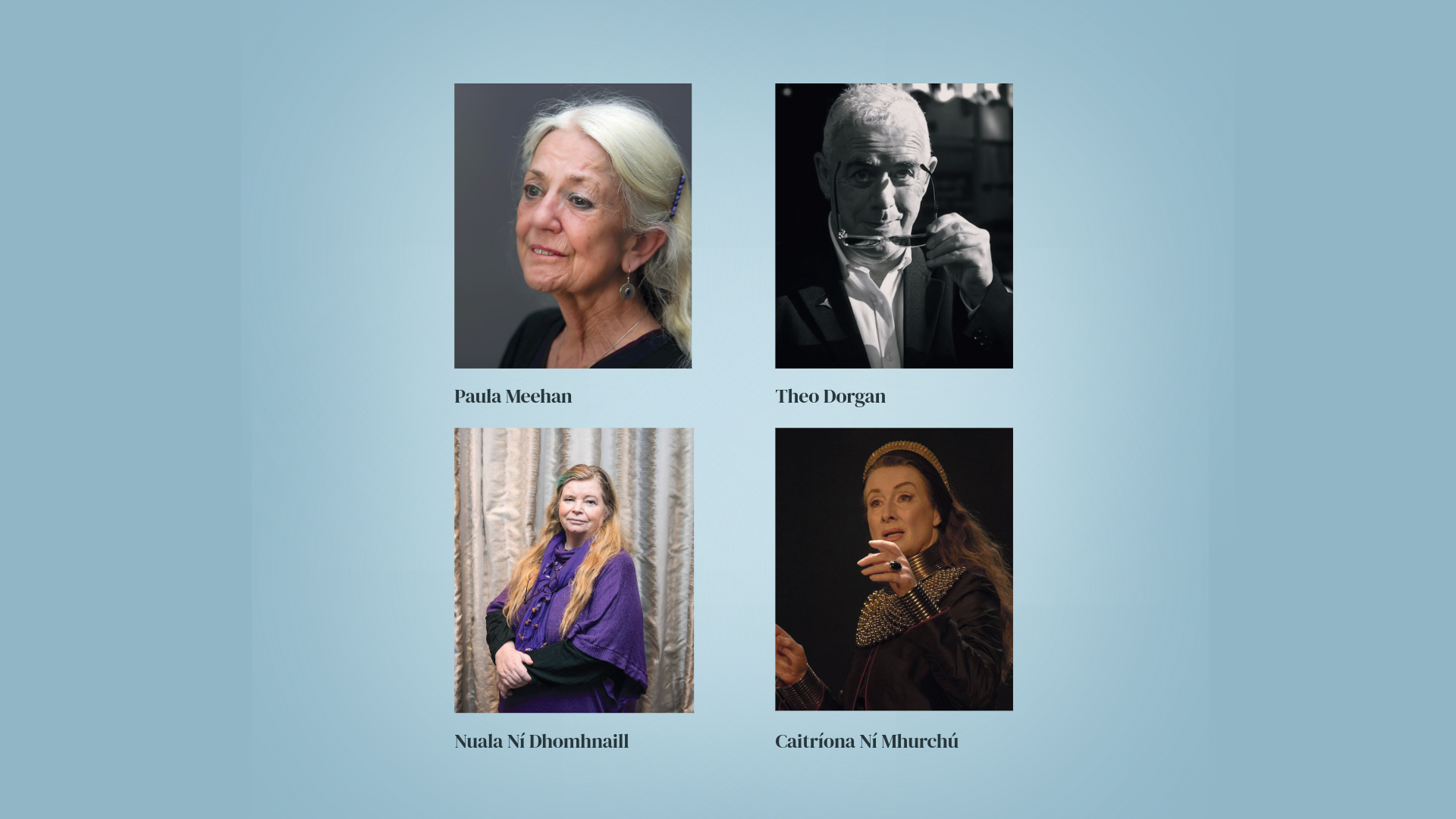
Both Paula Meehan and Theo Dorgan, two of Ireland’s best-known contemporary poets, have had a lifelong passion for Greek myth, theatre and poetry, and have repeatedly being drawn to Greece in their work, in particular the island of Ikaria, which Meehan identifies as ‘home’ in the poem The Island.
Greece also serves as a source of inspiration for those writing in the Irish language.
In 2024, the famous Abbey Theatre in Dublin breathed new life into Aeschylus’ Greek masterpiece, Persians, by staging an Irish-language translation of the play by the renowned poet and writer Nuala Ní Dhomhnaill.

'At home again on Ikaria, /our own bee-loud
glade. How this morning/hawks were hung in
the still mountain air;'
- Paula Meehan
Both Paula Meehan and Theo Dorgan, two of Ireland’s best-known contemporary poets, have had a lifelong passion for Greek myth, theatre and poetry, and have repeatedly being drawn to Greece in their work, in particular the island of Ikaria, which Meehan identifies as ‘home’ in the poem The Island.
Greece also serves as a source of inspiration for those writing in the Irish language.
In 2024, the famous Abbey Theatre in Dublin breathed new life into Aeschylus’ Greek masterpiece, Persians, by staging an Irish-language translation of the play by the renowned poet and writer Nuala Ní Dhomhnaill.
'At home again on Ikaria, /our own bee-loud
glade. How this morning/hawks were hung in
the still mountain air;'
- Paula Meehan
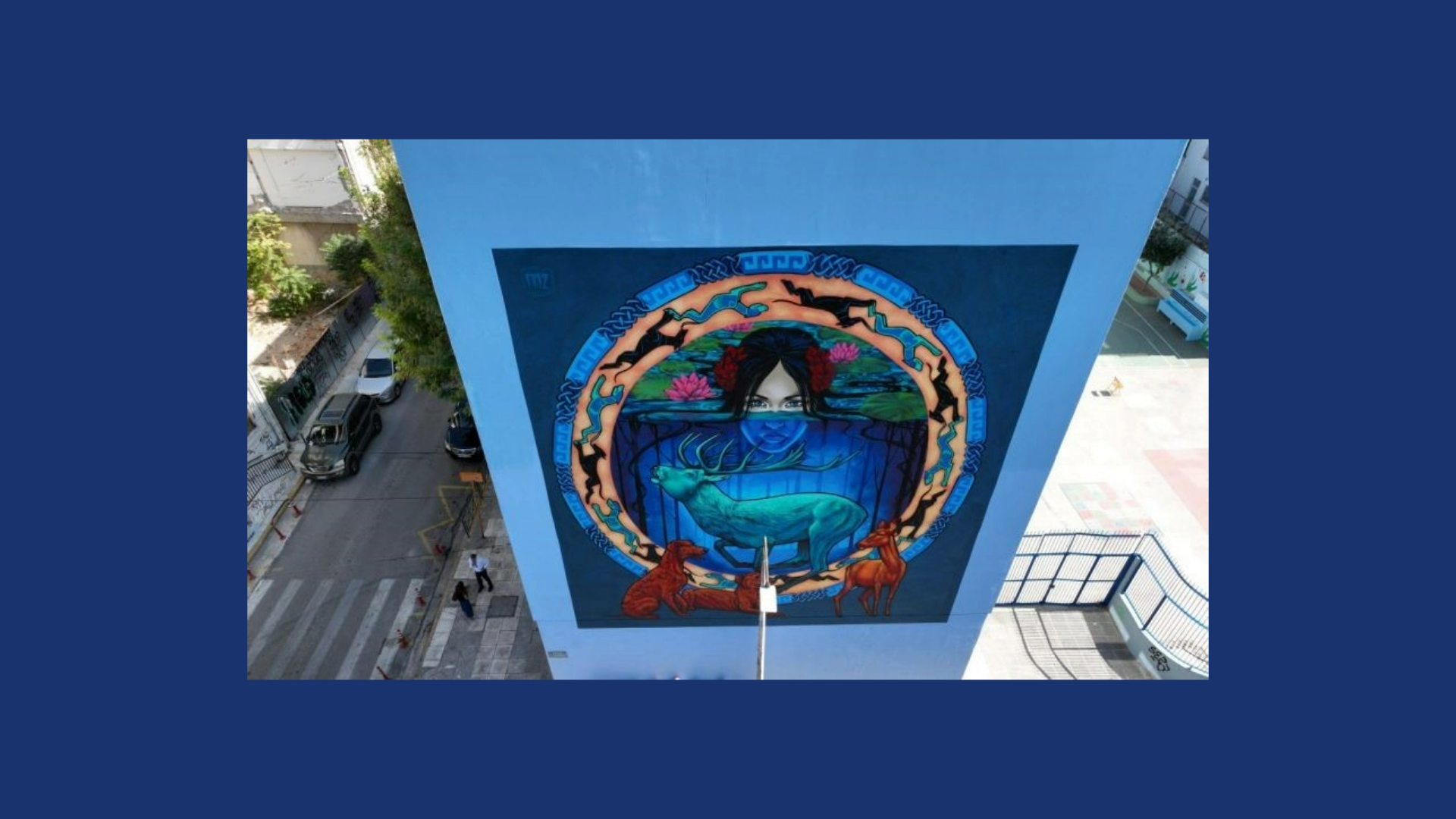
The small but vibrant Irish community in Greece continues to ensure that the links between the two countries remain strong.
The Greek Irish Society (founded in 1977), and the Irish Institute of Hellenic Studies at Athens (founded in 1995), have played a crucial role in in bringing the Irish and Greek communities together in Greece.
The small but vibrant Irish community in Greece continues to ensure that the links between the two countries remain strong.
The Greek Irish Society (founded in 1977), and the Irish Institute of Hellenic Studies at Athens (founded in 1995), have played a crucial role in in bringing the Irish and Greek communities together in Greece.
In addition, gatherings such as the annual Irish Wings Festival on Paxos, the Celtic Music Festival, and the Athens Irish Festival, have helped to foster cultural exchange.
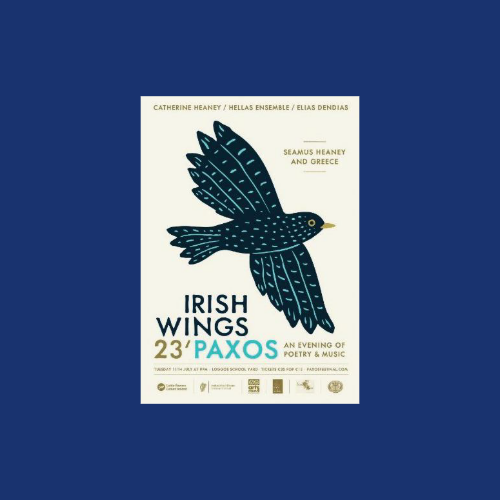
In addition, gatherings such as the annual Irish Wings Festival on Paxos, the Celtic Music Festival, and the Athens Irish Festival, have helped to foster cultural exchange.
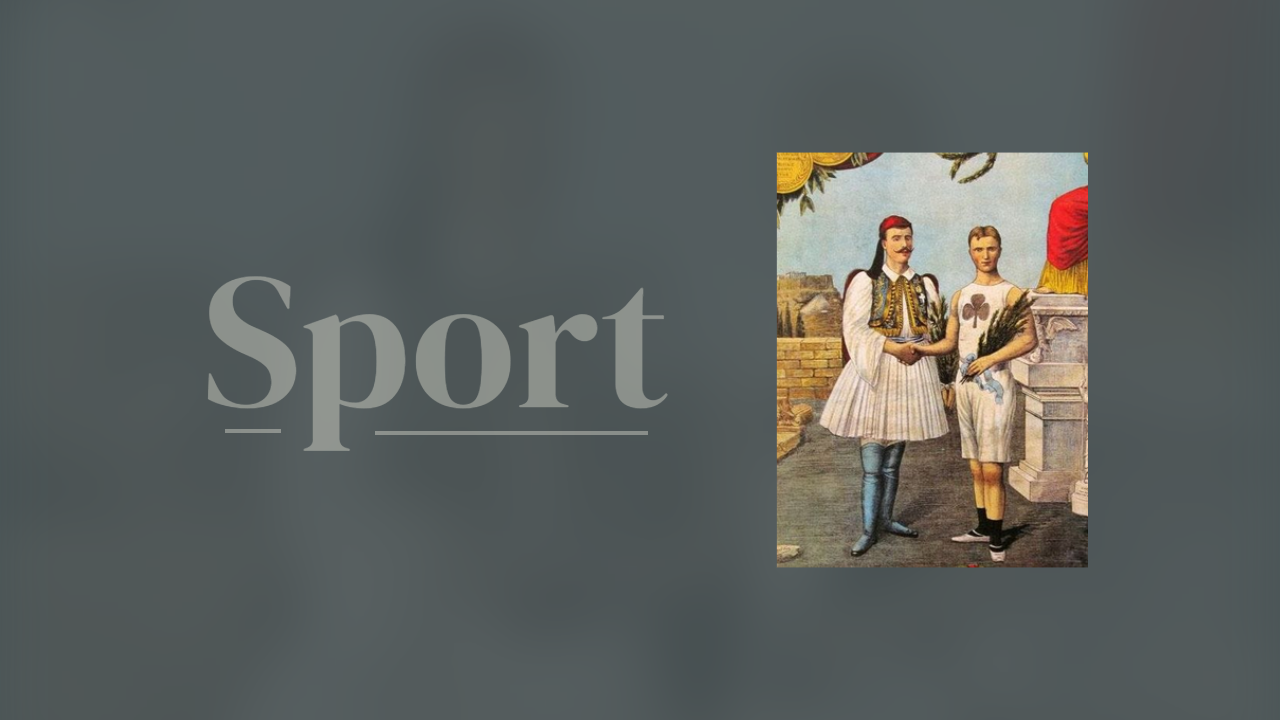
Have you ever wondered why Panathinaikos F.C. have a shamrock as they logo?
The shamrock was added to the shirt in 1918 upon the recommendation of Michalis Papazoglou, and while it remains a matter of discussion, it is believed to be inspired by the famous shirt worn by athlete Billy Sherring in the 1906 Athens Games.
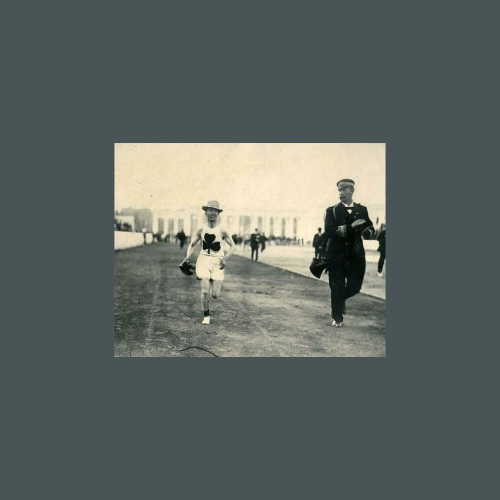
Sherring was the son of Irish parents and a member of the St. Patrick’s Athletic Club in Hamilton, Ontario. He enchanted Greek sports fans in 1906 when he won the marathon while wearing a large shamrock on his shirt.
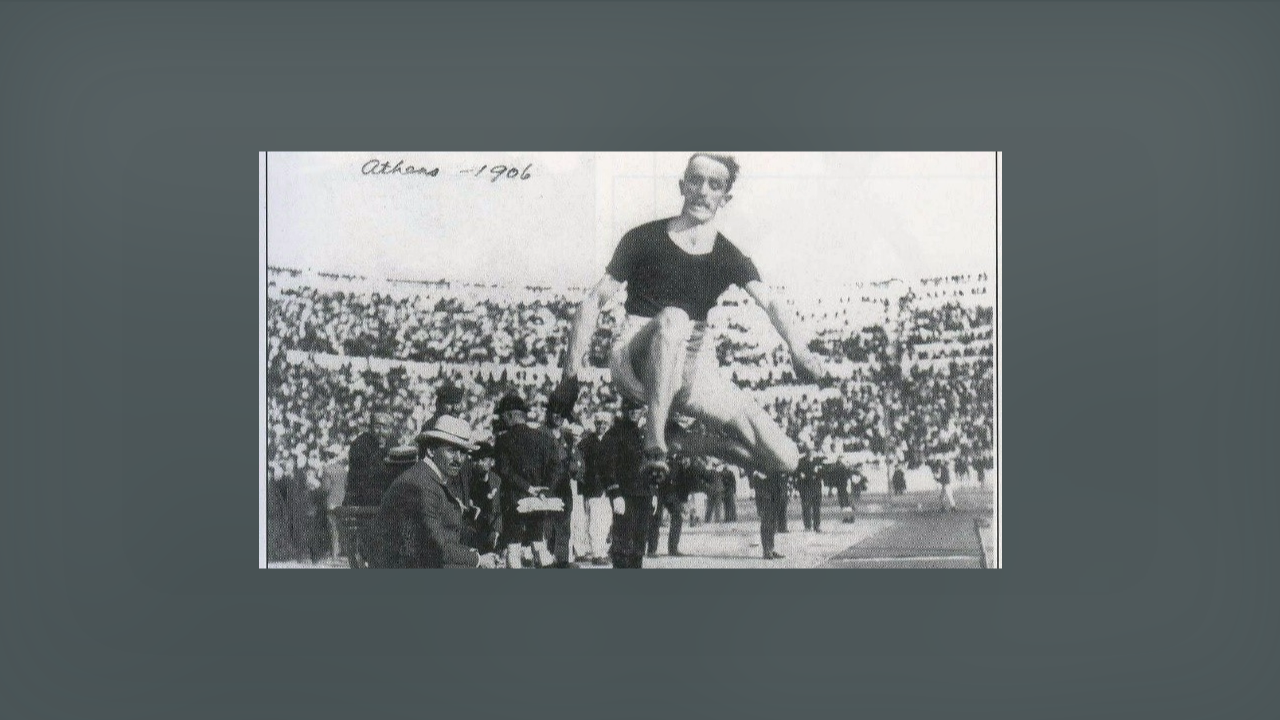
The 1906 Athens Games are also known for another incident involving symbols. As Olympic representation was limited to recognised States, and as Ireland was still struggling for independence in the early 20th century, Irish athletes had to participate under another banner – most frequently, the British flag.
At the 1906 Athens Games. Waterford native Peter O’Connor, incensed at the ceremonial hoisting of a Union Jack to honour his silver medal for the long jump, scaled the Olympic flagpole to wave a green flag bearing the message ‘Erin go Bragh’ (‘Ireland Forever’) as fellow Irish athlete, Con Leahy, and others stood guard below him.
Sherring was the son of Irish parents and a member of the St. Patrick’s Athletic Club in Hamilton, Ontario. He enchanted Greek sports fans in 1906 when he won the marathon while wearing a large shamrock on his shirt.
The 1906 Athens Games are also known for another incident involving symbols. As Olympic representation was limited to recognised States, and as Ireland was still struggling for independence in the early 20th century, Irish athletes had to participate under another banner – most frequently, the British flag.
At the 1906 Athens Games. Waterford native Peter O’Connor, incensed at the ceremonial hoisting of a Union Jack to honour his silver medal for the long jump, scaled the Olympic flagpole to wave a green flag bearing the message ‘Erin go Bragh’ (‘Ireland Forever’) as fellow Irish athlete, Con Leahy, and others stood guard below him.