


Peatlands: Connecting Ireland and Scotland’s natural landscapes
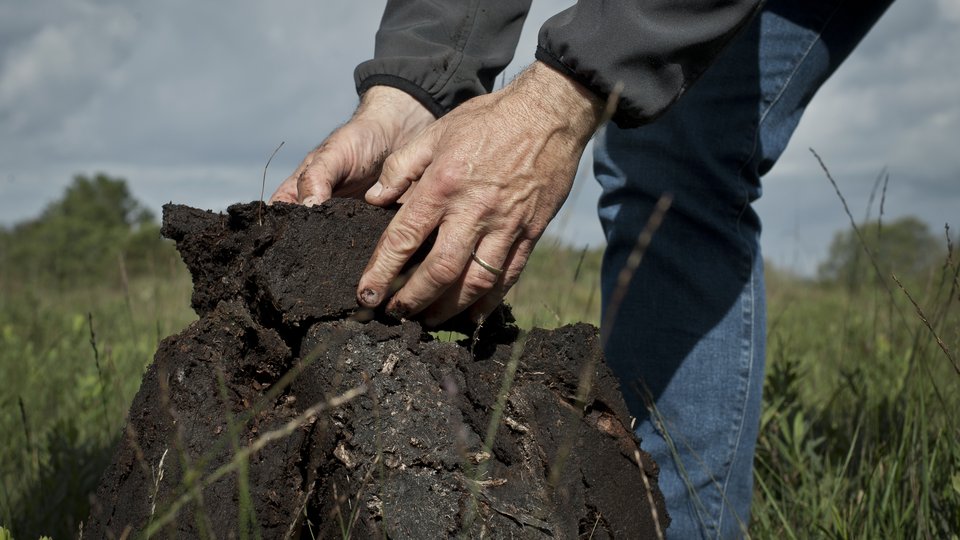
Ireland and Scotland are home to some of Europe’s most extensive peatlands. From the blanket bogs of the west of Ireland to the peatlands of the Scottish Highlands, peat has long been part of the natural and cultural fabric of both nations.
These bogs store vast amounts of carbon, support unique ecosystems, and have shaped rural livelihoods, language and culture on both sides of the Irish Sea. As climate pressures intensify globally, both Ireland and Scotland face a shared challenge and a shared opportunity to renew our relationship with peatlands. To this end, we have embarked on a joint restoration initiative that treats bogs not as a relic of the past, but as vital climate infrastructure for the future.
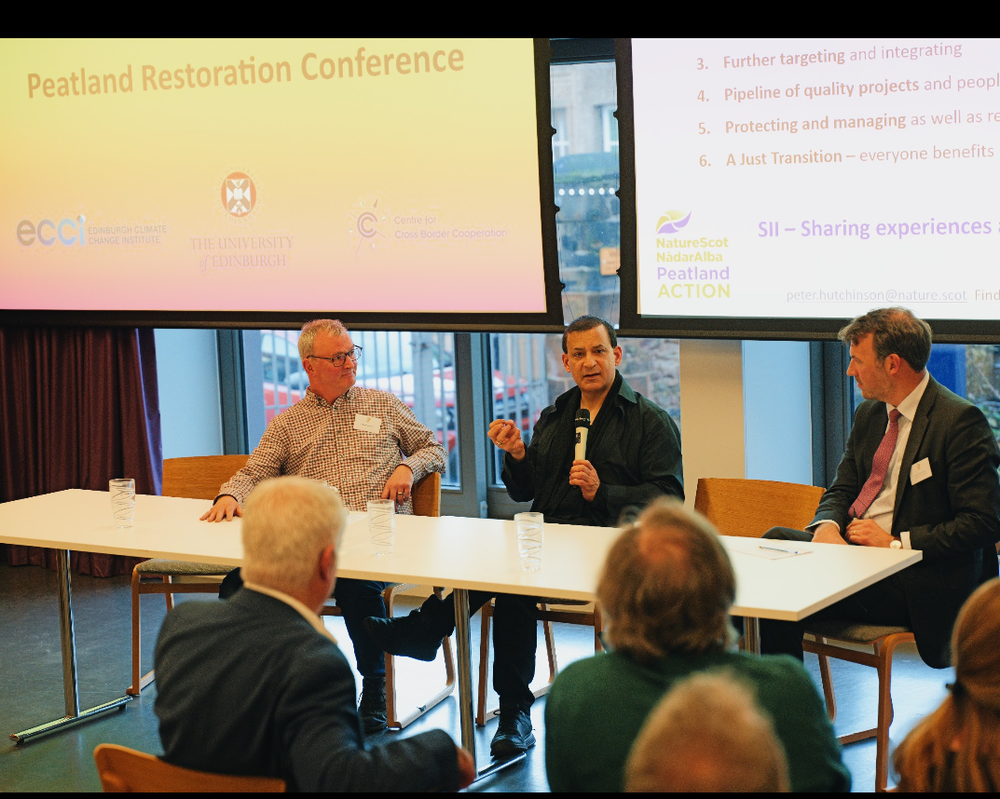
As part of this project, the Consulate General of Ireland in Scotland, the University of Edinburgh, the Edinburgh Climate Change Institute (ECCI) and the Centre for Cross Border Cooperation hosted a peatland restoration conference in the ECCI , alongside a turf-based art exhibition in the Scottish Parliament.
This point cannot be underestimated. Ireland and Scotland are linked by ancient factors: geological, historical, and cultural.
Peatland restoration
Peatland restoration involves rewetting and rehabilitating degraded bogs to restore their original ecological functions. Restoration has a huge impact on the environmental and ecological maintenance of our natural landscape. Restoring peatlands turns these carbon sources into active carbon sinks, with an increased potential to significantly reduce emissions nationally.
The peatland restoration project is made possible through The Shared Island Fund. This fund has provided a multi-million euro work stream in Ireland and Scotland, which has been underway for the last number of years.
The cross-border peatlands restoration programme aims to reduce carbon emissions of 6,000 tonnes of carbon per year and restore 4,000 hectares of blanket bog within and adjacent to protected sites, across Ireland, Northern Ireland and Scotland.
This collaborative project connects representatives from the Irish Government, Scottish Government and the Northern Ireland Executive, and has had an immense impact on the local landscapes of these regions.
The Peatland exhibition
To celebrate this project, an exhibition of Belfast visual artist Farhad O’Neill’s turf-based work was showcased in the Scottish Parliament. The exhibition showcased the progress of the Peatlands project to date and highlighted the benefits of collaborative working between Ireland and Scotland
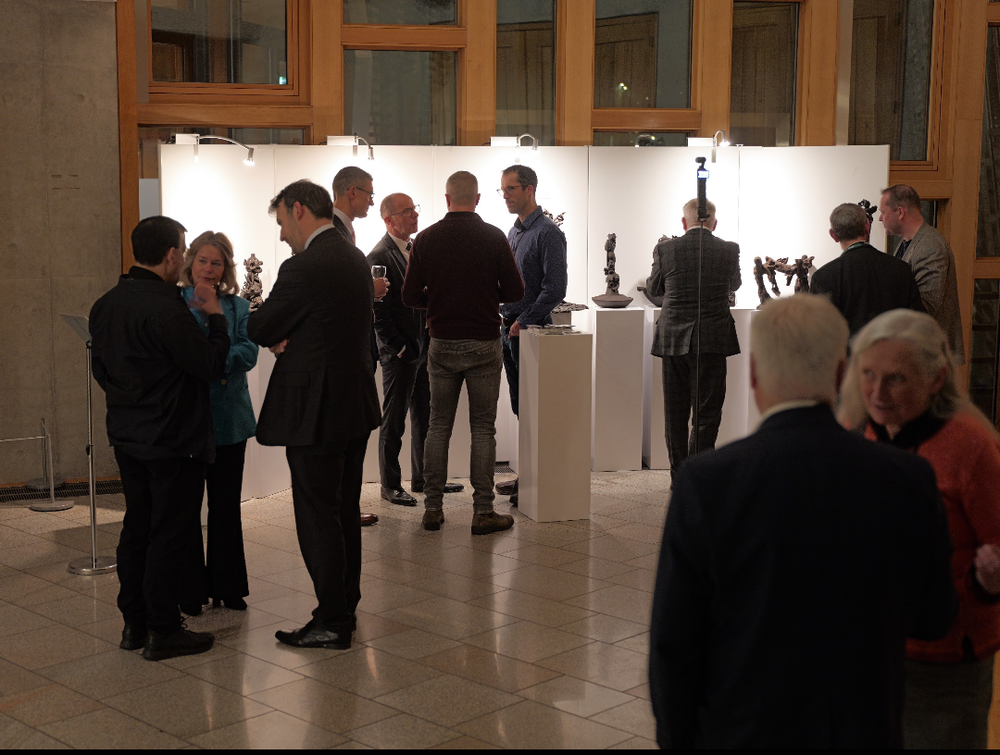
O’Neill’s work uses turf to create sculptures of ancient Irish, Scottish and Welsh mythology to highlight historic cultural and artistic links. Farhad was also centrally involved in the peatland restoration seminar, exploring the role that culture has played in peatland restoration and the ongoing opportunities that supporting our natural bogland provides.
The exhibition took place against the backdrop of the conference, where speakers discussed the cultural connections in peatland communities, the role of urban and rural areas in peatland regeneration, and economic activities that can facilitate and benefit from future peatland restoration activities.
We had an opportunity to catch up with the artist Farhad O’Neill to reflect on his work, Irish connections and a busy week in Edinburgh.
Read the full interview with Farhad O'Neill
Tell us about your work and journey to exhibiting in Scotland
“The background to this body of work began with a commission of the triple goddess, in turf, from noted Belfast gaeilgoir, Jake Jackson in 2021. Having completed one piece, I knew that this was the material I would be happily working in for the rest of my career.
The exhibition and conference in Edinburgh began with over two years of conversation continued between the Consulate and with Anthony Soares (Director - Centre for Cross Border Cooperation). An exhibition in Edinburgh was agreed upon, and the rest was a matter of time.
During this time, I continued to develop this body of work, and all three gents got to know each other a bit better. Good will on all sides, with a great connection in objectives set the stage for an excellent programme: the conference at the University of Edinburgh and an exhibition at the Scottish Parliament building, Holyrood, in December of 2025.”
What role does your Irish heritage plays in your work?
“The mythological basis of my work is all-important to this body of work. Scottish and Welsh mythology, and the history and figures of early Saints in "these islands" such as Columbanus and Colmcille also played important roles.
I was taught the Lebor Gabala Eireann as a child by my mother, a Belfast native and gaeilgoir, not just as mythology but also as a part of natural history and the history of immigration to ancient Ireland. I interpret these stories in the material of Ireland, which in many ways has captured and protected its ancient artefacts, turf.
All of this brings the creation of these works, which are both ancient and modern in style, into congruence with the incredible Gaelic revival currently taking place in Ireland and in the Diaspora as a whole.”
What are some of the environmental and cultural connections between Ireland and Scotland?
“This point cannot be underestimated. Ireland and Scotland are linked by ancient factors: geological, historical, and cultural. This connection reaches back thousands of years and includes the Kingdom of Dal Riada, the influence of Scottish cultural in the modern period (1500's upwards), and is most marked in the North/East of Ireland (Glens of Antrim) and the South/West of Scotland.
Figures like Colmcille would point to the shared religious and cultural links most strongly. I believe that these connections and history are positive and should be encouraged and will pay great dividends to the wider society if encouraged.
The importance given to environmental considerations such as the conservation of our Peatlands is both timely, needful, and very exciting as it has become an active conversation which crosses sectors; it has become a multi disciplinary effort.
This was brought home strongly by the diversity of backgrounds and skills shown at the recent conference at the University of Edinburgh.”
How important is the role of nature and sustainability in your work?
“Both are important. I am not burning the turf, but carving it to create a living expression of our most ancient past. By providing a focus vis a vis a sculpted object which tells as a story, I feel I am playing my part in the conversation currently taking place with regards to sustainability.
I approach this conversation from the standpoint a maker who understands our Peatlands to be living things, to be conserved of course, but also as things which are a part of contemporary culture and life.
The sculptures are a symbol of the energy - both in terms of stored kinetic energy and cultural energy - the importance of our history and Irish identity stored within the material itself.
It is incredibly moving to consider that the turf I am using in small amounts had it's formation when the ancient stories he interprets were living things, playing out on the earth in Ireland. The sculpture themselves sustain themselves and will never degrade if kept inside.”
What impact has presenting your work abroad and working with the Consulate and the Scottish Parliament had on your work?
“My role was as an artist, originator and sole researcher and creator of this body of work. Over five years of carving in turf, I have continually worked and reworked these pieces so that they would be suitable as public monuments in bronze, a living expression of our Gaelic history today, a voice for the Gaels in Ireland today, in sculpture. Reaching out, I have organised exhibitions in Belfast, with exhibitions planned on an all-Ireland basis.
The impact has been massive, in terms of understanding our past and the role and my place in the contemporary artistic scene in Ireland and in the Diaspora.”