

Fashion designer Oran Aurelio
on dressing Chappell Roan and reviving Irish glamour
Two weeks after unveiling his first-ever collection, Oran O’Reilly, known more widely under his brand name Oran Aurelio, is still catching his breath. “I’ve been a hermit at home,” he laughs. “Just breathing it all in.”
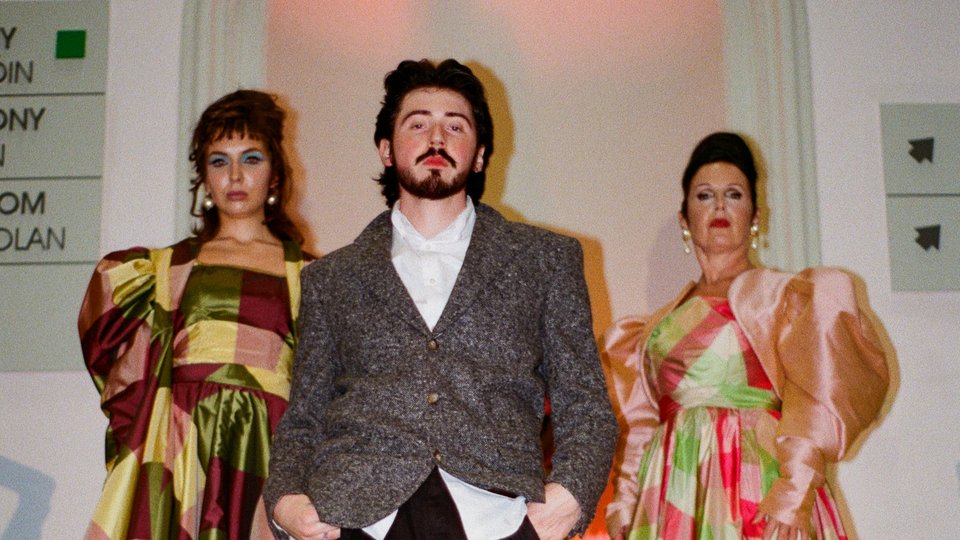
It’s hardly surprising. The 23-year-old Dublin designer has just staged a debut show that was theatrical, cinematic, and unapologetically glamorous. For O’Reilly, the experience feels surreal: a dream stitched together through years of imagination, improvisation, and sheer self-belief.
An unlikely path to fashion
His path to fashion was anything but straightforward. O’Reilly didn’t grow up sketching gowns or obsessing over catwalks. Instead, he saw himself as a storyteller. “I always loved art and English. For a while, I thought I’d be a playwright,” he explains.
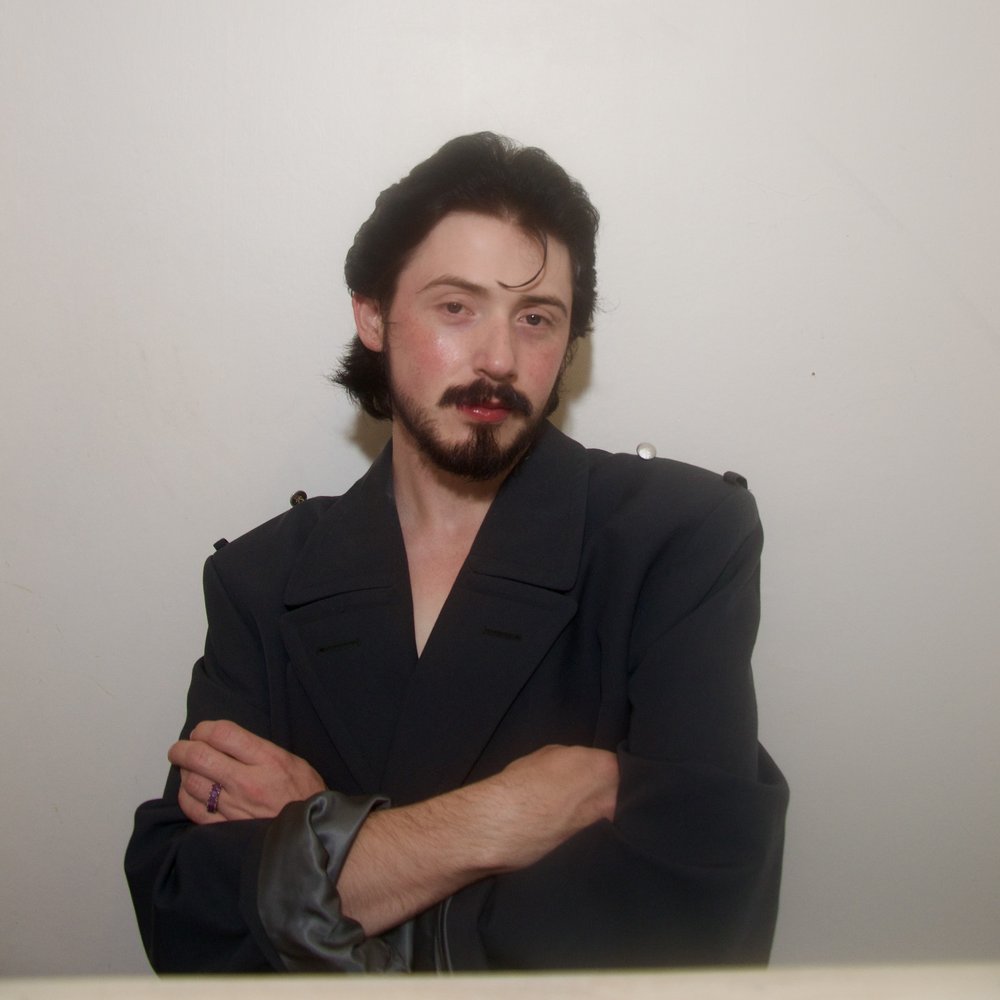
He applied to study drama at Trinity College, but when he didn’t get in, he found himself scrolling through course listings, searching for something that spoke to him. He landed on ‘Design for Film’ at IADT (Institute of Art, Design and Technology), and that decision, made in a moment of uncertainty, set him unknowingly on his path to fashion.
During his first year, O’Reilly had to try his hand at several disciplines: production design, make-up, graphics, and costume. “I just fell in love with costume design straight away. Everything clicked, I was like, ‘Oh my goodness, this is the medium that I've always searched for.’”
Costume and fashion are deeply linked. In costume, you’re dressing a character, and in fashion, you’re dressing the idea of a person. Both are storytelling.
He bought a second-hand sewing machine online during the pandemic and began teaching himself to sew from scratch.
“I bought a cheap €20 sewing machine and I just loved the idea of sewing. But I am completely self-taught, I didn’t even know any designers then. I only knew what Gucci was from Instagram,” he laughs.
First big break
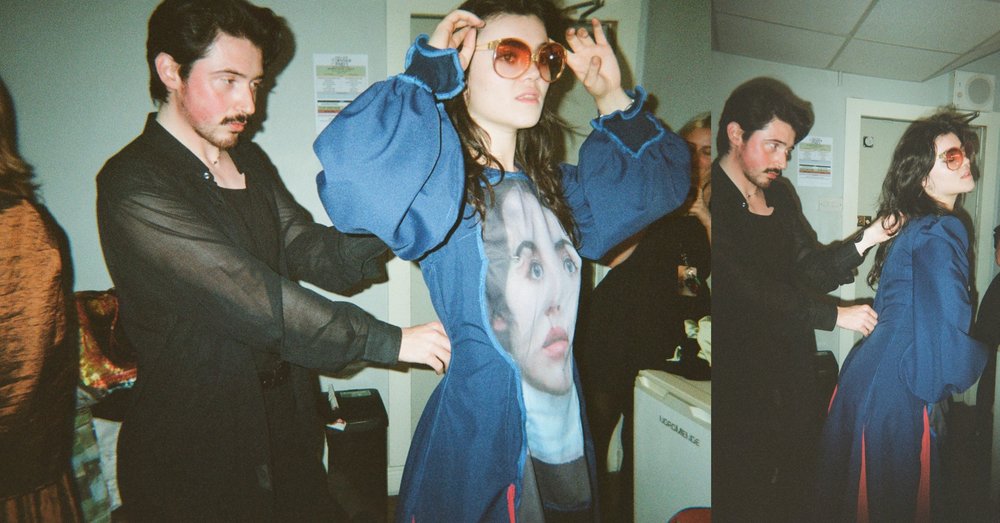
That self-taught experimentation soon led to his first big break. In late 2020, O’Reilly printed a photo of actor Natasha Lyonne onto fabric and stitched it into a corset as a Christmas gift for a friend. When Lyonne reposted it on her Instagram story, the response was instant.
“This was quite literally the December, after I started sewing late August. I got so much traction from people being like, ‘Oh do you sell these? Where can I buy this?’. It clicked in my brain then – oh my god, people care about what I do,” he says.
Instagram audience
Through Instagram and word of mouth, O’Reilly’s work found fans in drag performers and musicians drawn to his sense of fun, his camp sensibility, and his love of drama.
“From that, I really started making stuff and doing my own little photo shoots… My friends, my mom, whatever, nobody was safe from the wrath of me putting them in some awfully made clothes,” he jokes. “And through social media, through Instagram, people started taking note and getting interested.”
Dressing CMAT and Chappell Roan
Soon, the names he was dressing became headline-worthy. CMAT, The Last Dinner Party, Siobhán McSweeney, Nell Mescal.
And then came Chappell Roan, whose theatrical looks and unapologetic energy have made her one of the most exciting performers in music. The collaboration began, as so many things in O’Reilly’s story do, with a random Instagram message.
“I followed one of Chappell’s stylists after seeing a look I loved,” he explains. “I just messaged to say how great it was. And she replied, saying, ‘I’m Chappell’s stylist, would you make a look for her?’”
Divine in Pink Flamingos
The designer was already a fan, having followed Chappell Roan’s music since her early singles. When he was sent a deck of concepts for her upcoming tour, one reference stood out: Divine in Pink Flamingos. “I’d recreated that dress before for a drag queen,” he says. “I knew in my heart that was it, that was the one I needed to do.”
The result was a bold, camp-glam homage, worn by Chappell Roan at Kentucky Pride, just as her single Good Luck, Babe! was exploding across social media. “It was just at her genesis of being a mega star,” O’Reilly says.
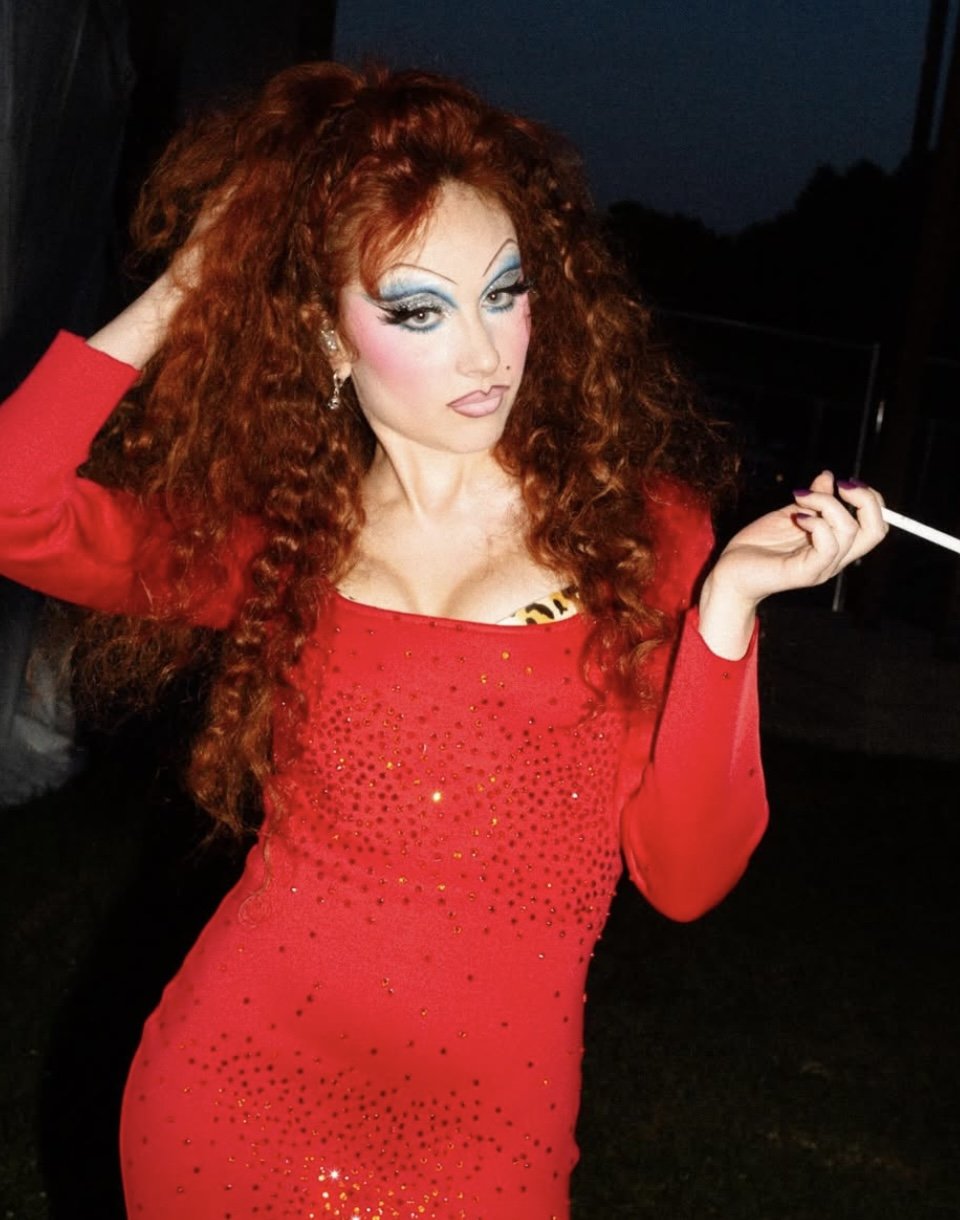
“Her referencing a drag queen during Pride was really special to me. I thought it was a really fun multi-layered outfit, I loved it. I was so grateful, and the feedback was amazing.
And thank God the fans liked it because that's always the main concern. All these people that I've worked with have such loyal, loving fan bases and you always want to do right by them. Thank God they took it well and they loved it. Seeing fan accounts with her in that dress as their little profile picture, it was an honour,” he says.
A sharp sense of narrative
It’s easy to frame O’Reilly’s rise as an overnight success story. But behind the headlines is a designer with a sharp sense of narrative and self-awareness, qualities that set him apart. His background in film and theatre remains central to how he designs.
“Costume and fashion are deeply linked,” he says. “In costume, you’re dressing a character, and in fashion, you’re dressing the idea of a person. But both are storytelling. I just fell in love with the idea of clothes and garments and telling a story through a piece of fabric, and world building through that.”
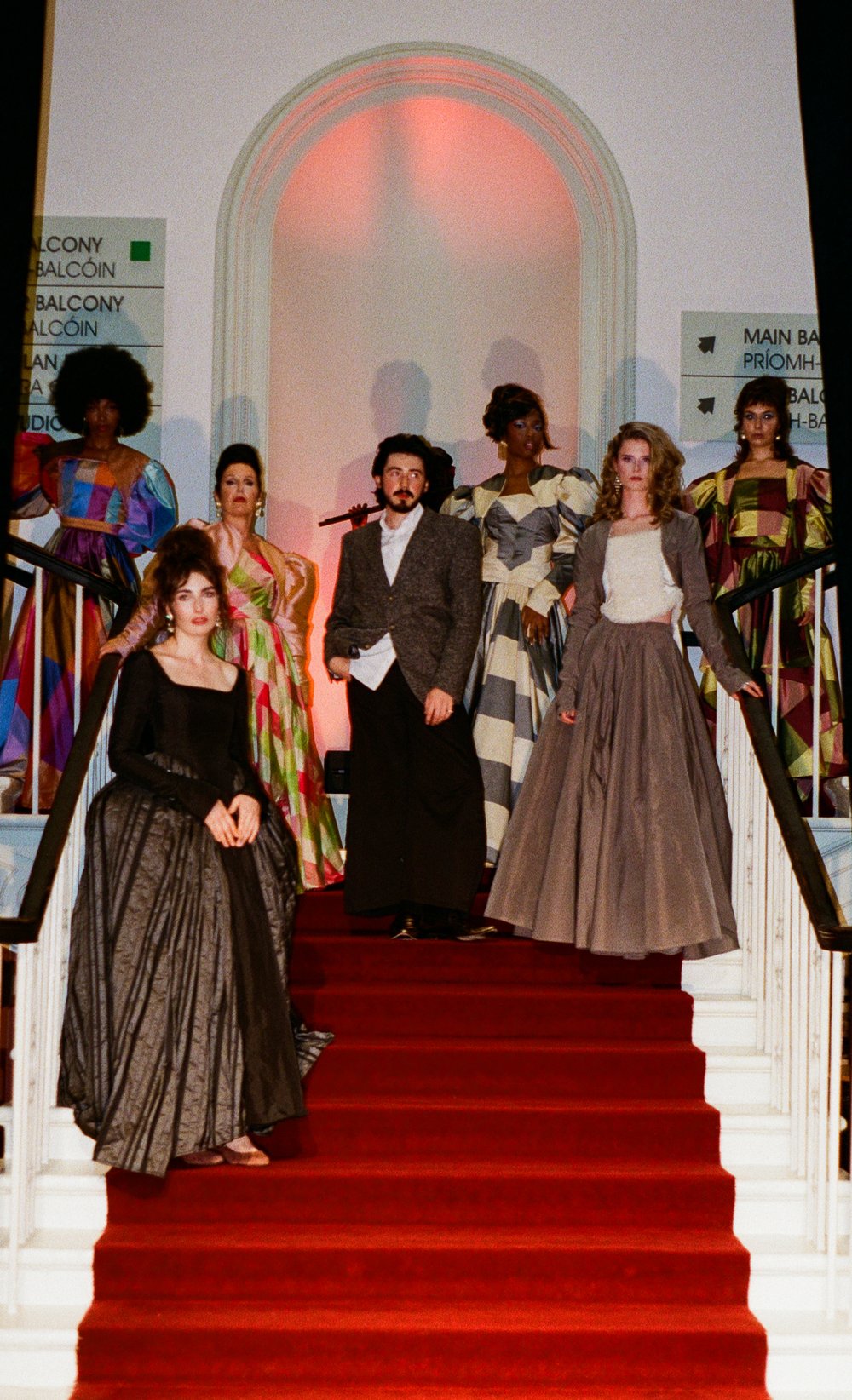
The Tragedy of the Duchess of Malfi - debut collection
That distinction became clear in his debut collection, The Tragedy of the Duchess of Malfi, shown in Dublin this autumn. Inspired by the Jacobean tragedy, O’Reilly reimagined it as a 1960s movie musical, combining medieval silhouettes with mid-century glamour.
The result was dramatic yet poised, with full skirts and polished tailoring. “People think it’s ridiculous to have your purse match your shoes match your coat,” he says. “But I love that kind of coordination. It’s tongue-in-cheek, but it’s beautiful.”
Introspective and structured vision
The collection marked a clear evolution for O’Reilly, a step away from the performative pieces he has created for musicians and drag artists, toward a more introspective and structured vision.
“That was deliberate,” he says. “I got to design purely for myself. I really let my own personal aesthetic take charge. I was really trying to establish what Oran Aurelio is as brand, rather than as a collaboration with an artist.”
I think glamour is a dying art form. I just wanted to situate my brand in the idea of these long forgotten couture techniques of embracing your own body and style and wearing clothes that make you feel good, powerful, strong, confident.
Models included close friends, fellow students, and even his mother. The atmosphere was intimate and celebratory, more like a performance than a runway.
“I just wanted this to be this big glam spectacle…I knew that maybe people might not like it, or might not think it's wearable, but I just knew I needed to do it,” he explains.
Glamour as an art form
At the heart of his aesthetic lies an old-fashioned belief in glamour not as luxury, but as an art form. “I feel like everyone's idea of glamour is so subjective. But for me, I have such a specific idea of what glamour is and what I want to portray,” he says.
“I just want to situate my brand in the idea of these long forgotten couture techniques of embracing your own body and embracing your own style and wearing clothes that make you feel good, powerful, strong, confident.”
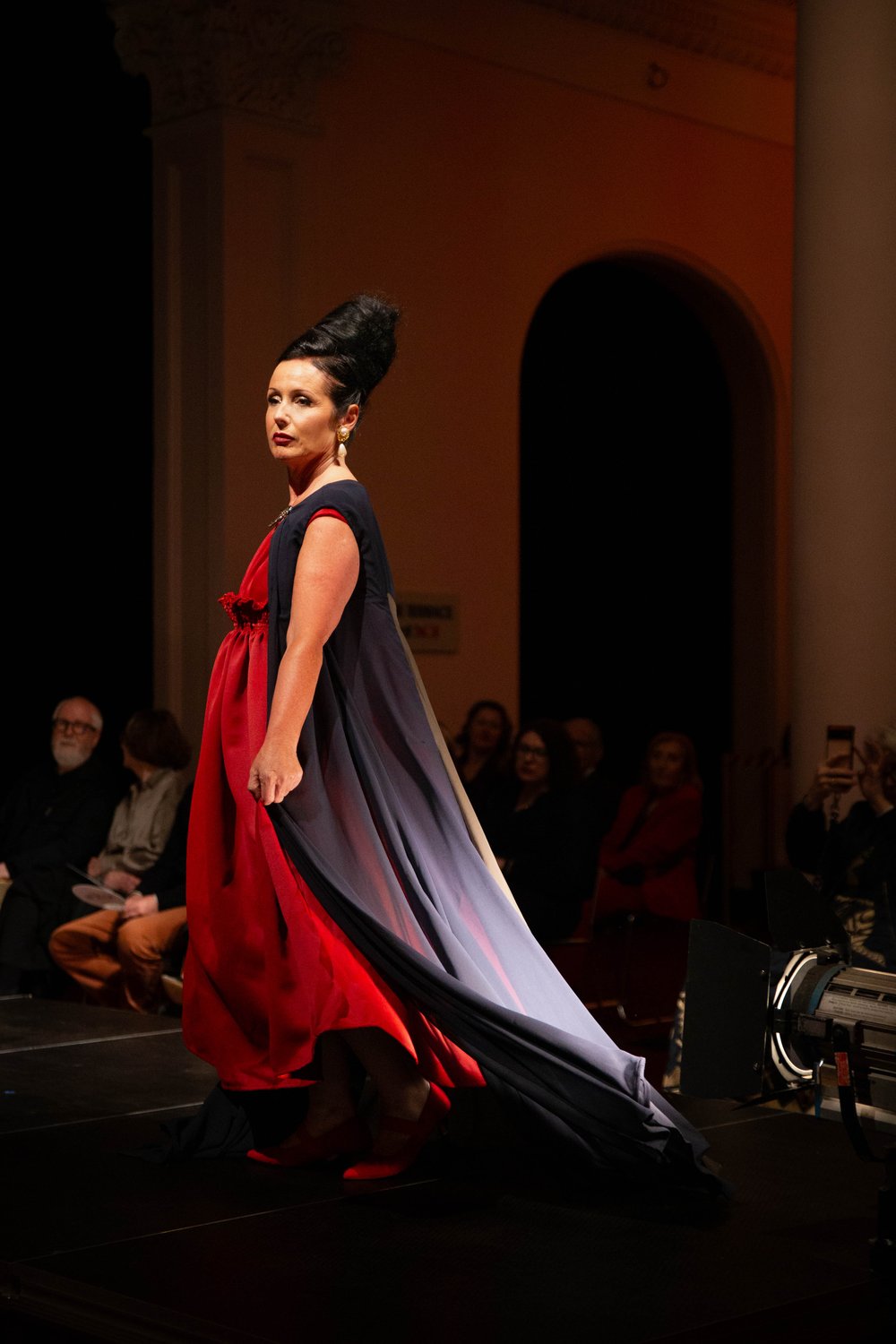
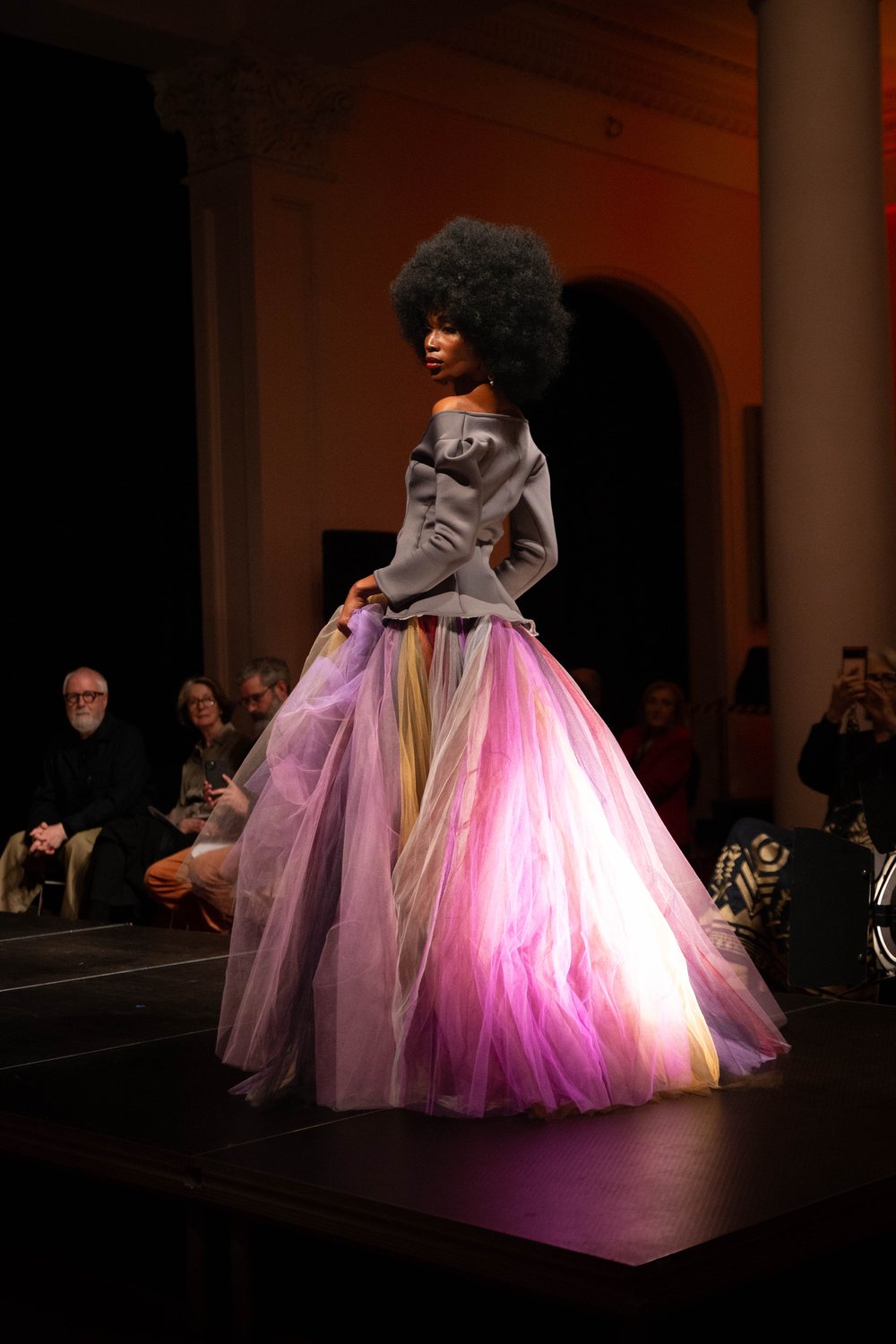
He’s particularly fond of the circle skirt: “It’s my favourite silhouette in the world. Hardly anyone makes them now because they use so much fabric, but I want to bring them back.”
A broader movement in Irish design
That devotion to craft, to slow, handmade, couture-informed techniques, also places him within a broader movement in Irish design.
Over the past decade, Ireland’s creative industries have become increasingly visible internationally, from film to fashion, theatre to food. O’Reilly sees this not as a sudden emergence, but as overdue recognition.
“Ireland has always been overlooked in terms of design, but we have been some of the most prolific creators of art and fashion. We have so many mills, so many production facilities, it’s all been here. But I think it's captured people's fascination because we are we have such an a plethora of stories to tell,” he says.
Generations of Irish designers
He speaks with admiration of brands like Magee 1866, and of the generations of Irish makers who laid the groundwork for today’s designers.
“I feel like Irish culture is having this resurgence and I hope it's not just a trend because we have such a strong knowledge of textiles and design. I feel like we are long overdue our time in the public eye as a place where design is really thriving,” says O’Reilly.
Storytelling at his design core
Storytelling, in its broadest sense, remains at the core of his identity, which is something inherently Irish, but also deeply personal. Whether he’s dressing CMAT for an album cover or constructing a Jacobean duchess in couture silk, O’Reilly’s work always begins with narrative.
“I don’t sketch,” he says. “I pattern-cut, I sew, if it's knit, I hand knit, but I'm very much a one-man band when it comes to what I produce. I make everything myself. It’s all about building the world through the clothes.”
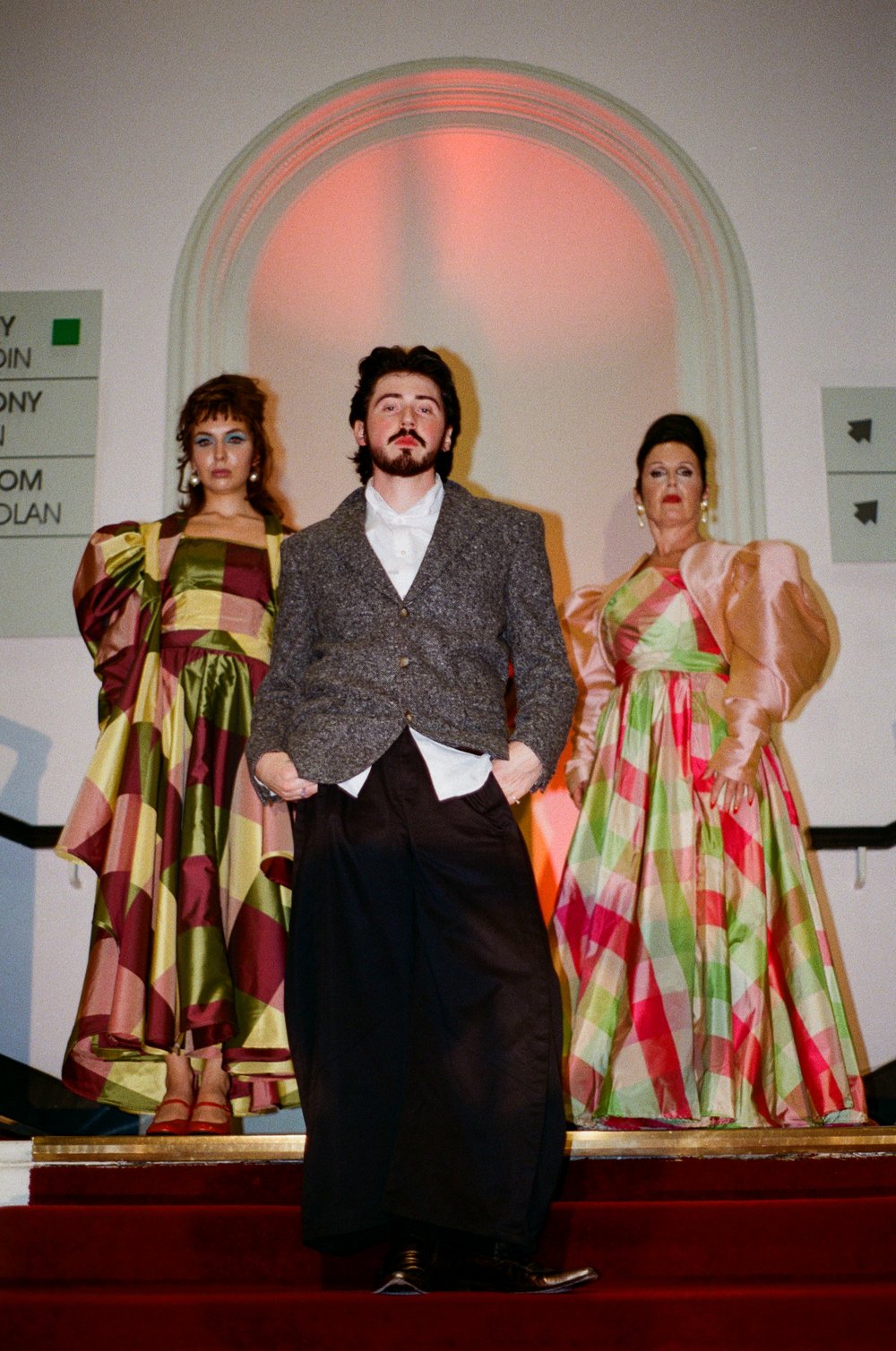
Though freshly graduated from IADT, he’s already deep into preparing for his second collection. “I started on my next collection the week before my show,” he admits. “I just can’t stop. It’s not that I’m hungry for success, it’s really about not letting myself down.”
A wearable second collection
The next body of work will be more wearable, while continuing to showcase his storytelling instinct. “I’d love people to be able to experience it, to own a piece of it,” he says. “I have so many goals. Someday, I’d love to design Olympic uniforms. That’s been a dream since I discovered fashion.”
Dedication to Dublin
His affection for Dublin remains constant, a muse as much as a backdrop. “I think anyone who’s from somewhere like Dublin has that love–hate relationship with it,” he says.
“You grow up wanting to leave, then in your twenties you realise how much it’s shaped you.” His upcoming collection will be a “love letter” to the city that raised him: “Dublin’s the old ball and chain, I love it.”
It's an affection that runs through his work, offering proof that even as his world expands, every thread still leads back to home and those intrinsically Irish storytelling roots.
Follow Oran Aurelio's journey on Instagram.