
Steven Grattan
Journalist
A life in Bogotá
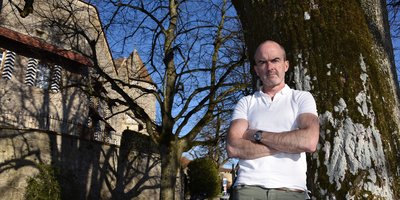
Steven Grattan is a journalist from Northern Ireland, currently serving as the Amazon Rainforest and Deforestation Correspondent for the Associated Press. Based in Bogotá, Colombia, he co-founded The Bogotá Post, an English-language newspaper, in 2013, and has taught journalism at Universidad del Rosario. Steven has reported extensively on Indigenous issues, deforestation, and general politics across Latin America for outlets including Reuters, The Guardian, and Al Jazeera.
How long have you been living in Colombia and what brought you there?
A degree in Journalism and Spanish led me to Colombia with the hope of making it in journalism. Colombia seemed like a perfect option as it was filled with issues I was interested in.
How long have you been living in Colombia and what brought you there?
A degree in Journalism and Spanish led me to Colombia with the hope of making it in journalism. Colombia seemed like a perfect option as it was filled with issues I was interested in.
Tell us about your work
My current job involves reporting on the Amazon rainforest and deforestation across Latin America, with a focus on environmental issues, indigenous communities, and related socio-political dynamics.
Prior to the Associated Press, I was part of Reuters' breaking news team in São Paulo, Brazil, and co-founded The Bogotá Post, an English-language newspaper in Colombia. My journalism encompasses topics such as politics, migration, human rights, and LGBTQ+ issues.
Why is deforestation such a big issue in Colombia?
Deforestation in Colombia is a huge problem, threatening biodiversity, indigenous communities, and the fight against climate change. A lot of it is driven by agriculture, illegal logging, and land grabbing, especially after the 2016 peace deal with the FARC, which left former conflict zones open to exploitation.
On top of that, illicit economies like illegal mining and coca cultivation are destroying the environment, polluting rivers and wiping out forests. Even with some government efforts, weak enforcement and ongoing conflict make it really hard to get deforestation under control.
Why is deforestation such a big issue in Colombia?
Deforestation in Colombia is a huge problem, threatening biodiversity, indigenous communities, and the fight against climate change. A lot of it is driven by agriculture, illegal logging, and land grabbing, especially after the 2016 peace deal with the FARC, which left former conflict zones open to exploitation.
On top of that, illicit economies like illegal mining and coca cultivation are destroying the environment, polluting rivers and wiping out forests. Even with some government efforts, weak enforcement and ongoing conflict make it really hard to get deforestation under control.
Are there any other Irish changemakers who inspire you?
Orla Guerin, the BBC's Senior International Correspondent, is a huge inspiration to me. Even though she works in broadcast and I focus mostly on text, I really admire her deeply reported, human-centered stories, especially those that shed light on the aftermath of war.
Her work is not only powerful but incredibly important. A few years ago, I had the privilege of sitting down with her for a one-on-one conversation at The Gresham Hotel in Dublin while we were both home for Christmas from our respective parts of the world.