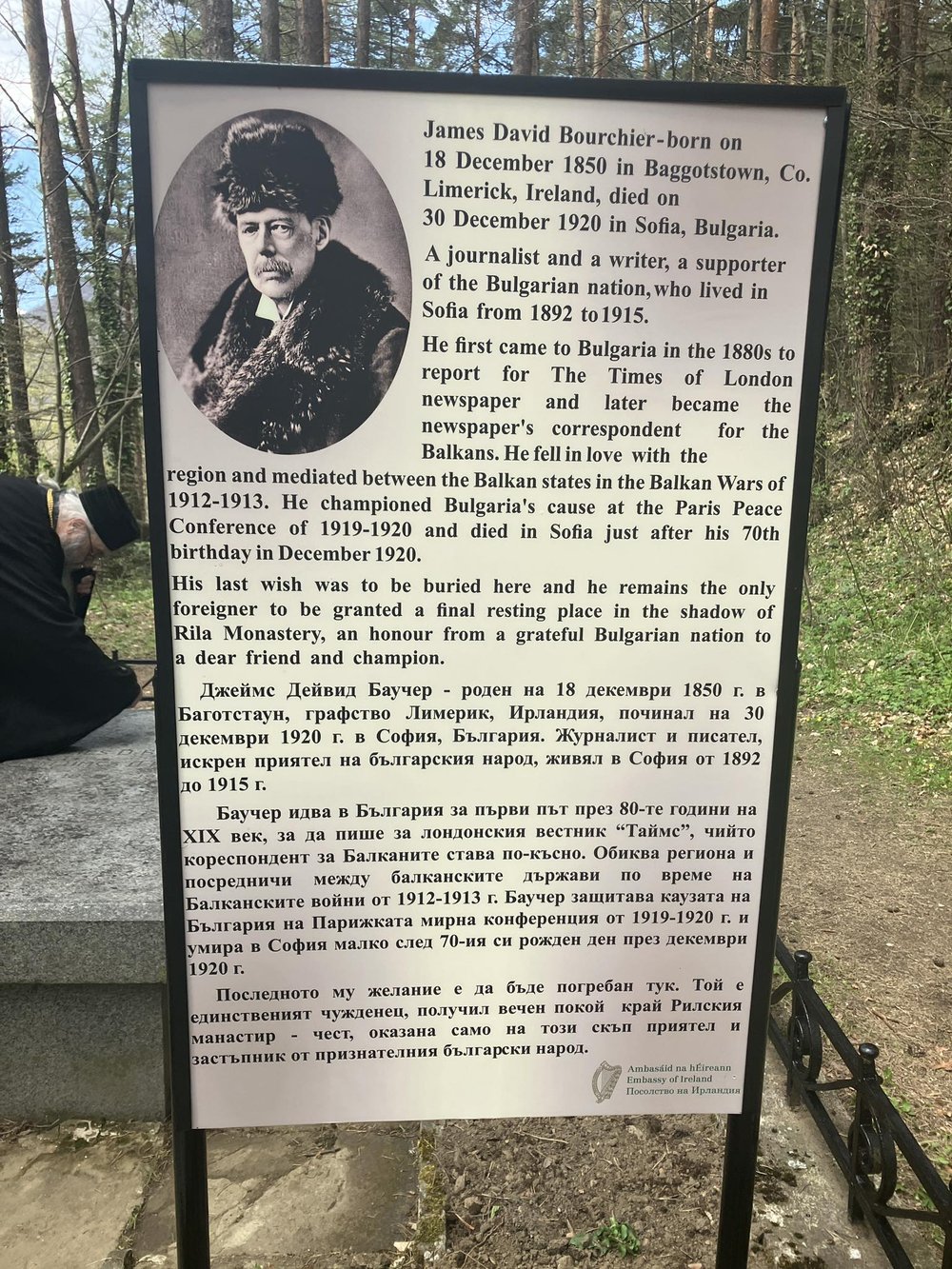

The Irishman with a Bulgarian Heart
Every country has its heroes—heroes we learn about in school, heroes our parents tell us about from a young age, heroes who have inspired movies and books. But there are also heroes who are unknown in their own country yet have done so much for foreign nations, where they are remembered and honoured for years to come.
One such hero is James Bourchier (also known as James Boucher). He is known in Bulgaria by the nickname “The Irishman with a Bulgarian Heart.”
The making of a Balkan correspondent
James David Bourchier was born in 1850 near Bruff in Limerick, Ireland to a family of landowners. He graduated from the Royal School of Portora in Enniskillen and Trinity College, and later studied at King’s College, Cambridge. The young Irishman had an interest in music but began to lose his hearing partially and therefore turned to journalism and linguistics. He began working as a teacher at Eton and, at the same time, wrote several articles, which caught the attention of Britain’s most famous newspaper, The Times, where he began working as a correspondent for the Balkans.
In 1888, 38-year-old Bourchier was assigned to report the situation in the Balkans. His work as a correspondent began in Romania, and he then travelled to Bulgaria, followed by numerous visits to other countries on the peninsula. By the early 20th century, he had travelled throughout nearly the entire peninsula and quickly became an expert on Balkan politics.
When Sofia became home
Amid the turbulent situation in the Balkans at the beginning of the 20th century, Bourchier established himself as one of the most influential European journalists. His articles were read by ministers and statesmen, and his political stance sometimes influenced the policies of entire governments.
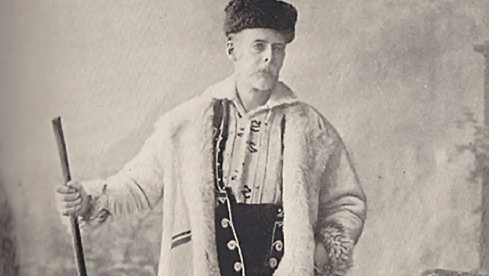
In 1892, he moved to Sofia permanently. He was so captivated by Bulgaria and its people that he wore Bulgarian folk costumes, slept wrapped in a yamurluk (a Turkish word for raincoat), and drank rakia (a traditional Bulgarian alcoholic spirit made by fermenting and distilling fruit). He formed friendships with people from all walks of life. It is believed that Ivan Mrkvička’s world-famous painting “Rachenitsa” depicts Bourchier himself dancing the rachenitsa, a famous traditional Bulgarian folk dance and musical genre.
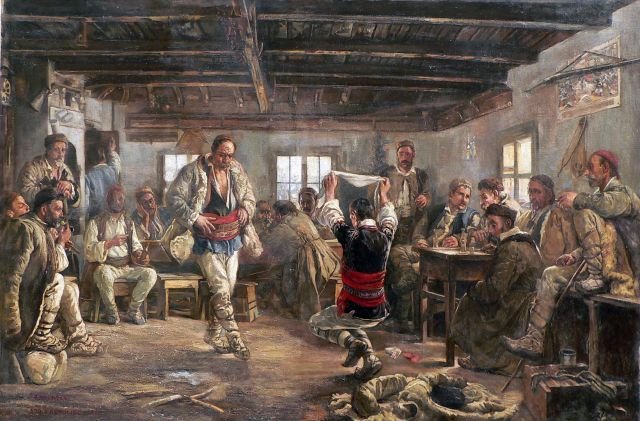
James Bourchier’s articles attest to his attitude toward the Bulgarians. In one of them, he writes:
"Indeed, the Bulgarians have worked wonders. Since the signing of the Treaty of Berlin, they have existed under conditions that by no means can be described as favourable to their development. They had no active allies, yet they had to contend with many active and unscrupulous enemies. Hired assassins roamed the country with the aim of eliminating the most prominent citizens; foreign emissaries lived among them to stir up unrest by the most despicable means; they had to fight the Serbs and live under the constant threat of occupation by an incredibly stronger enemy. They overcame these difficulties with quiet courage and perseverance—qualities of which any nation would be proud—and proved themselves the worthiest contenders for the rejection of slavery."
His articles provided Europe with an opportunity to learn about events in Bulgaria and to understand the reasons behind Bulgaria’s quest for national unification.
A lifelong champion of Bulgaria
At the start of World War I, Bourchier repeatedly appealed to representatives of the Entente to treat Bulgaria more favourably. This did not sit well with the British government and nearly cost him his job at The Times. He left Bulgaria when the country entered the war in 1915 and continued his reporting from the Russian Empire before returning to London. He retired in 1918 and was given complete freedom to express his views on the Bulgarian cause.
One of his favourite places to visit in Bulgaria was the Rila Monastery, and he expressed a desire to be buried there. After his death in 1920, he was indeed laid to rest near the Rila Monastery—an honour bestowed upon no other foreigner. Permission was granted personally by Tsar Boris III.
In this way, Bulgaria expressed its gratitude to a foreigner who loved our country, lived among its people, and had the courage to defend the Bulgarian cause before the world, especially at times when it was not particularly popular.
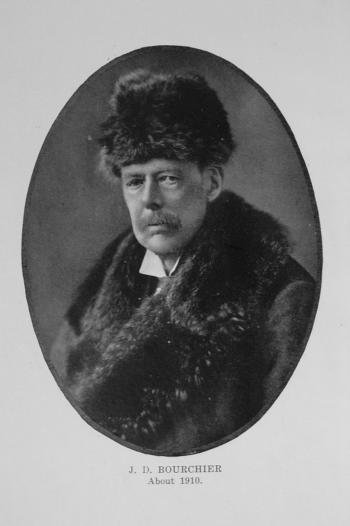
Honoured across Bulgaria
In 1926, Eleanor Flora Bosworth Smith, also known as Lady Grogan, wrote a biography of him, "The Life of James Boucher", which, nearly a century later, in 2022, was translated into Bulgarian.
A peak in the Rila Mountains has been named after James Bourchier, and the Bulgarian Commission on Antarctic Toponyms has named a bay off the northwestern coast of Smith Island in the Arctic Archipelago of the South Shetland Islands after him.
In 1990, the newly established Bulgarian Society for British Studies dedicated its first national conference to the 140th anniversary of his birth in Limerick and the 70th anniversary of his death.
In 1991, a major boulevard in Sofia was named after him. Later, one of the most central subway stations of the city was named after him. Several other cities also have streets named after him.
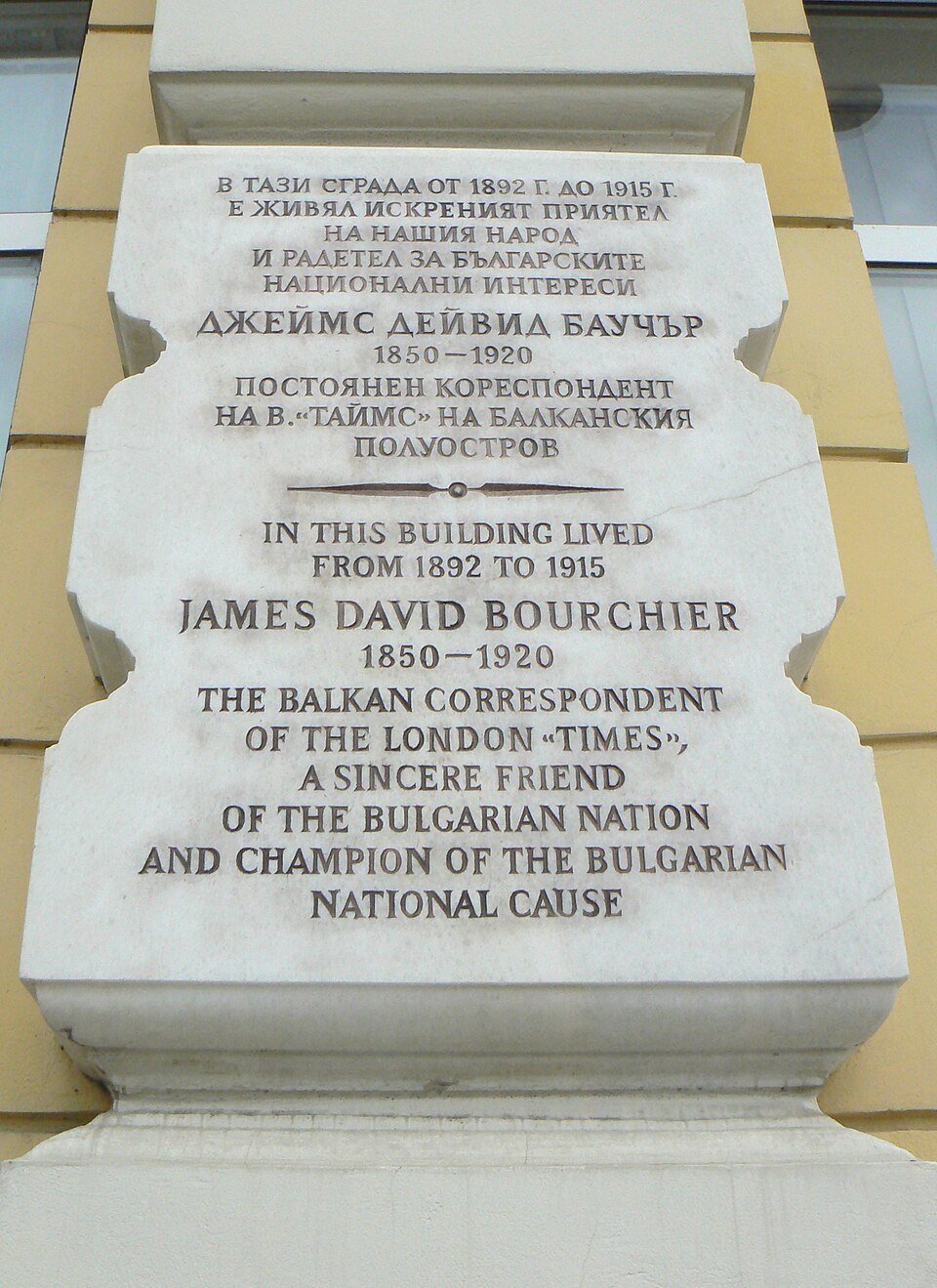
In June 2005, to mark the 100th anniversary of events related to his work, a monument to him was unveiled in Sofia, along with a commemorative plaque at the site where he lived.
James Bourchier's enduring legacy
Since its opening in 2005, the Embassy of Ireland in Sofia has been tending to Bourchier’s grave. Over the years, groups of Irish citizens and Bulgarian cultural figures have visited the grave annually to lay wreaths and pay tribute to him. During the years the embassy has also organized several discussions and seminars in his honour, as well as essay contests for young people.
In 2023, the Embassy of Bulgaria in Ireland unveiled a commemorative plaque for Bourchier in his birthplace of Bruff.
In April of this year, Ambassador Catherine Bannon, together with the abbot of the Rila Monastery, unveiled arestored information plaque at his grave in Sofia.
She also appeared in the latest documentary film about James Bourchier, which will be screened for the Sofia public in late September.